Three Weeks in Cabuyal: Volunteering with Sea Turtles in Costa Rica

A glimpse into my three weeks volunteering with Leatherback Trust in Cabuyal—from nesting turtles and conservation work to life at the remote volunteer camp.
Getting to Cabuyal
After spending a few days exploring Tamarindo, I was ready for something completely different.
When I planned my Costa Rica trip, I knew I wanted to volunteer with sea turtles. Not only would it help keep my travel costs down, but it was also something I'd wanted to do for years. After a bit of research, I reached out to Leatherback Trust and arranged to spend one week volunteering at their conservation camp in Cabuyal.
I deliberately only committed to a week. Living completely off the grid was a little outside my comfort zone. There was no electricity, no reliable internet, cold showers, and I had no idea what to expect. If I enjoyed it, I could always extend my stay. Costa Rica allows many visitors to stay for up to 90 days on a tourist visa, so I wasn't in any rush.
What I didn't know at the time was that one week would eventually turn into three.
Getting there, however, didn't exactly go to plan.
I caught a local bus from Tamarindo to the meeting point where someone from the conservation project was supposed to pick me up. When I stepped off the bus, I looked around expecting to see someone waiting for me.
Instead... there was nobody.
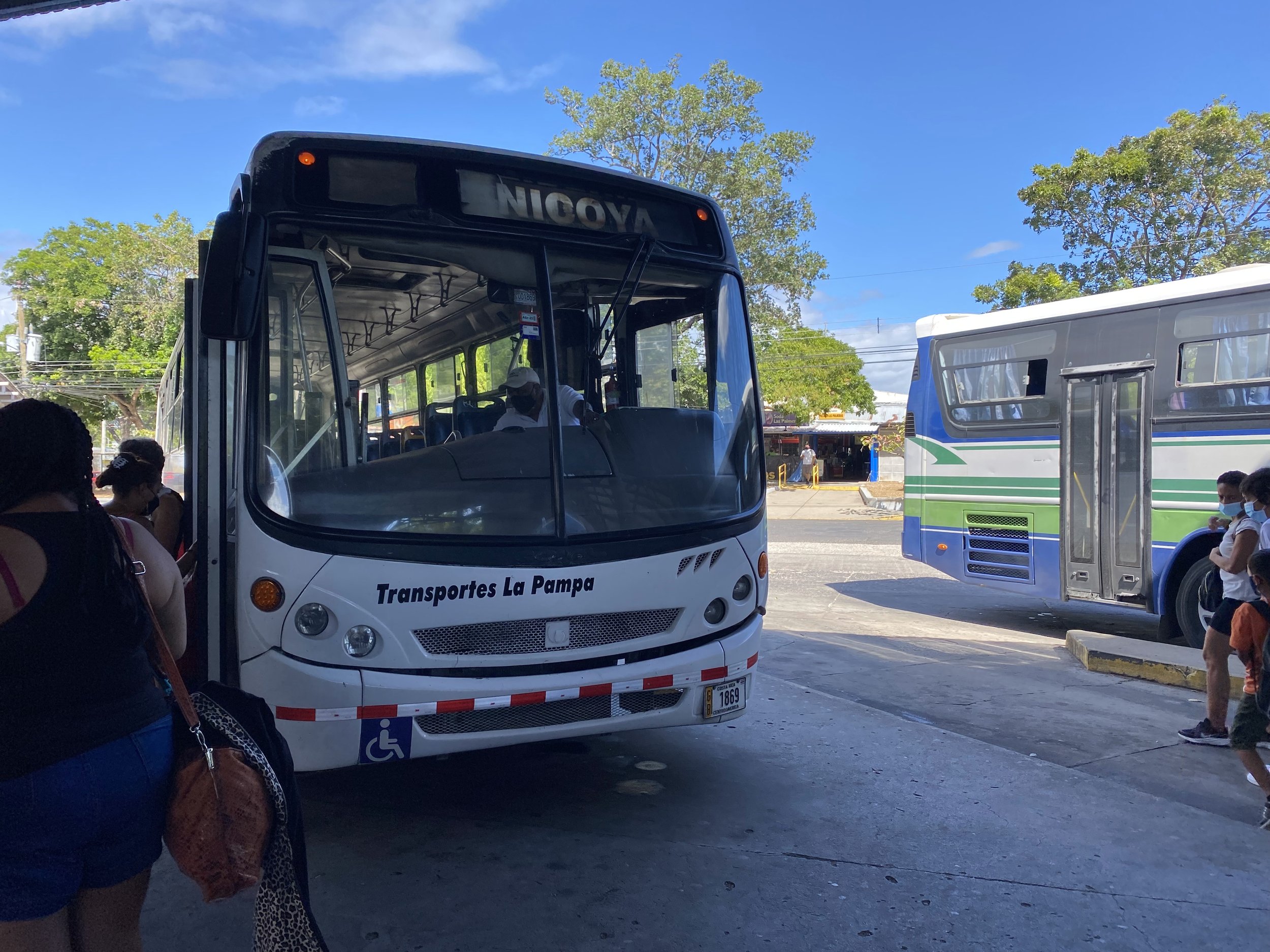
My journey to Cabuyal began with a series of local buses before an unforgettable pickup that didn't quite go as planned.
A local man approached me and asked if I needed a ride.
"Yes."
"I'll drive you."
Perfect, I thought.
Without really questioning it, I put my backpack in his vehicle and climbed in. I'd never met Keilor, the volunteer coordinator, before, so I had absolutely no idea what he looked like. I also didn't know how much English he spoke, so nothing about the situation seemed unusual.
About thirty minutes into the drive, something started to feel off.
I looked out the window and thought,
Why does this road look familiar?
Then it hit me.
"I'm pretty sure we're driving back toward Tamarindo."
Thankfully, the driver let me borrow his phone because I still hadn't bought a Costa Rican SIM card. After a quick call, Keilor realized what had happened and spoke to the driver in Spanish. He explained that the driver had misunderstood where I needed to go, negotiated a lower fare for the unexpected detour, and gave him directions to the correct pickup point.
The funny part?
The "correct pickup point" was exactly where I'd originally gotten off the bus.
Thirty minutes later, the driver pulled over... right back at the same bus stop.
This time, though, Keilor was actually standing there waiting for me – in a Leatherback Trust T-shirt.
As I climbed out of the car, he looked at me with a grin and asked,
"So... you just got into a random stranger's car?"
I laughed.
"I thought it was you!"
Looking back, it probably wasn't one of my smarter travel decisions, but I'd never met Keilor before. I had no idea what he looked like, and I didn't know how much English he spoke. At the time, the whole situation seemed completely normal. I'd become so used to people meeting me at bus stations that I never questioned it.
Fortunately, everything worked out in the end – but at an extra cost.
By the time we arrived at camp, everyone helped unload the groceries out of the truck and started to get dinner ready. Keilor showed me around, introduced me to the other volunteers, and explained that, because of the camp's health protocols, I'd have my own room and bathroom for the first week. After a long day of buses, wrong turns, and wondering where on earth I was going, I was happy just to settle in.
Little did I know, the next morning would teach me my first lesson about life in Cabuyal... not everything happened by truck.
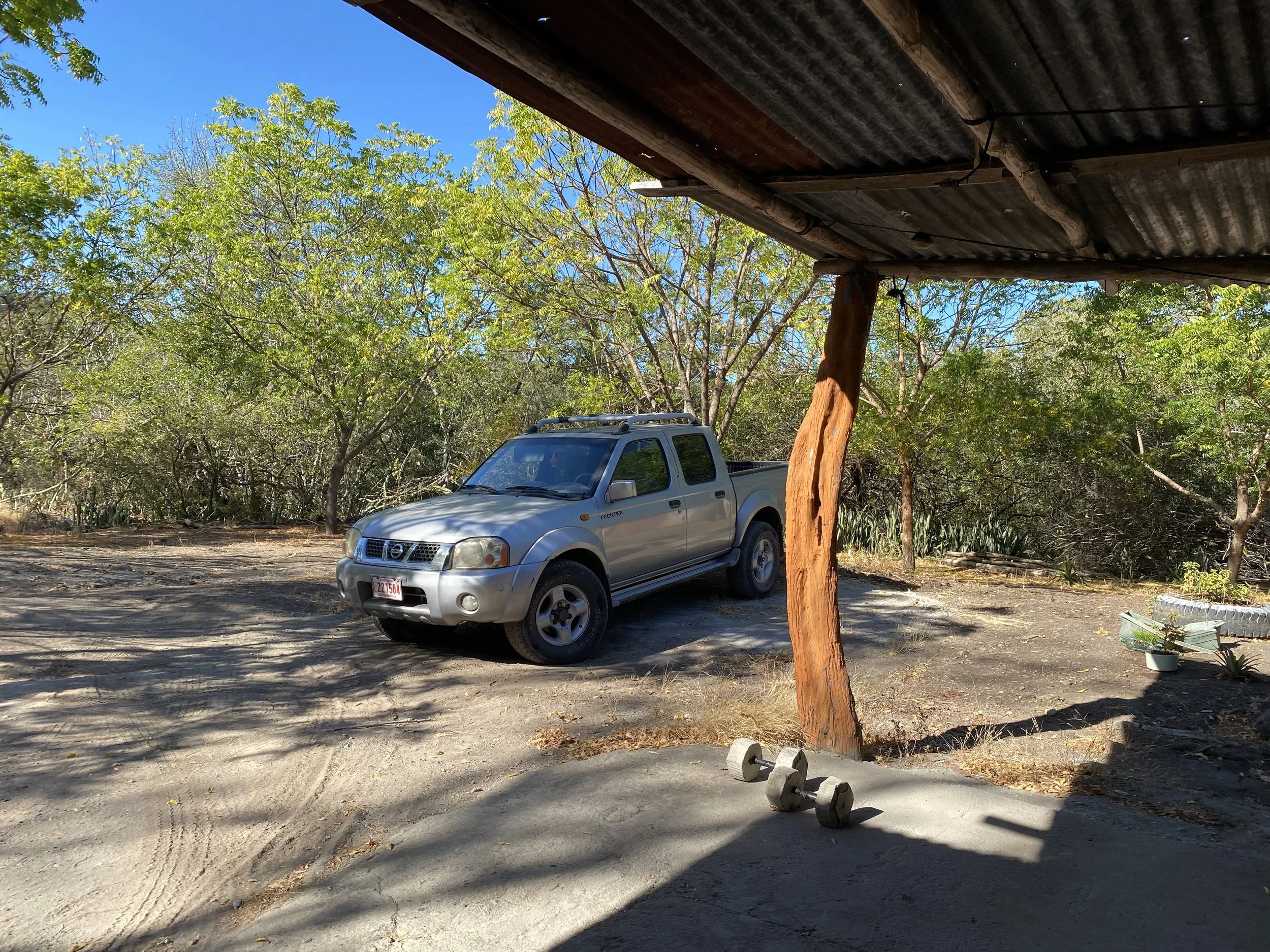
Settling into Camp
I quickly learned that nothing at the conservation camp happened alone. Whether it was cooking, cleaning, beach patrols, or maintaining the camp, everyone pitched in. It didn't matter if you were a volunteer, a researcher, or one of the local staff - we all worked together.
The camp itself was exactly what I'd signed up for - simple, remote, and completely different from anywhere I'd stayed before.
There was no mains electricity, only solar panels that powered the research equipment and a few essential items. If there was enough power left over, then we could charge our own phones or power banks. On cloudy days, that wasn't always guaranteed, so I quickly learned to keep my electronics charged whenever I had the chance.
The nearest place with Wi-Fi was Casa del Mar, the only restaurant within walking distance. I tried not to go there too often because if I was going to use their internet, it only felt right to order something. Most visits ended with a rum and Coke, a fruit smoothie, or whatever caught my eye on the menu. The owner was incredibly welcoming, and every so often she'd cook dinner for all of us. After we finished eating, the music would come on, and before long everyone was dancing. As someone with absolutely no Latin dance experience, I mostly just tried to follow along and hoped nobody noticed my terrible moves.
The rest of the time, life was surprisingly quiet.
The beach was usually almost empty, the only sounds coming from the waves, birds, and whatever wildlife happened to be wandering nearby. Two Spanish university students were also staying at camp while researching mammals in the surrounding forest using camera traps. Every week they'd return with memory cards full of photos, and it became one of my favourite things to look through. It was amazing seeing the wildlife that passed by while we were sleeping, and their research even suggested that one local wild cat species was more common than researchers had previously thought.
After dinner on my first evening, I unpacked my bag, listened to the sounds of the jungle, and wondered what the next morning would bring.
As it turned out, my first lesson came before sunrise.
The volunteers who had worked the overnight patrol were still on the beach with a nesting turtle, so Keilor and I piled into the truck and drove down to meet them. I assumed that was how we always got to the beach.
The following morning, I confidently grabbed my backpack and headed toward the truck.
Keilor looked at me, smiled, and asked,
"Where are you going?"
"To the truck."
He laughed.
"No... we walk."
It turned out that the previous morning had been a special exception.
Most mornings, the beach was a 20 to 30-minute walk away.
That was the moment I realized life in Cabuyal was going to be very different from anything I'd experienced before.
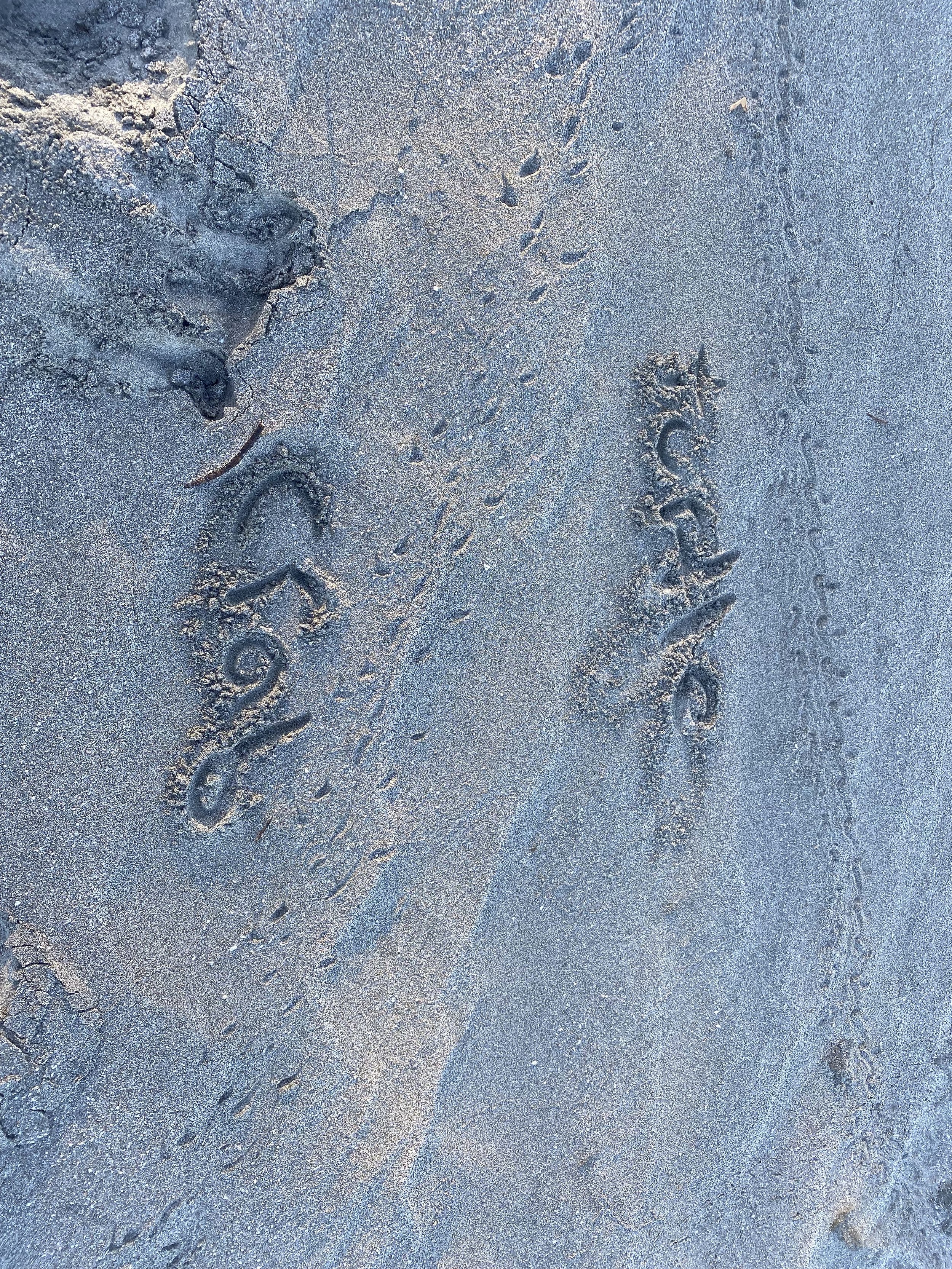
One of my first lessons was learning to tell the difference between hatchling turtle tracks and crab tracks in the sand—a skill that became surprisingly important during morning beach patrols.
Finding My Rhythm
After a couple of days, I started settling into the rhythm of camp life.
Instead of constantly checking bus schedules, figuring out where I was sleeping next, or planning my next destination, life became wonderfully simple. Depending on the schedule, I could be helping cook dinner, walking the beach at sunrise, reading a book in the afternoon, filming videos for my YouTube channel, or heading out for another night patrol.
It didn't take long before night patrol became my favourite shift.
Our patrols ran from 11 p.m. until 4 a.m., with just two people assigned to each shift—a volunteer and one of the local staff members. The goal was simple: slowly walk the length of Playa Cabuyal, looking for turtles coming ashore to nest or fresh nesting crawls in the sand.
Walking from one end of the beach to the other took about an hour. Once we reached the far end, we'd take a short break before turning around and walking all the way back again. After we'd completed one full sweep of the beach, the staff member would usually try to get some sleep while we waited for another turtle to appear.
I never did.
I've always been a bit of a night owl, so instead of sleeping, I'd sit on the sand, listen to the waves crashing onto the shore, simply stare up at the sky, or fit in a workout. With no towns nearby, almost no light pollution, and no phone constantly buzzing for my attention, it became one of the most peaceful places I'd ever experienced.
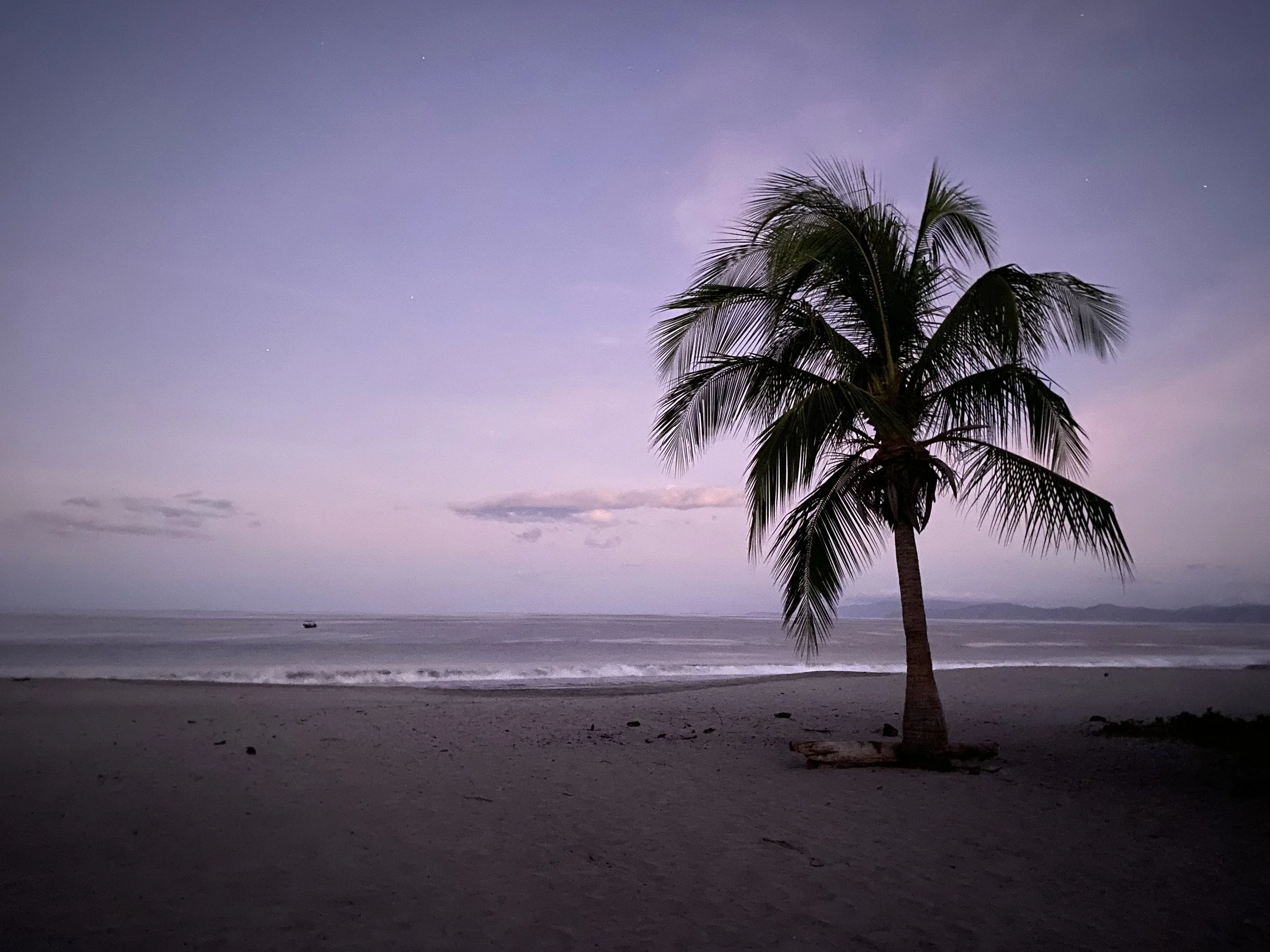
The beach just before night patrol began. Once we stepped onto the sand, our lights were switched off so we wouldn't disturb any nesting sea turtles.
As soon as we stepped onto the beach, our headlamps were switched off.
Sea turtles are incredibly sensitive to light, so we walked in complete darkness, allowing our eyes to adjust naturally. At first, it felt almost impossible. I kept wondering how we were supposed to spot a turtle when I could barely see the beach in front of me. But after a while, my eyes adapted, and I began noticing shapes and movement that I would have completely missed on my first night.
The only time we turned our lights back on was after a turtle had entered her egg-laying trance. Once she reached that stage, she was focused entirely on laying her eggs, allowing us to briefly use our lights to count the eggs, scan for a PIT tag if she had one, and record the conservation data before switching the lights off again.
Every night felt different.
When there was a full moon, the beach was surprisingly bright, making it much easier to walk and spot movement along the shoreline. On moonless nights, however, the darkness was almost complete. Those nights were definitely more challenging, and I learned to trust my eyes far more than my flashlight.
Then there were the nights when the beach seemed almost magical.
Tiny bioluminescent dinoflagellates glowed beneath our feet, causing every footprint to light up with a brilliant blue shimmer. It felt like I was walking across a beach full of stars. Even now, it's one of the most surreal natural phenomena I've ever witnessed.
Of course, turtles weren't the only wildlife we encountered.
One evening, someone casually mentioned there was an alligator beside the path we used every single day.
I laughed.
"Good one."
I genuinely thought they were joking. Growing up, I'd always associated alligators with Florida. It had never even crossed my mind that they also lived in Costa Rica.
Then one night I saw it.
Two glowing eyes staring back at us from the darkness.
Turns out... they weren't joking.
From that moment on, I paid a lot more attention whenever we walked past that section of the trail. The next day, I happily bought myself a rum and Coke at Casa del Mar while Googling exactly how common alligators were in Costa Rica.
Thankfully, my first turtle encounter was a lot less intimidating.
On my very first night patrol, I spent more time scanning the ocean than the beach itself.
"I'm pretty sure there's a turtle out there," I whispered to Catalina.
She looked out across the water before quietly replying,
"I don't think so."
A few moments later, a green turtle emerged from the waves.
I couldn't believe I had spotted it.
We stayed well back while she slowly crawled up the beach, carefully choosing where to nest. Watching such an ancient animal move across the sand in complete silence was something I'll never forget. Once she entered her egg-laying trance, Catalina let me count the eggs while she recorded the measurements and scanned the turtle for a PIT tag.
For my very first patrol, I couldn't have asked for a better introduction.
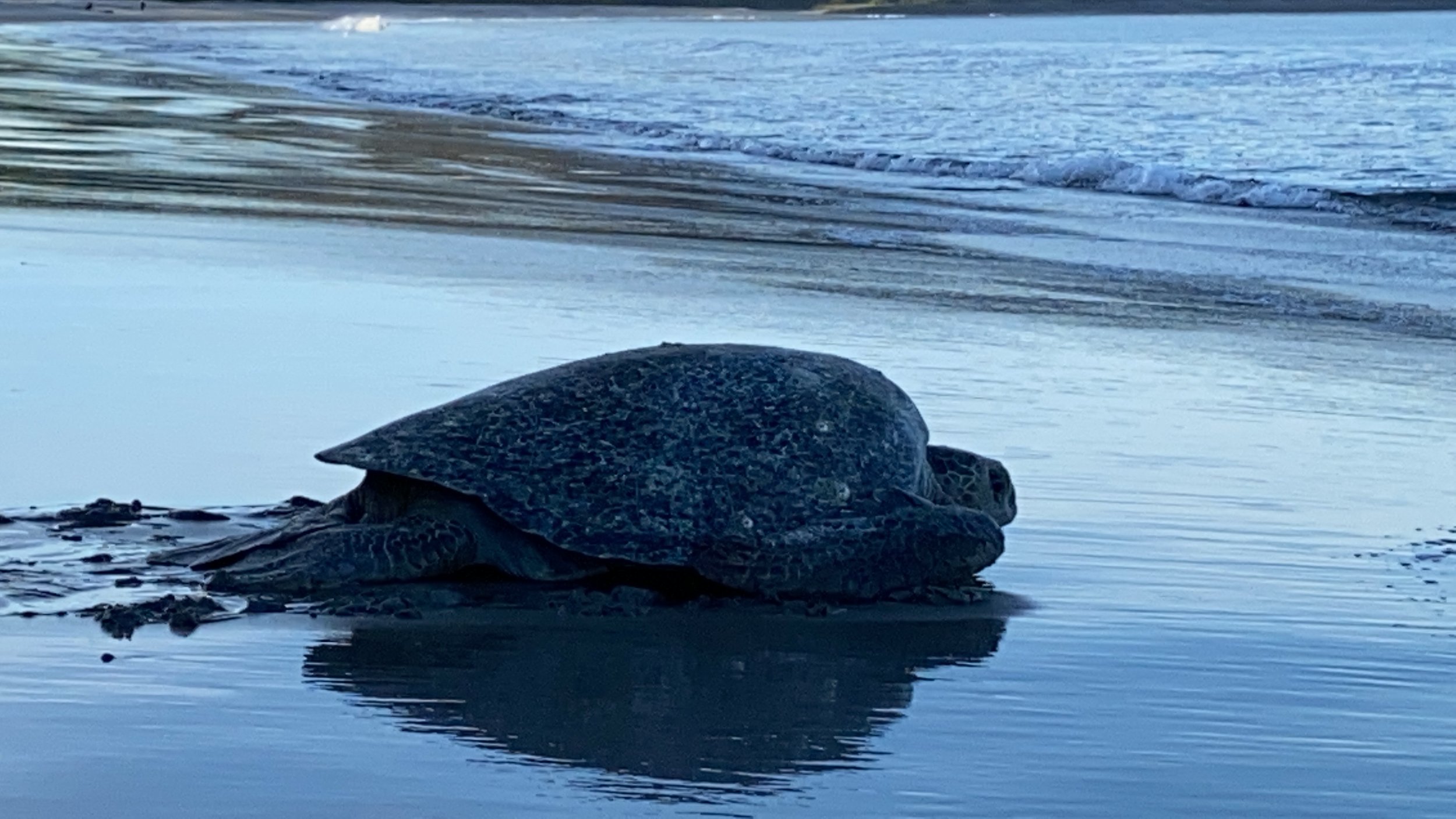
Watching my first green sea turtle emerge from the Pacific Ocean was a moment I'll never forget—and the perfect introduction to life on night patrol.
More Than Just a Volunteer
By the end of my first week, something had changed.
I'd originally planned to volunteer for just seven days. It seemed like the perfect amount of time to experience life at a sea turtle conservation camp before continuing my trip around Costa Rica.
Instead, I asked if I could stay longer.
Somewhere between the night patrols, quiet afternoons on the beach, and life without constantly checking my phone, I realized I wasn't ready to leave.
For the first time in weeks, I wasn't thinking about bus schedules or my next destination. I was simply enjoying where I was.
Even the little routines became something I looked forward to.
Whenever I wanted to check in with family or upload a few photos, I'd make the walk to Casa del Mar. By then, it had become part of my routine, and there was a good chance I'd order another rum and Coke before checking my messages.
Back at camp, life settled into an easy routine.
The volunteers came from different countries, but everyone spoke English whenever I was around so I wouldn't feel left out. The local staff were bilingual, effortlessly switching between Spanish and English throughout the day.
The conservation work, however, was another story.
All of the data sheets were written in Spanish.
At first, I had absolutely no idea what anything meant. Slowly, though, I began recognizing the different headings and conservation terms. By the end of my stay, I could usually work out what information was being recorded without needing to ask.
My first night patrol also taught everyone something about me.
Because we'd worked until four o'clock in the morning, I went to bed shortly after sunrise.
When I finally woke up around noon, Keilor looked genuinely concerned.
"I thought something was wrong!"
I laughed.
"No... I just really like sleeping."
After that, nobody questioned my sleeping habits again.
Looking back, those three weeks weren't memorable because I had internet, comfortable accommodation, or a packed itinerary.
They were memorable because life became wonderfully uncomplicated.
I spent afternoons reading on a nearly empty beach, worked out while waiting for turtles to appear, watched sunsets almost every evening, and found myself appreciating the quiet far more than I ever expected.
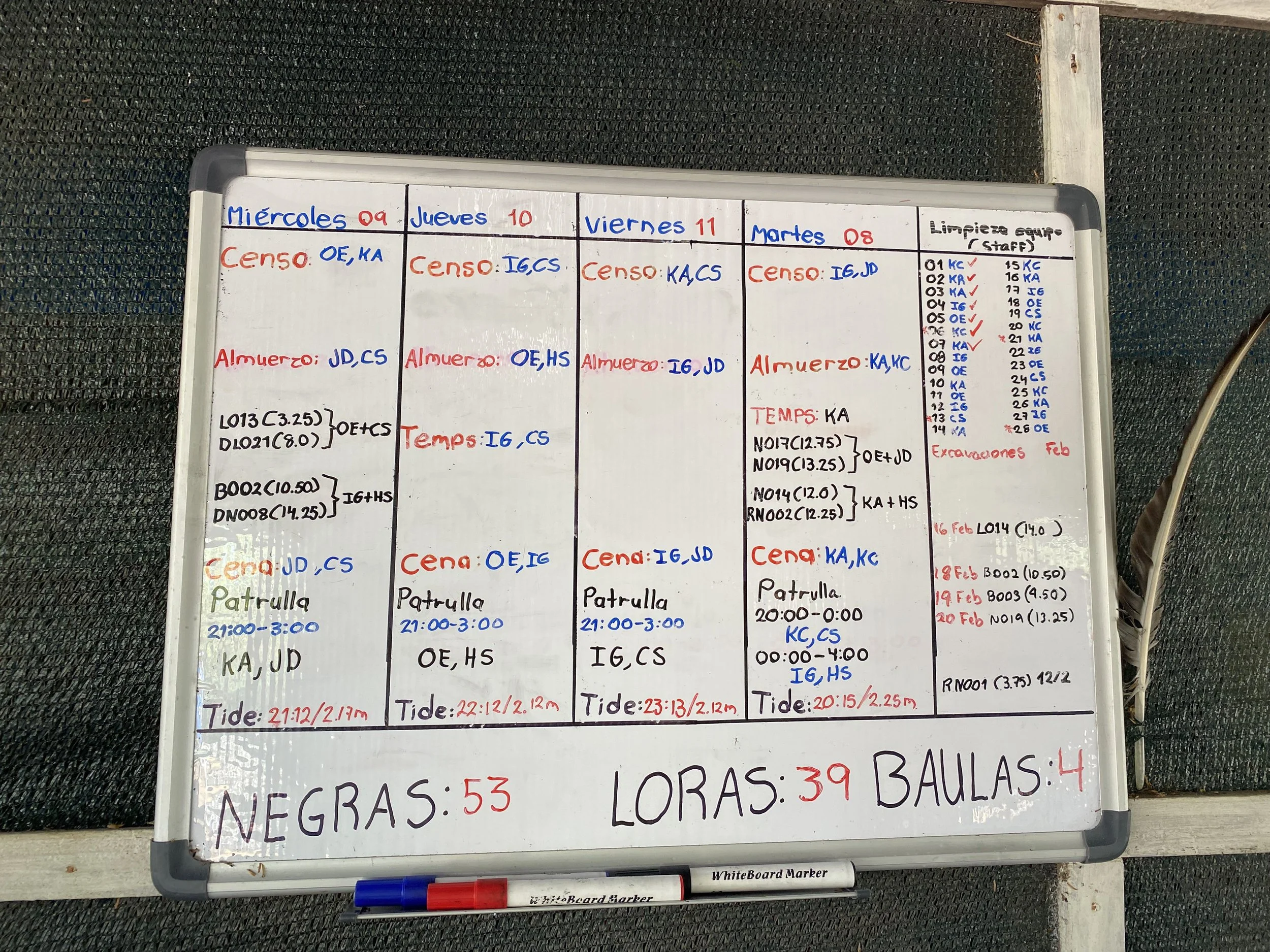
Our weekly volunteer schedule was entirely in Spanish, so I quickly learned the conservation terms needed to keep up with daily life at camp.
Why I'll Never Forget Cabuyal
When I first arrived in Cabuyal, I thought I was signing up to volunteer with sea turtles for a week.
Instead, I ended up staying for three.
Looking back, it wasn't because I suddenly became an expert at turtle conservation or because every night was filled with incredible wildlife encounters. In reality, some patrols were quiet, some mornings were spent walking an empty beach, and some afternoons were simply spent reading a book while listening to the waves.
And that was exactly what I needed.
After weeks of constantly travelling through Costa Rica, I'd started to feel tired. Not physically, but mentally. I was always thinking about the next bus, the next hostel, the next destination, or the next thing to see.
Cabuyal changed that.
For three weeks, my world became wonderfully small.
Instead of scrolling through my phone, I watched the stars. Instead of searching for Wi-Fi, I was happy reading a book on an almost deserted beach. My evenings were spent walking alongside the Pacific Ocean, and my mornings often ended just as everyone else was starting their day.
It was a routine I'd never experienced before, but one I quickly grew to love.
Of course, the turtles were unforgettable.
Seeing my first green turtle emerge from the ocean, helping measure a giant leatherback, watching tiny hatchlings make their way towards the sea, and learning from the incredible staff and volunteers are memories I'll always treasure. Those experiences deserve stories of their own, and I'll be sharing many more from my time in Cabuyal in future blogs.
But when people ask me about volunteering in Costa Rica, those aren't always the first things that come to mind.
I remember the silence.
The stars.
The glowing footprints left behind by bioluminescent plankton.
The laughter over dinner at Casa del Mar.
The friendships that formed despite language barriers.
And the feeling of being completely disconnected from the internet, yet somehow more connected to everything around me.
Cabuyal wasn't the place I saw the most attractions in Costa Rica.
It probably wasn't where I took the most photos - although it's hard to compare now that I lost so many of my Costa Rica pictures when my phone ended up at the bottom of the ocean in Panama.
Yet somehow, it became one of my favourite places in the entire country.
Eventually, though, it was time to continue my Costa Rican adventure.
I said goodbye to Cabuyal, climbed back onto another local bus, and headed inland toward one of the destinations I had been looking forward to the most - Monteverde.
After three weeks of beaches, turtles, and life off the grid, it was time to swap the Pacific coast for misty cloud forests, hanging bridges, and some of the most incredible wildlife I've ever seen.

From conservation work and simple camp life to unforgettable wildlife encounters, my three weeks in Cabuyal became one of the most rewarding experiences of my Costa Rica adventure.
