
I arrived in Panama City without a plan and somehow ended up with canals, monkeys, rooftop cocktails and nearly three weeks of adventure ahead of me.
After spending one full day exploring San José and visiting as many museums as I could fit in, it was time to leave Costa Rica behind. I had loved almost everything about the country—except, perhaps, the prices—but a new adventure was waiting across the border.
I had a long bus journey ahead of me, taking me all the way from San José to Panama City.
And what did I know about Panama? Absolutely nothing.
For once, I had done zero research. All I really knew was that rich people apparently stored their money there and that the Panama Canal existed. I didn’t know where I wanted to go, what I wanted to see or even how I would eventually leave the country. I figured I would sort everything out once I reached Panama City.
My time in Central America was slowly ending, but a new continent was waiting on the other side. First, I had to figure out how to get there.
Travelling from San José to Panama City was simple enough: get on a bus and stay on it for a very long time. The journey took most of the day, giving me plenty of time to stare out the window at a country I knew nothing about. As we travelled farther into Panama, I remember looking at the scenery and thinking, I’m probably going to come back this way. I was already passing places I might want to visit—even if I didn’t know what any of them were yet.
The border crossing must have been easy because I honestly don’t remember anything about it. Border crossings tend to stick in my memory when something goes wrong, so the fact that this one has disappeared probably means it was wonderfully uneventful.
By the time we reached the bus terminal in Panama City, I was tired, carrying everything I owned and still needed to cross the city to my hostel. I had a rough idea of which local bus to take, but I wasn’t expecting the fare to be only 25 cents.
As the bus moved through the city, I started digging through my belongings for American change. Panama uses the US dollar alongside its balboa coins, but I had only just arrived and wasn’t prepared with a quarter. A woman nearby noticed me struggling and quietly paid my fare.
I eventually found a quarter and tried to give it to her, but she wouldn’t accept it. All I could do was thank her. It was a small gesture, but it became my first real interaction in Panama—and a lovely introduction to the country.
Eventually, I reached Hostel Mamallena, where I would spend my first three nights. It had a relaxed backpacker atmosphere, with private rooms and dorms attracting travellers of all ages.
I claimed a bottom bunk and promptly passed out. Panama City could wait until morning.
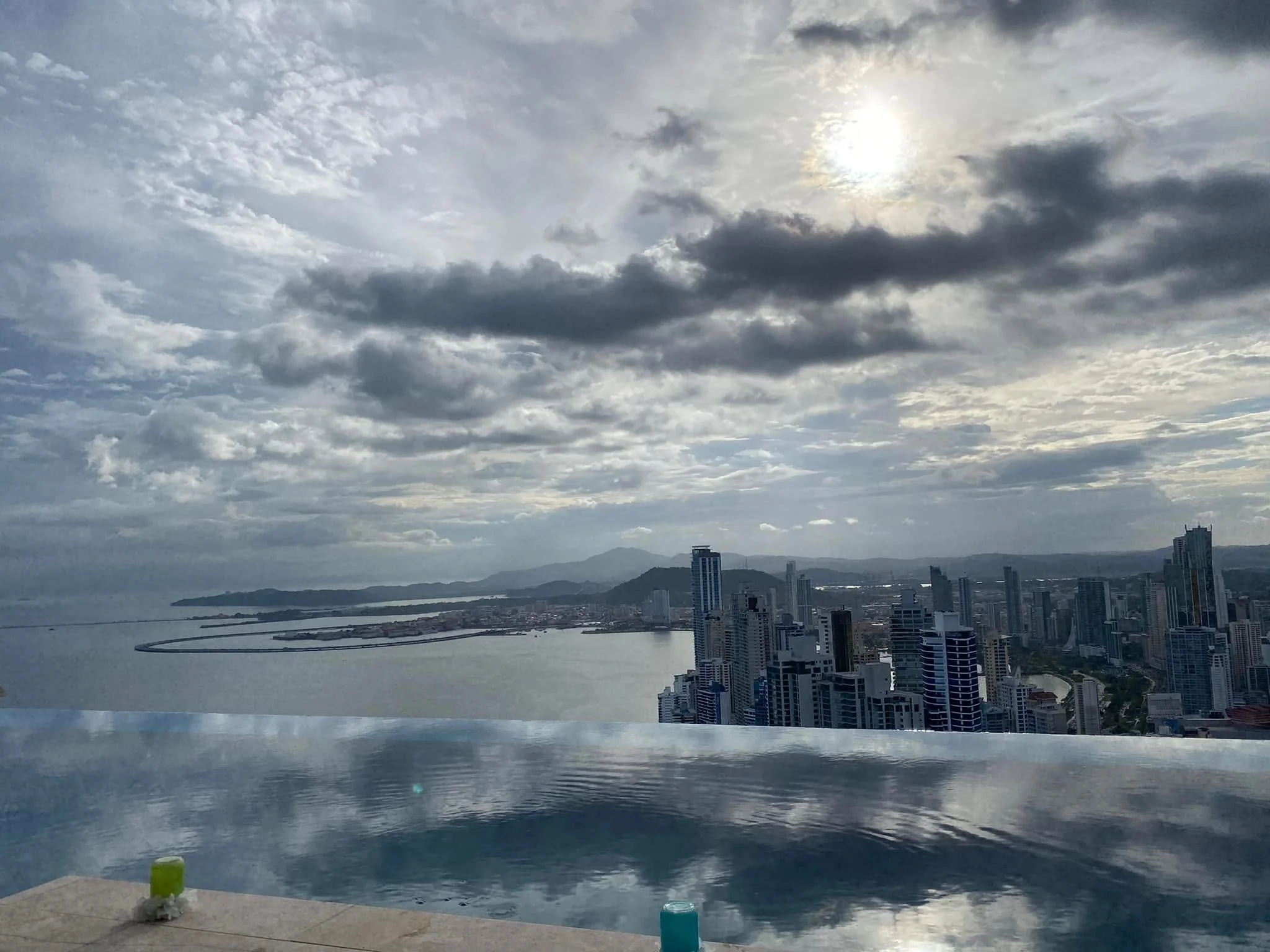
I took this photo later from a rooftop bar, but somewhere among those buildings was Hostel Mamallena—and the part of Panama City I would begin exploring the next morning.
Walking Through Casco Viejo
The next morning, I set off on foot toward Casco Viejo, Panama City’s historic district. It was about a 40-minute walk from the hostel, but walking has always been my favourite way to explore a new city. I hadn’t planned a route or made a list of everything I needed to see. I simply knew where I was heading and planned to wander once I arrived.
Casco Viejo felt completely different from the modern city I had passed through the night before. Its narrow streets, colourful colonial buildings, old churches and historic plazas made it feel as though I had stepped into another time. Then I would catch a glimpse of modern skyscrapers rising across the water, creating a beautiful contrast between old and new Panama.
I visited whichever landmarks I came across, including Iglesia de San José, the Metropolitan Cathedral Basilica of Santa María la Antigua, the National Theatre of Panama and Las Bóvedas. I wasn’t rushing between attractions. I took my time looking at the architecture and stopping whenever something caught my attention.
Eventually, the weather decided what I would do next. It started to rain, so I escaped indoors and visited the Panama Canal Museum.
I had learned about the canal from a Canadian—or at least North American—perspective: the failed attempts to build it, the mosquitoes and diseases that killed thousands of workers, and the United States eventually completing the project. I wanted to understand the canal from Panama’s perspective instead.
Once inside, I did what I normally do in museums: I read practically every sign.
The exhibits covered the enormous engineering challenge, but also told a broader story about Panama. I learned about workers who arrived from around the world, the railway, and Panama’s history as a route between oceans. One detail that stayed with me was the terrible conditions endured by Chinese workers who helped construct the Panama Railway. Many died during its construction, while others reportedly died by suicide. It was much darker than the simplified story I remembered learning in school.
The museum helped me see the canal as more than an impressive shortcut for ships. Its construction shaped Panama’s land, population, politics and relationships with other countries.
By the time I stepped outside, the rain had stopped. I continued walking until I found one of the colourful Panamá signs, then stopped at a small local restaurant for roasted chicken and French fries.
Afterward, I returned to the hostel. I had arrived without a plan, but I couldn’t continue improvising forever. I still had to decide where to go—and, more importantly, how to reach Colombia.

My walk through Casco Viejo took me from Plaza Herrera and its narrow historic streets to the ruins of Santo Domingo—and eventually inside the Panama Canal Museum when the rain arrived.
Planning 20 Days Around One Boat
I quickly discovered that travelling overland to Colombia wasn’t a realistic option. Although the two countries share a border, the Pan-American Highway ends at the Darién Gap, a remote and dangerous stretch of jungle without a road connecting them.
That left two realistic choices: fly to Colombia or travel by boat through the San Blas Islands.
Flying would have been faster, but it wasn’t really in my budget. The boat trip cost considerably more than my usual transportation, but it was also a once-in-a-lifetime opportunity. Somehow, I had never even heard of the San Blas Islands. Now I was considering spending several days travelling through them toward an entirely new continent.
Naturally, I called my mom.
I told her how much I wanted to take the trip and suggested that, since she hadn’t bought me anything for Christmas, sailing from Panama to Colombia could be my present. Thankfully, she agreed.
After comparing trips and departure dates, I contacted a boat company and was lucky enough to secure a place departing in approximately 20 days. These trips can fill quickly, so I couldn’t plan the rest of Panama until that date was confirmed.
Suddenly, my completely unplanned trip had a deadline.
I could now work backwards and choose where to go before returning to Panama City. I had nearly three weeks to explore, but I needed to leave enough time to return and prepare. After planning my entire route around this boat, I certainly couldn’t miss it.
My mom had two other suggestions for Panama. She wanted me to visit Colón, apparently because it was known for inexpensive shopping. After almost six months of living out of a backpack, I wasn’t sure what she thought I needed to buy. I couldn’t fit it into my route anyway.
Her other suggestion was a monkey tour.
My mom was a little short on details, so I searched for one myself and found a half-day excursion with Monkey Adventures. It would take me onto Gatún Lake to look for monkeys, sloths and other wildlife. At the time, I paid $75 USD, including transportation from my hostel.
Within one evening, I had booked a boat to Colombia, started planning my route and arranged the next morning’s adventure. I was going to look for monkeys—and hopefully prove I was better at spotting wildlife than usual.
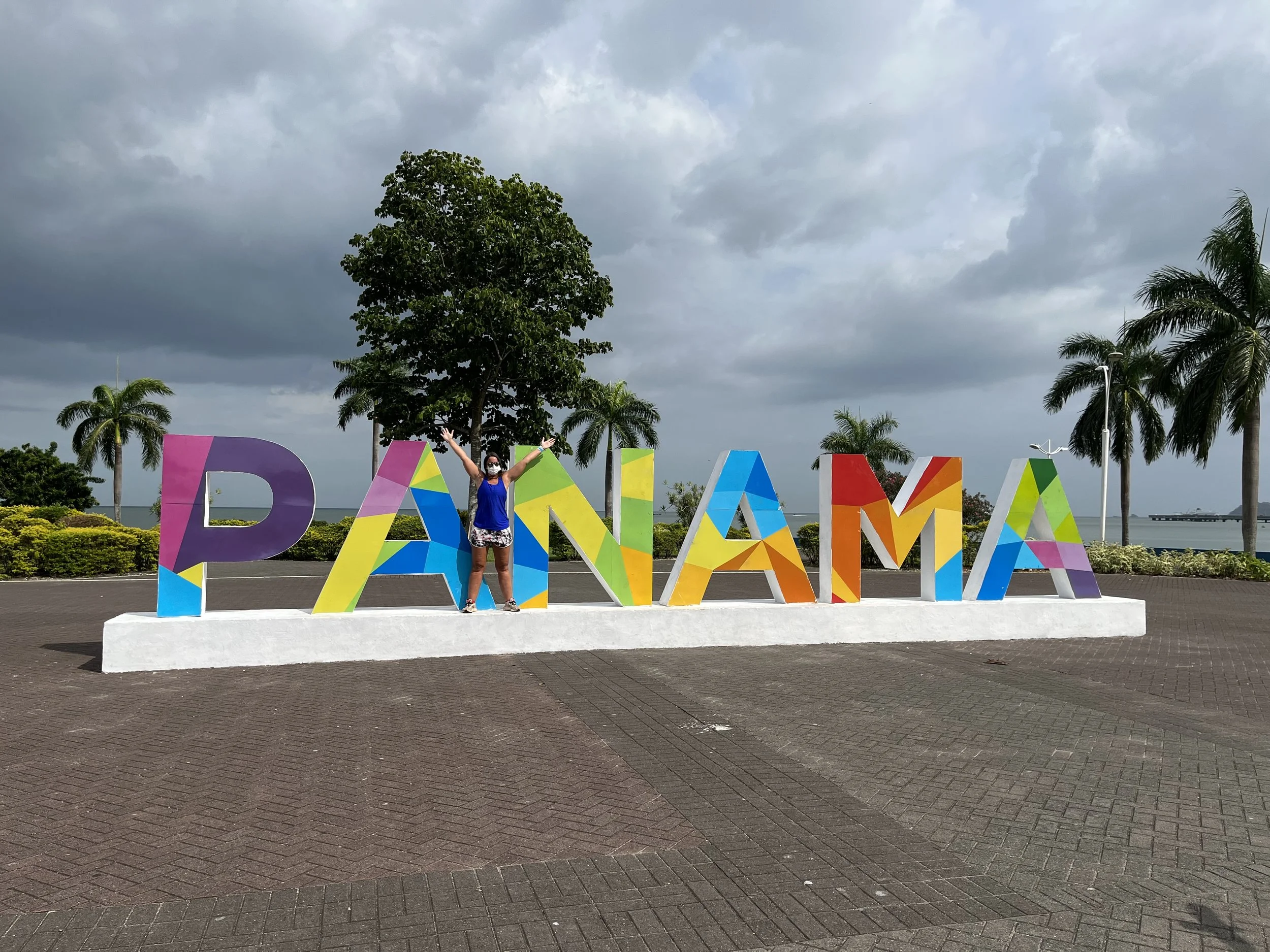
I had barely arrived in Panama, and I was already trying to figure out how to leave—but first, I had nearly three weeks to explore.
Monkeys, Missing Sloths and a Possible Crocodile
The following morning, I was picked up at around 7:30 a.m. for the four-hour tour. After learning about the Panama Canal inside a museum, I was excited to experience part of it from the water.
At the dock, one of the first things I noticed was a sign warning about possible crocodiles or alligators. Naturally, I immediately started searching the water. I didn’t see anything, but the sign gave me hope that the morning might include more wildlife than expected.
Our group climbed into a small green boat with a canopy and set out toward Gatún Lake, an artificial lake forming a major part of the Panama Canal. I was in heaven: travelling across the water, surrounded by jungle, while enormous ships passed nearby.
I grew up beside a river where watching large ships is normal, but this felt different. These vessels were travelling through the Panama Canal along the route I had learned about the previous afternoon. Seeing them from our small boat made it easier to appreciate just how massive they were.
As we travelled between the islands, our guides pointed out wildlife hidden in the trees.
“There’s a sloth up there.”
I stared into the branches and saw absolutely nothing.
We moved elsewhere, and someone spotted another sloth. Once again, everyone seemed to know exactly where to look—except me. I have never been talented at finding camouflaged wildlife, and this tour wasn’t going to change that.
Fortunately, the monkeys were easier to see.
We first watched them from a distance, but as the boat moved closer, they became increasingly interested in us. We were given small pieces of banana to encourage them to approach.
Another boat already had a monkey bouncing between its seats, and I remember thinking, How lucky are they? Before long, one of the monkeys finally jumped onto our boat. It bounced between the seats before making its way to the front, where a piece of banana was waiting.
At the time, I was thrilled. I took what felt like a million photos and videos. Looking back, I recognize that feeding wild animals to bring them closer isn’t the most ethical experience. Even a small amount of food can change their natural behaviour and encourage them to associate boats and people with food. It felt magical in the moment, but today I would be more cautious about choosing a tour that encourages direct interaction.
Eventually, we began the journey back to the dock. I continued watching the water, determined to find one of the animals mentioned on the warning sign. At one point, I thought I saw a crocodile—but it may have been a floating stick.
We will never know.
After the tour, I ate lunch near the hostel and continued planning my route. By evening, however, I was ready to stop researching and see the city from a different perspective.
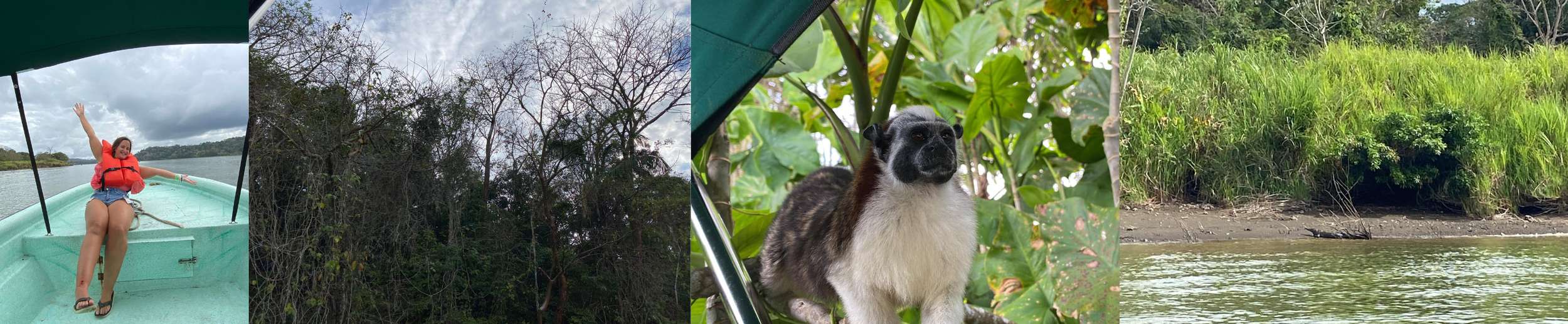
One very happy boat passenger, one sloth apparently hiding in those trees, one monkey I could actually see, and one “crocodile” that may still have been a floating stick.
Sunset Above Panama City
That evening, I headed to Panaviera, a rooftop bar at the JW Marriott Panama, for sunset views over the city.
I arrived around 5:00 p.m. and was surprised to find the rooftop almost empty. Considering the view, I couldn’t understand why no one else was there. I ordered a drink and claimed the perfect spot.
Then I discovered why I was alone.
After months in Central America, I expected the sun to set at approximately 6:00 p.m. In Panama City, it wasn’t due to disappear until closer to 6:30, meaning I had arrived much earlier than necessary.
There are worse mistakes than giving yourself extra time at a rooftop bar with a cocktail and a view.
The rooftop also had an infinity pool, and I desperately wanted to go swimming. However, I wasn’t staying at the JW Marriott, and getting soaked at a fancy hotel bar seemed likely to draw too much attention. Instead, I remained responsibly dry.
As 6:00 p.m. approached, more people arrived, confirming that everyone else had checked the sunset time. Some hotel guests asked to share my table because I had claimed such a good spot. I agreed, although part of me couldn’t help thinking that they must have money if they were staying there.
Slowly, the sky changed colour behind the skyscrapers. I stayed after the sun disappeared, waiting for the buildings to light up against the darkening sky.
It felt surreal to be surrounded by skyscrapers again. I hadn’t experienced a skyline like this since leaving Hong Kong to begin my journey through Central America. For months, I had travelled through smaller cities, colonial towns, islands, beaches and jungle. Now I was sitting high above a modern city, watching its towers glow over the waterfront.
Once I had taken enough photos, I caught a taxi back to Hostel Mamallena. My first visit to Panama City was almost over, but my time there wasn’t. Nearly three weeks later, I would return to the same hostel with no phone, a boat to catch and a new continent waiting for me.

Showing up far too early for sunset worked in my favour: I had Panaviera’s rooftop infinity pool, a cocktail and the perfect view as Panama City changed from daylight to darkness.
Later, Back in Panama City
After travelling through Santa Catalina, Boquete, the Lost and Found Jungle Hostel and Bocas del Toro, I returned to Hostel Mamallena. Knowing where it was and what to expect made everything easier.
This time, however, I arrived without the phone containing most of my Panama photos and videos. The ocean had swallowed it in Santa Catalina, and I had spent almost two weeks travelling without one. Before leaving the country, I needed a replacement for maps, reservations, communication and researching what came next.
Buying a phone took up part of my only full day back, but I still had one major attraction left to visit: the Miraflores Locks.
I took a local bus there and stayed far longer than most people probably would. After visiting the Panama Canal Museum and travelling across Gatún Lake, it felt fitting to finally watch vessels enter the lock chambers and slowly move through the system.
Growing up beside a river, I have always enjoyed watching large ships pass. Sitting at Miraflores felt strangely familiar, even though I was watching one of the world’s most famous engineering achievements in action. I didn’t have another attraction to rush toward, so I stayed, slowed down and enjoyed it.
Back at the hostel, I prepared for several days on a boat. Considering Panama’s ocean had already claimed my phone, I wasn’t taking any chances. I lined my large backpack with garbage bags, carefully repacked everything I wanted to keep dry and researched Colombia. Then I went to bed early ahead of the morning departure for the San Blas Islands.
But that adventure belongs later in the story. To keep things in order, we need to return to the morning after my first stay in Panama City.
My route was planned, my San Blas trip was booked and my next stop would take me far away from the skyscrapers.
The following morning, I packed my backpack and began making my way to Santa Catalina, a small surf town on the Pacific coast. I expected beaches, boats and a few relaxing days beside the ocean.
I did not expect the ocean to swallow my phone.

From waterfront walks and boat rides to the Miraflores Locks and rooftop views, Panama City gave me far more than I expected. Next stop: Santa Catalina—where the ocean had a surprise waiting for me.
