I Lost My Phone in Santa Catalina, Panama—and Still Loved It
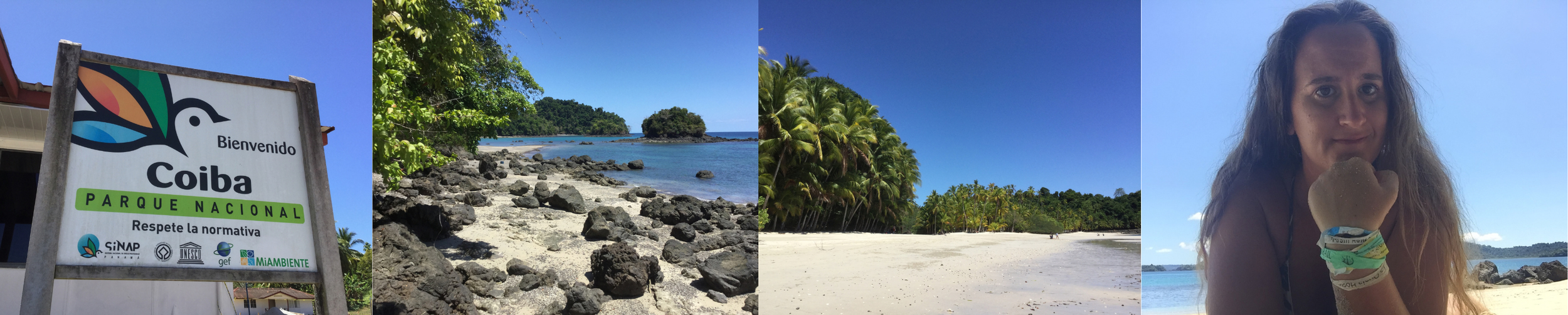
A glimpse of Santa Catalina and Coiba National Park: rocky shores, palm-lined beaches and impossibly blue skies.
The Long Road to Santa Catalina
The morning after my first stay in Panama City, I packed my backpack and began making my way toward Santa Catalina, a small town on Panama’s Pacific coast.
I had arrived in Panama without a plan, but my route was slowly taking shape. Santa Catalina would be my first stop because it offered exactly what I had been looking for: beaches, fewer tourists and access to Coiba National Park, one of Panama’s best places for snorkelling and scuba diving.
I planned to stay for three nights. My main goal was to take a boat out to Coiba, although I hadn’t decided whether I could afford to scuba dive or if I would need to settle for snorkelling.
First, I had to get there.
The journey from Panama City wasn’t exactly straightforward. I had to take a bus to another station before transferring to a shuttle that continued toward Santa Catalina. As I travelled farther from the city, the surroundings became quieter and less developed.
That was exactly why I had chosen to go.
By early afternoon, the shuttle dropped me off at Deseo Bamboo Ecolodge. I had specifically chosen it because of its eco-friendly design, thatched roofs and rustic atmosphere. The rooms also had individual beds instead of bunk beds, which felt like a small luxury after spending so much time in hostels.
The owner welcomed me, explained how everything worked and showed me to my room. Once my backpack was safely beside my bed, she pointed out the trail that created a shortcut to the beach. I could follow the main road, but walking through the nearby field would save time and make the journey a little more interesting.
If my memory is correct, there may even have been cows along the way.
Before heading to the beach, I arranged a snorkelling tour to Coiba for the following morning. Scuba diving was what I really wanted to do, but it cost more than I could afford. Snorkelling would still allow me to experience the marine life surrounding the islands, and I wasn’t going to travel all the way to Santa Catalina without seeing it.
With the next day’s tour confirmed, I changed into my bathing suit and followed the shortcut toward Playa Estero.
The trail took me through the field and eventually brought me to the beach area. Before reaching the sand, I passed a restaurant and a small river that changed depending on the tide. There was also a large hostel much closer to the beach, which briefly made me question whether I had chosen the most convenient place to stay.
Still, I genuinely liked the quieter, rustic atmosphere of Deseo Bamboo, even if reaching it required a little extra walking.
I crossed the river and found a spot on the beach. I had enough time to walk along the sand, enjoy the sunset and record another short clip for a birthday video I was secretly making for my mom.
It should have been a peaceful first evening in Santa Catalina.
Instead, one wave was about to erase nearly every photo and video I had taken since Costa Rica.
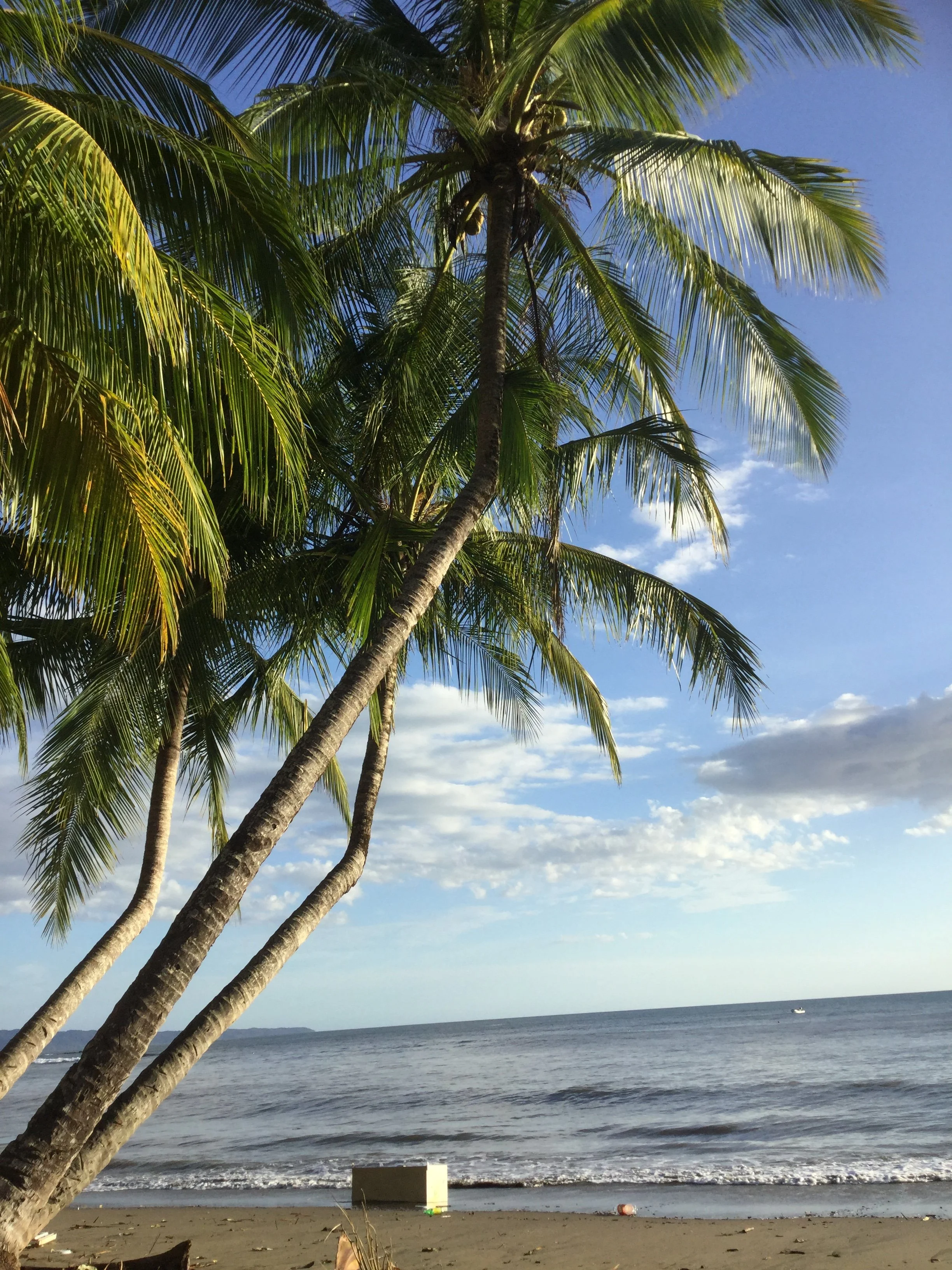
This isn’t Playa Estero from my first afternoon, but Playa Santa Catalina shows exactly why I came: palm trees, ocean views and barely anyone around.
The Wave That Took My Phone
For the previous few days, I had been recording short clips of myself saying “Happy Birthday” to my mom from different places along my journey. Her birthday was at the end of March, and my plan was to combine them into a 30-second video showing all the places I had visited.
At Playa Estero, I walked toward the rocky end of the beach to record another clip. Afterward, I placed my phone on one of the rocks so I could take a few photos of the sunset.
Then a wave came in and took it.
One moment, my phone was sitting on the rock. The next, it had disappeared into the ocean.
I immediately began searching the water and the spaces between the rocks, hoping the wave might have dropped it somewhere nearby. I kept looking long after it became obvious that I probably wasn’t going to find it. Even if I had recovered it, spending that much time submerged in salt water likely would have destroyed it—but I still wasn’t ready to give up.
That phone contained most of my photos from Costa Rica and everything I had taken so far in Panama. It held my pictures from Casco Viejo, the Panama Canal Museum, Monkey Island and the rooftop sunset in Panama City, along with countless videos I hadn’t saved anywhere else.
The worst part was that I had planned to back everything up that night.
My goal had been to return to the hostel, transfer the photos off my phone and make sure I had copies in case something happened. Apparently, I had been one evening too late.
Eventually, I had to accept that the ocean had won. By then, I was hungry, so I stopped at a restaurant near the beach for something to eat before beginning the walk back to Deseo Bamboo.
Instead of taking the shortcut through the field, I followed the main road. It was longer, but after dark—and without a phone—I figured it would be the safer option. Unfortunately, being in the middle of nowhere also meant there were very few lights along the way. I no longer had a phone to use as a flashlight, so even the road felt much darker than expected.
Fortunately, I met a couple who were walking toward another hostel and using the flashlight on their phone. I joined them and told them how my first afternoon in Santa Catalina had ended with the ocean stealing almost every travel photo I had.
They walked me all the way back to my hostel, making sure I arrived safely instead of leaving me alone in the dark.
Once I returned, I told the owner what had happened. I still had my laptop and an iPod Touch—essentially an iPhone without cellular service—so I could still communicate whenever I found Wi-Fi.
I used email, Skype and possibly a message to another family member to let my mom know I had lost my phone and might be harder to reach. I didn’t tell her why I had been using it near the water. That would remain a secret until I eventually sent her the birthday video.
That night, I also researched what I would need to make a travel insurance claim. I asked the owner if she would write a letter confirming what had happened, and thankfully, she was happy to provide one in English. I would still need an official police report, but the closest practical opportunity to get one wouldn’t come until I reached Bocas del Toro.
It had been a terrible first day in Santa Catalina, and I went to bed without my phone or most of the photos from my recent travels.
However, I didn’t have much time to feel sorry for myself. The following morning, I had an early boat to catch—and what waited around Coiba would become one of the best wildlife experiences of my entire trip.
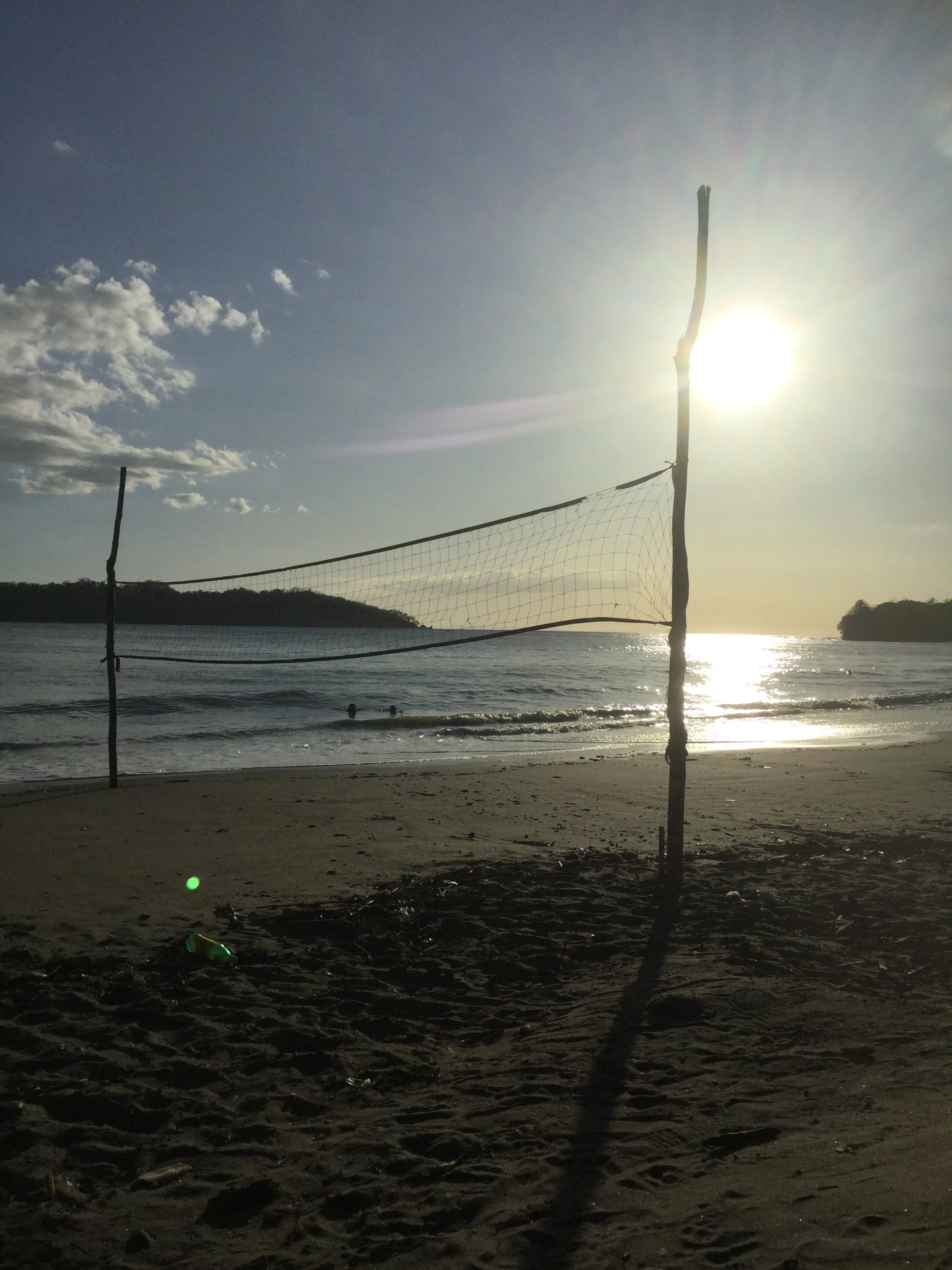
Not the sunset that stole my phone, but close enough to show why I was trying so hard to photograph it.
Snorkelling Around Coiba National Park
The following morning, I was picked up from Deseo Bamboo for my tour to Coiba National Park. Losing my phone the previous evening still hurt, but I wasn’t going to let it ruin one of the main reasons I had travelled to Santa Catalina.
Coiba National Park includes Coiba Island and dozens of smaller islands off Panama’s Pacific coast. Once home to an isolated prison colony, its limited development helped protect the surrounding forests, reefs and marine life.
After boarding the boat, we left Santa Catalina and headed toward the islands. My iPod Touch had a camera, but I was still too upset about losing my phone to feel like documenting everything. I took only a couple of photos that day.
Early in the tour, we stopped at the park station to pay the required entrance fee before continuing farther into the protected area.
If my memory is correct, we visited two snorkelling locations that morning.
The snorkelling was absolutely incredible.
There were sea turtles everywhere, along with schools of colourful fish moving around the reef. I also saw blacktip reef sharks swimming through the water. They weren’t interested in us, but seeing sharks while snorkelling still added an extra rush of excitement every time one appeared.
After the disaster of the previous evening, being surrounded by so much marine life was exactly what I needed. For a few hours, I wasn’t thinking about my lost phone, the missing photos or the insurance paperwork waiting for me. I was simply floating above the reef, watching turtles and sharks move through the clear water.
After our morning snorkelling stops, we visited one of the islands for lunch. While we were there, our guide pointed out a crocodile living nearby—so apparently my possible crocodile-shaped stick in Panama City wasn’t going to be my only encounter with one.
Once we had eaten, we had time to walk around and enjoy the island. Of course, knowing that a crocodile was somewhere nearby made exploring slightly more interesting. I was happy to look around, but I had no intention of becoming part of the local food chain. I kept my distance from the water and tried not to get eaten.
When our break was over, we returned to the boat for one final snorkelling stop. If the marine life was that impressive from the surface, I could only imagine what waited deeper underwater. Diving around Coiba remains an experience I would love to return for one day.
We arrived back in Santa Catalina sometime in the late afternoon—possibly around 4:00 p.m.—and I was dropped off at my hostel. I had taken only a couple of photos, but the sea turtles, reef sharks and island crocodile had made the day impossible to forget.

I didn’t take any photos on the boat, but I managed this one during our island lunch stop—between snorkelling and keeping an eye out for the crocodile.
Beaches, Beers and a Fellow Traveller
When I returned to Deseo Bamboo, there was only one other person in my room. His name was Zach, an American traveller who had just arrived in Santa Catalina. We started chatting and quickly discovered that we had a similar approach to travel. He also enjoyed exploring the world, finding less touristy places and seeing where the journey took him.
Since he didn’t have plans for the evening, I suggested that we head to the beach for a couple of drinks.
We made our way to the beach, had a few drinks and watched the sunset. Afterward, we stopped at a local bar for dinner and another drink. Zach couldn’t stay out too late or drink very much because he was going scuba diving the following morning.
I was only slightly jealous.
After seeing Coiba from the surface, I was curious to learn what Zach would see underwater.
We agreed that if we ran into each other again, we could hang out—but neither of us knew what the other person’s schedule would look like.
The following day, I walked to Playa Santa Catalina. Unlike Playa Estero, where I had spent most of my time, this side was much quieter. There were no crowds of tourists, and for much of the day, I had the area almost entirely to myself.
Every once in a while, local fishers would return to shore, but otherwise, the beach remained peaceful. After the boat tour, the lost phone and the unexpected social evening, it felt good to have nowhere I needed to be.
I walked along the beach, watched the water and enjoyed the quiet. Santa Catalina was small enough that I didn’t feel lost without my phone, and being less connected made the day even more peaceful.
Eventually, I stopped at a local restaurant for something to eat. There weren’t many other tourists around, which was part of what I had wanted when I chose Santa Catalina in the first place.
Later, I found Zach again, and we spent more time having drinks and trading travel stories. He showed me videos from his dive, confirming what I already suspected: diving around Coiba looked incredible.
I also told him about the Lost and Found Jungle Hostel, the unusual place I planned to visit after Boquete. Since he also liked travelling away from the more obvious tourist route, I thought it would be exactly his kind of place. He said he would try to fit it into his schedule.
Before going our separate ways, we connected on Facebook so we could keep in touch. One of my favourite things about travelling alone is how easily a conversation with a stranger can turn into an evening at the beach—and sometimes into a friendship that continues long after both people leave.
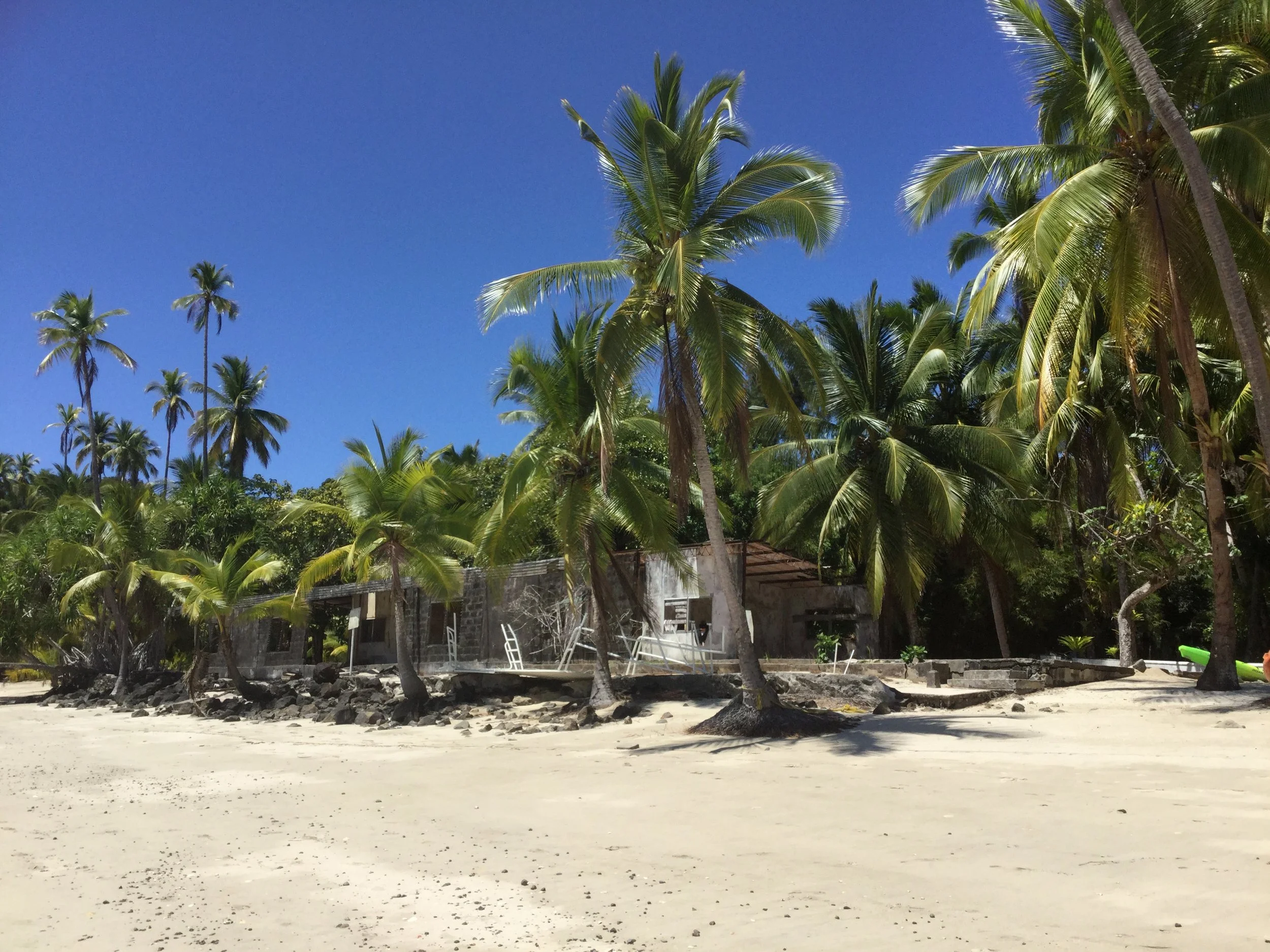
I didn’t take any photos of our beach drinks, so this quiet palm-lined beach will have to do. Cheers to the moments that never made it onto camera.
Leaving Santa Catalina Without a Phone
The following morning, it was time to pack my backpack and leave Santa Catalina after three nights.
My next destination was Boquete, but getting there would require several buses and transfers.
Normally, I would use my phone to confirm the route, follow my location and search for another option if something went wrong. This time, I had to research everything at the hostel, remember as much as possible and rely on asking people for help along the way.
My laptop and iPod Touch still connected to Wi-Fi, and the iPod had a camera. However, I had taken only a couple of photos because I was still too upset about everything I had lost to feel like taking more.
Losing the photos didn’t erase the experience itself.
Santa Catalina gave me one of the worst travel moments of my trip, followed almost immediately by one of the best. Within 24 hours, I had lost my phone and then snorkelled among sea turtles, tropical fish and blacktip reef sharks. I also explored quiet beaches and watched sunsets with a new friend.
The ocean may have taken my phone, but it didn’t get to take Santa Catalina away from me.
With my backpack packed and as much of the route memorized as possible, I said goodbye to Deseo Bamboo and began making my way toward Boquete. Without a phone to guide me, I wasn’t sure how the day would unfold.
At least by then, I was getting used to travelling without a plan.
Next stop: Boquete, where cooler mountain air, coffee country and unexpected craft beer were waiting for me.
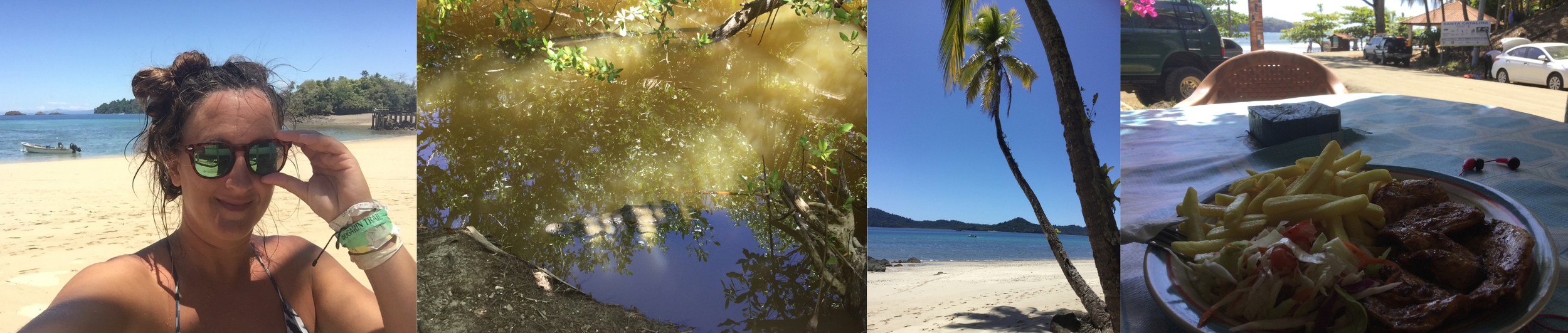
Santa Catalina beyond the surf: beach time, a crocodile sighting, palm-lined sand and lunch away from the tourist crowds.
