The Solo Explorer’s Guide to Panama
Intro
Panama is much more than the Panama Canal. Sitting between Central and South America, the country packs Caribbean islands, Pacific beaches, tropical rainforest, cool mountain towns, wildlife, modern cities and Indigenous culture into a relatively small area.
It's also a great country for travellers who want variety. You can explore the historic streets and modern skyline of Panama City, watch enormous ships pass through the Panama Canal, surf or visit Coiba from Santa Catalina, hike around the mountains of Boquete, disappear into the jungle for a few days, relax on the beaches of Bocas del Toro, or sail through the San Blas Islands.
I travelled through Panama as part of my journey through Central America, entering from Costa Rica and eventually leaving by sailboat for Colombia. I hadn't done much research before arriving, and Panama ended up surprising me with just how different each stop felt. One day I was sweating on a tropical beach; another I was reaching for a sweater in the mountains.
Panama is also relatively easy to explore independently. Buses, shuttles and boats connect most of the major traveller destinations, although reaching some of the more remote places can become an adventure of its own.
This guide covers the practical side of planning a trip to Panama — when to visit, where to go, how to get around, what to eat, where to stay, how much to budget and what to know as a solo traveller — along with a few things I learned while travelling across the country myself.
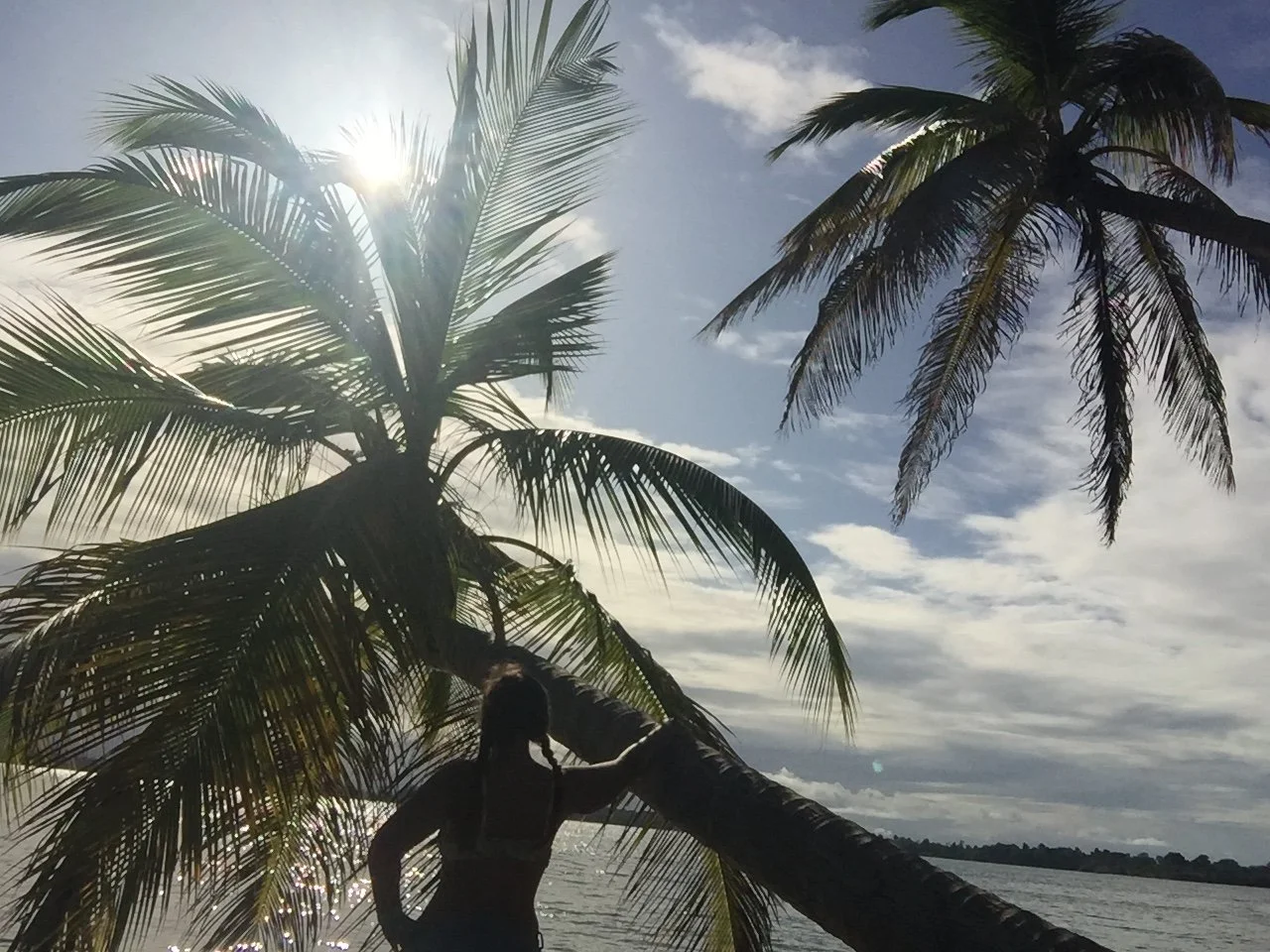
Island hopping through Panama — palm trees, Caribbean views and the kind of places that make you want to stay a little longer.
Why Panama Is Great for Solo Female Travellers
Panama is a great choice for solo female travellers because it combines easy-to-reach destinations with plenty of opportunities to get off the typical tourist trail. You can spend a few days exploring a major city, head into the mountains, relax on a beach, explore the jungle or hop between Caribbean islands — all within the same trip.
Easy to travel independently – Buses, tourist shuttles and boats connect most of the main destinations, so you don't need to rent a car or join an organised tour to travel around the country.
A well-established backpacker route – Panama City, Santa Catalina, Boquete and Bocas del Toro all attract independent travellers, making it relatively easy to meet other people along the way.
Lots of variety – Beaches, mountains, rainforest, wildlife, islands, hiking, nightlife, history and the Panama Canal mean you can build a trip around almost any travel style.
Good hostel network – Popular destinations have hostels, guesthouses and budget accommodation, including social options for solo travellers who want to meet people.
English is common in tourist areas – Knowing some Spanish definitely helps, particularly when using local buses or travelling outside tourist areas, but you can usually get by with basic Spanish in the main destinations.
Plenty of organised activities – Boat trips, wildlife tours, diving, snorkelling and hiking tours make it easy to explore places that are harder to reach independently while also meeting other travellers.
JD's Tip: I travelled across Panama on my own and found it fairly easy to figure things out as I went. Some journeys required several buses, boats or simply asking someone where I needed to go, but locals were generally willing to help and I regularly met other backpackers travelling along similar routes.
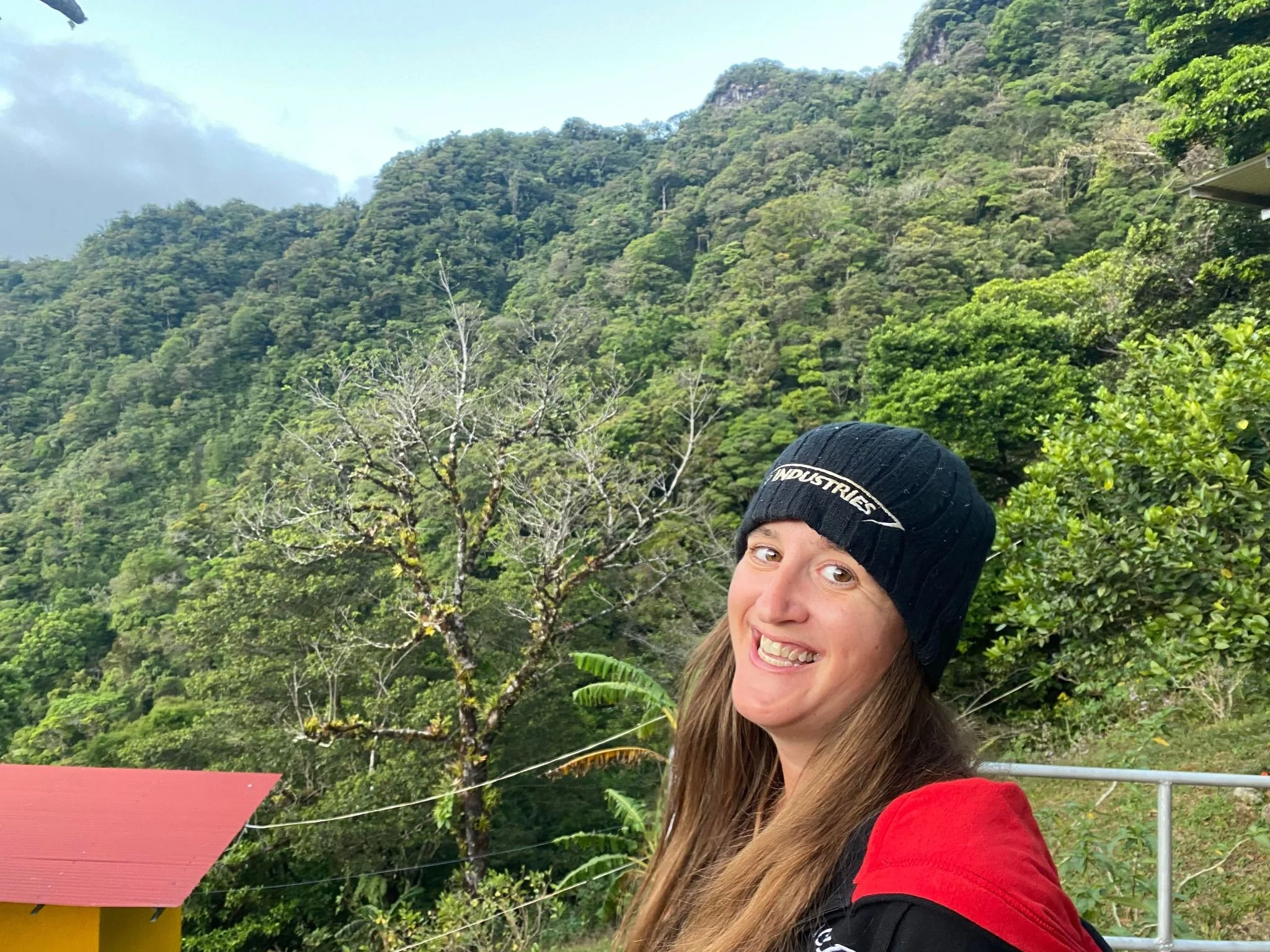
Panama isn't all beaches and skyscrapers — the highlands offer jungle, mountains and a completely different side of the country.
Entry Requirements
Entry requirements depend on your nationality, so always check the rules that apply to your passport before travelling.
Canadian travellers: Canadians can visit Panama for tourism without obtaining a tourist visa in advance.
Passport: Panama's immigration authority states that your passport or travel document should have at least 3 months of validity remaining when entering the country.
Proof of onward travel: You may be asked to show a return or onward ticket proving that you intend to leave Panama. This is particularly important for backpackers travelling overland who may not have a traditional round-trip flight.
Proof of funds: Immigration may require proof that you have enough money to support yourself during your stay. Panama currently lists a minimum of B/.500 (USD $500).
Different passports = different rules: Some nationalities require a visa before travelling to Panama, so don't assume the requirements for Canadians, Americans or Europeans apply to everyone.
JD's Tip: If you're travelling through Central America without a fixed return flight, have proof of your onward journey easily accessible. Even if nobody asks for it, it's much easier than trying to find booking information while standing at immigration.
⚠️ Entry requirements can change. Always check with Panama's immigration authority or your own government's travel advisory before travelling. Panama National Immigration Service
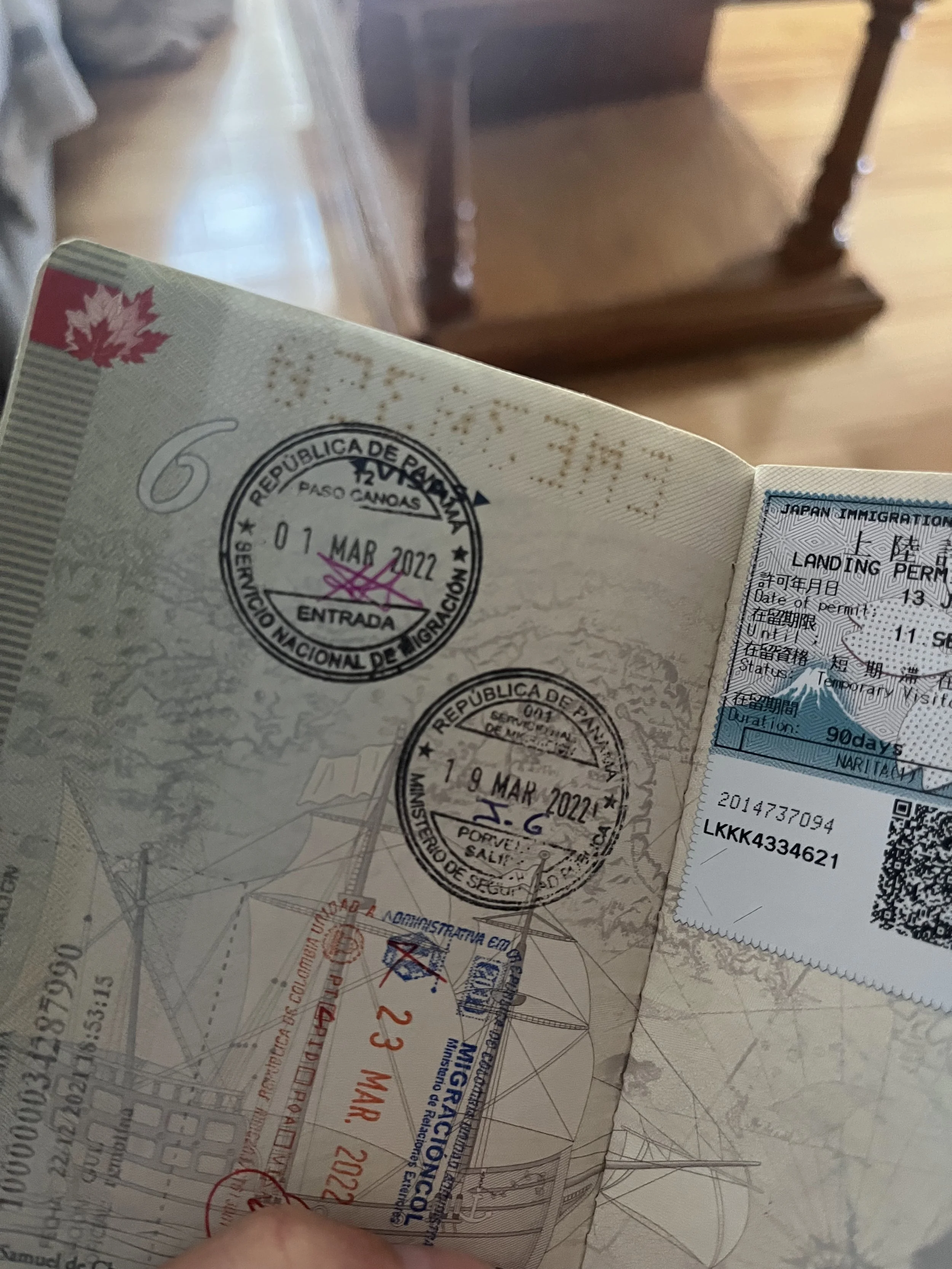
Crossing into Panama overland from Costa Rica — another stamp in the passport and another country to explore.
Best Time to Visit Panama
Panama has a tropical climate, so temperatures stay warm throughout most of the country year-round. Instead of four traditional seasons, Panama is generally divided into a dry season and rainy season — although the weather can vary considerably depending on where you are.
Dry Season (December–April): Generally the most popular time to visit. Expect more sunshine, less rain and good conditions for beaches, hiking and exploring. It's also peak season, so accommodation and tours can be busier and more expensive.
Rainy Season (May–November): Expect higher humidity and more frequent rain, particularly in the afternoons. That doesn't necessarily mean constant rain all day, and travelling during this period can mean fewer tourists and better accommodation prices.
Panama City & Pacific Coast: Hot and humid throughout the year. The dry season generally provides the most reliable weather for exploring.
Boquete & the Highlands: Much cooler than Panama's coastal areas because of the elevation. Even if you've packed for tropical Panama, bring long pants and a sweater or light jacket. I definitely noticed the temperature difference when I arrived in Boquete.
Bocas del Toro & Caribbean Coast: Bocas doesn't follow the same weather pattern as the Pacific side of Panama. Rain is possible throughout the year, with some of its drier weather typically occurring in March and September–October. Don't assume Panama's December–April dry season guarantees perfect Caribbean beach weather.
San Blas Islands: Can be visited throughout the year, but calmer seas and sunnier conditions generally make the dry season particularly appealing if you're planning an island-hopping or sailing trip.
JD's Tip: Don't pack for Panama assuming you'll be hot every second of the trip. Most places I visited were hot, but Boquete was genuinely chilly, especially once the sun went down. I was wearing yoga pants and a sweater — something I hadn't expected in Panama.
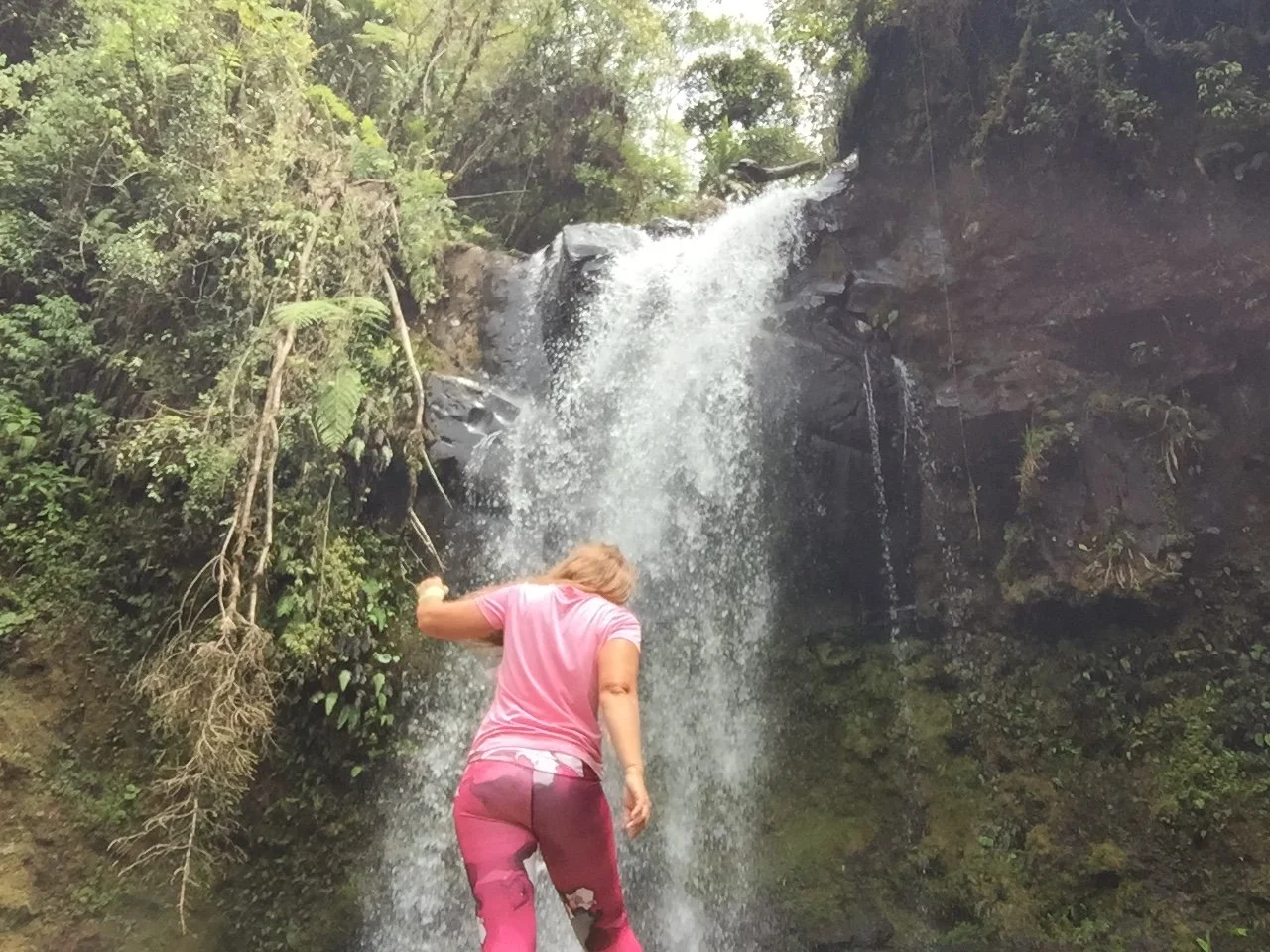
Panama’s rainy season helps keep places like Boquete incredibly green — and keeps the waterfalls flowing.
Money & Currency
Panama is an easy country when it comes to money, especially if you're already travelling with U.S. dollars. The country uses the Panamanian balboa (PAB) alongside the U.S. dollar (USD), with both currencies having the same value.
Local Currency: The official currency is the Panamanian balboa (PAB), which is fixed at 1 balboa = 1 U.S. dollar.
U.S. Dollars: Panama does not print its own paper banknotes, so U.S. dollar bills are used for everyday purchases. Panama does issue its own coins, and you'll often receive a mixture of Panamanian and U.S. coins as change.
Cash: Keep some small bills and coins with you. They're particularly useful for local buses, small restaurants, markets, taxis and more remote areas.
Cards: Credit and debit cards are widely accepted in Panama City and many tourist areas, hotels and larger businesses. Smaller businesses and remote destinations may still be cash-only.
ATMs: ATMs are easy to find in Panama City and larger towns, but don't assume you'll always have access to one once you head somewhere more remote. Withdraw cash before leaving major towns if your next destination is isolated.
Prices: Panama isn't necessarily as cheap as some other Central American countries. Local transportation and food can be inexpensive, while accommodation, organised tours, island trips and tourist activities can quickly increase your daily budget.
Tipping: Tipping isn't as heavily expected as it is in Canada or the U.S., although around 10% is appreciated for good restaurant service when a service charge hasn't already been included.
JD's Tip: Carry small change! When I first arrived in Panama City, I took a local bus from the terminal toward my hostel and the fare was only $0.25 USD. I was digging through my things trying to find a quarter when a woman simply paid my fare for me. I eventually found one and tried to give it to her, but she wouldn't take it. It was a pretty nice introduction to Panama.
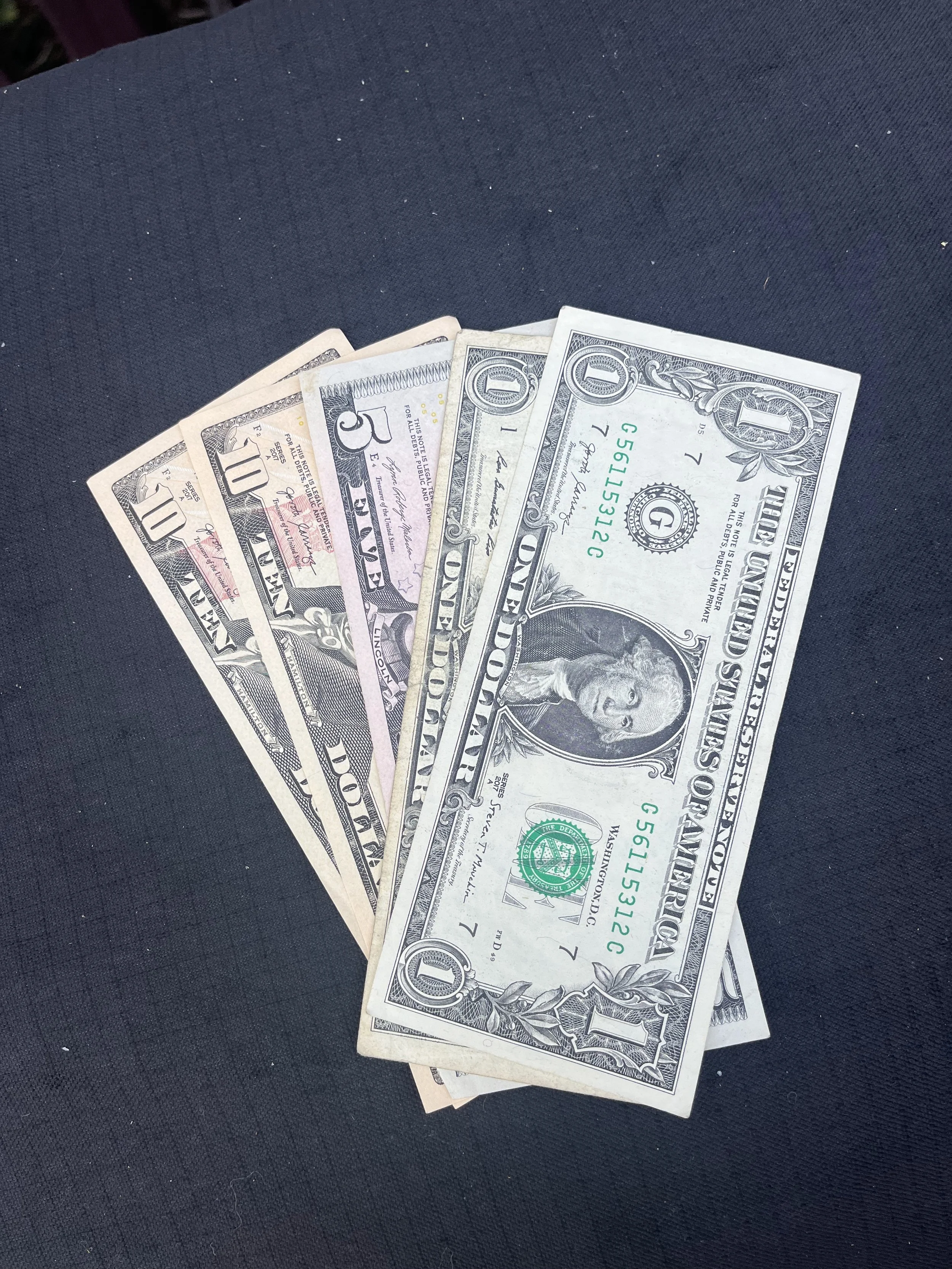
U.S. dollars make travelling in Panama fairly straightforward — just remember to keep some smaller bills and change handy.
Where to Stay in Panama
Panama has accommodation for almost every travel style, from backpacker hostels and jungle lodges to beachfront hotels and luxury high-rises. Where you stay will depend heavily on your route — accommodation in Panama City feels completely different from staying in the mountains of Boquete or on an island in Bocas del Toro.
Panama City: For a first visit, Casco Viejo (Casco Antiguo) is the best choice if you want to be surrounded by history, restaurants, rooftop bars and many of the city's major sights. It's beautiful and very walkable once you're there, although accommodation tends to be more expensive and Metro access isn't as convenient. El Cangrejo is a great alternative for budget-conscious and independent travellers — it's central, has plenty of restaurants and nightlife, and has much better access to the Metro. Avenida Balboa is another good option if you prefer modern hotels, skyline views and easy access to the Cinta Costera waterfront.
Santa Catalina: Accommodation is more limited than in Panama City or Bocas del Toro, with hostels, guesthouses and small hotels spread around the village. If you're visiting for surfing, snorkelling or diving around Coiba, staying a few nights gives you time to explore without rushing.
Boquete: You'll find hostels, guesthouses, boutique hotels and mountain lodges. The cooler climate makes it a completely different experience from Panama's beach destinations.
Lost & Found: For something completely different, there are accommodation options tucked into Panama's mountains and jungle. I stayed at the Lost & Found Hostel, which required hiking uphill with my backpack just to reach it. Definitely not your standard hostel check-in!
Bocas del Toro: There is a huge range of accommodation, particularly around Bocas Town, from social backpacker hostels to overwater bungalows and resorts on the surrounding islands. Decide whether you want to be close to restaurants and nightlife or somewhere quieter near the beaches before booking.
San Blas Islands: Accommodation is much more basic. Depending on how you visit, you might stay in a simple island cabin or, like I did, sleep aboard a sailboat while travelling through the islands.
JD's Tip: Look at the location, not just the price or rating. Panama has destinations where accommodation can be spread out, transportation isn't always available on demand, or reaching your hostel may literally involve climbing a mountain with your backpack. A cheap room isn't such a bargain if getting there becomes a problem.
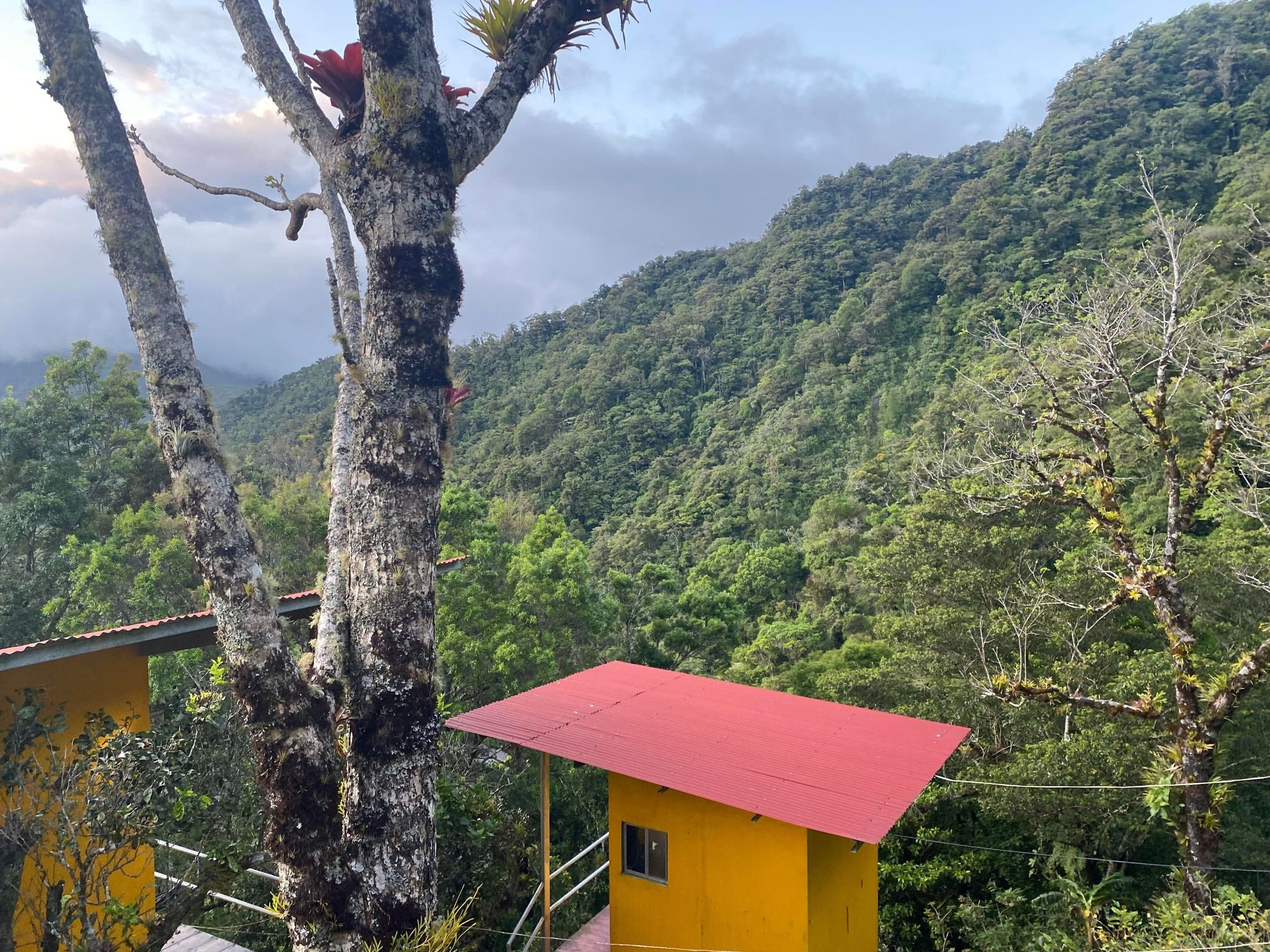
Worth the uphill trek — mountain views like these are the real reward at Lost & Found Hostel.
What to Eat in Panama
Panamanian food is influenced by the country's Caribbean, Indigenous, African, Spanish and Latin American roots, with plenty of rice, beans, plantains, seafood, chicken and tropical fruit. You don't need to eat at expensive restaurants either — local restaurants and small eateries are often some of the best places to try traditional food.
Sancocho: One of Panama's best-known dishes, this comforting chicken soup is traditionally made with ñame (yam), corn and herbs. Recipes vary depending on where you are.
Arroz con Pollo: Chicken and rice is a simple staple you'll find throughout Panama, often served with vegetables, salad or plantains.
Patacones: Green plantains that are fried, flattened and fried again until crispy. They're commonly served as a side dish or snack.
Ceviche: Particularly worth trying along the coast. Fresh fish or seafood is marinated in citrus juice and usually mixed with onion, peppers and herbs.
Fresh Seafood: With both a Caribbean and Pacific coastline, Panama is a great place for fish, shrimp and other seafood — especially in coastal destinations like Santa Catalina and Bocas del Toro.
Carimañolas: Fried yuca stuffed with seasoned meat, usually beef, and eaten as a snack or breakfast food.
Ropa Vieja: Slow-cooked shredded beef in a tomato-based sauce, usually served with rice and other sides.
Tropical Fruit: Pineapple, papaya, mango, watermelon and bananas are easy to find, along with fresh fruit juices and smoothies. When buying fresh fruit, follow the usual traveller rule: wash it, peel it or skip it. Fruit you can peel yourself, such as bananas or mangoes, is generally the easiest option. Be more cautious with pre-cut fruit if you don't know how it was washed or how long it has been sitting out.
Local Beer: Panama has several local beers, including Balboa, Panamá and Atlas, as well as a growing craft beer scene. I made sure to stop at a craft brewery while I was in Boquete and tried a flight after a day of hiking.
JD's Tip: Don't overlook the small local restaurants. One of my simple meals in Panama City was roasted chicken and fries at a local diner, and eating local is an easy way to keep food costs down when you're travelling for several weeks.
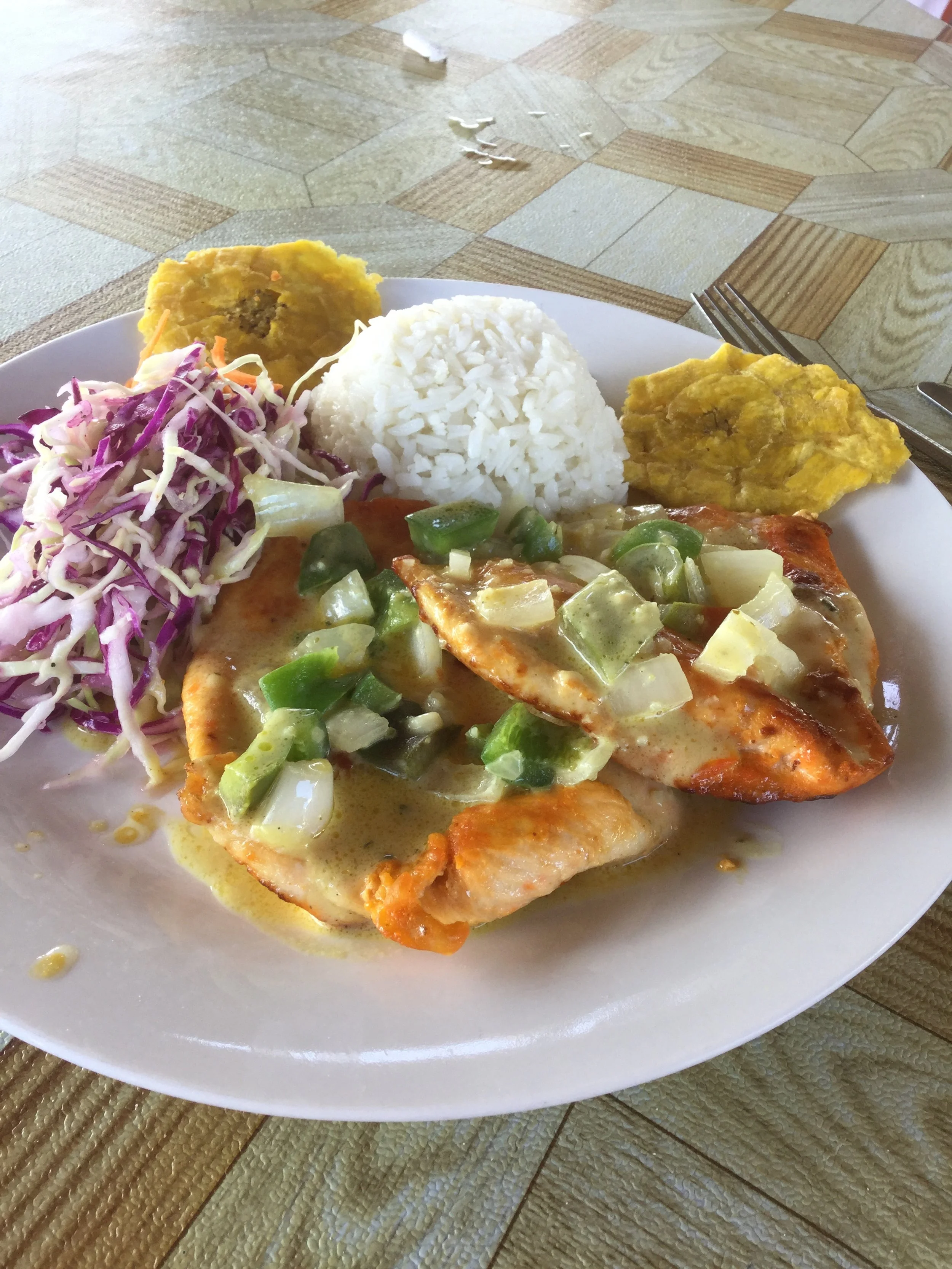
A typical Panamanian meal: chicken, rice, fresh slaw and crispy patacones — simple, filling and delicious.
Suggested Panama Itinerary
Panama may look small on a map, but don't try to squeeze the entire country into one week. Getting between some destinations can take most of a day, especially if you're travelling by local bus. For a trip that includes Panama City, the Pacific coast, the mountains and the Caribbean, I'd recommend around 10–14 days. Add extra time if you want to visit the San Blas Islands or continue by boat to Colombia.
10–14 Day Panama Itinerary
Days 1–3: Panama City
Give yourself at least a few days to explore the capital.
Wander through Casco Viejo
Visit the Panama Canal Museum
See the Miraflores Locks
Walk along the waterfront and take in the contrast between the historic city and modern skyline
Take a Gatún Lake/Monkey Island tour if wildlife is high on your list
Spend an evening at one of Panama City's rooftop bars
Days 4–6: Santa Catalina
Head west to Panama's Pacific coast for a completely different side of the country.
Relax in the small beach town
Surf or spend time at the beach
Take a day trip to Coiba National Park for snorkelling or diving
Give yourself some downtime — Santa Catalina is a good place to slow down
Days 7–8: Boquete
Trade the tropical coastline for Panama's cooler mountain climate.
Hike The Lost Waterfalls
Explore Boquete and the surrounding mountains
Visit a coffee farm if you're interested in Panama's famous coffee
Try some of the local craft beer
Pack a sweater — it can feel surprisingly cool after travelling along the coast
Days 9–11: Bocas del Toro
Head to the Caribbean for beaches, boats and island hopping.
Explore Bocas Town
Take an island-hopping or snorkelling tour
Look for dolphins and marine life
Visit the beaches around the archipelago
Spend a day at Starfish Beach
Leave some time for Bocas' nightlife if that's your thing
Days 12–14: Return to Panama City
Returning to Panama City gives you some breathing room before your flight home and time for anything you missed at the beginning of the trip. It's also a useful buffer because transportation between Bocas and Panama City takes time.
Have More Time?
If you have 2–3 weeks, this is where I'd add some of Panama's less conventional stops.
Lost & Found: Spend two nights in the mountains between Boquete and Bocas del Toro if you want hiking, jungle and something completely different from Panama's main tourist destinations. Just remember that reaching the hostel involves hiking uphill with your luggage.
San Blas Islands: Add several days for the San Blas Islands if your budget and schedule allow. You can visit from Panama City, stay on the islands or, like I did, sail through San Blas and continue all the way to Cartagena, Colombia. If you're continuing into South America, it's an unforgettable alternative to flying.
JD's Tip: Build travel days into your itinerary. Panama isn't a country where I'd plan something major every morning and expect transportation to cooperate perfectly. My trip from Santa Catalina to Boquete involved buses through Soná and David, while getting from Lost & Found toward Bocas involved standing beside the road waiting to flag down a shuttle. Getting there was sometimes part of the adventure.
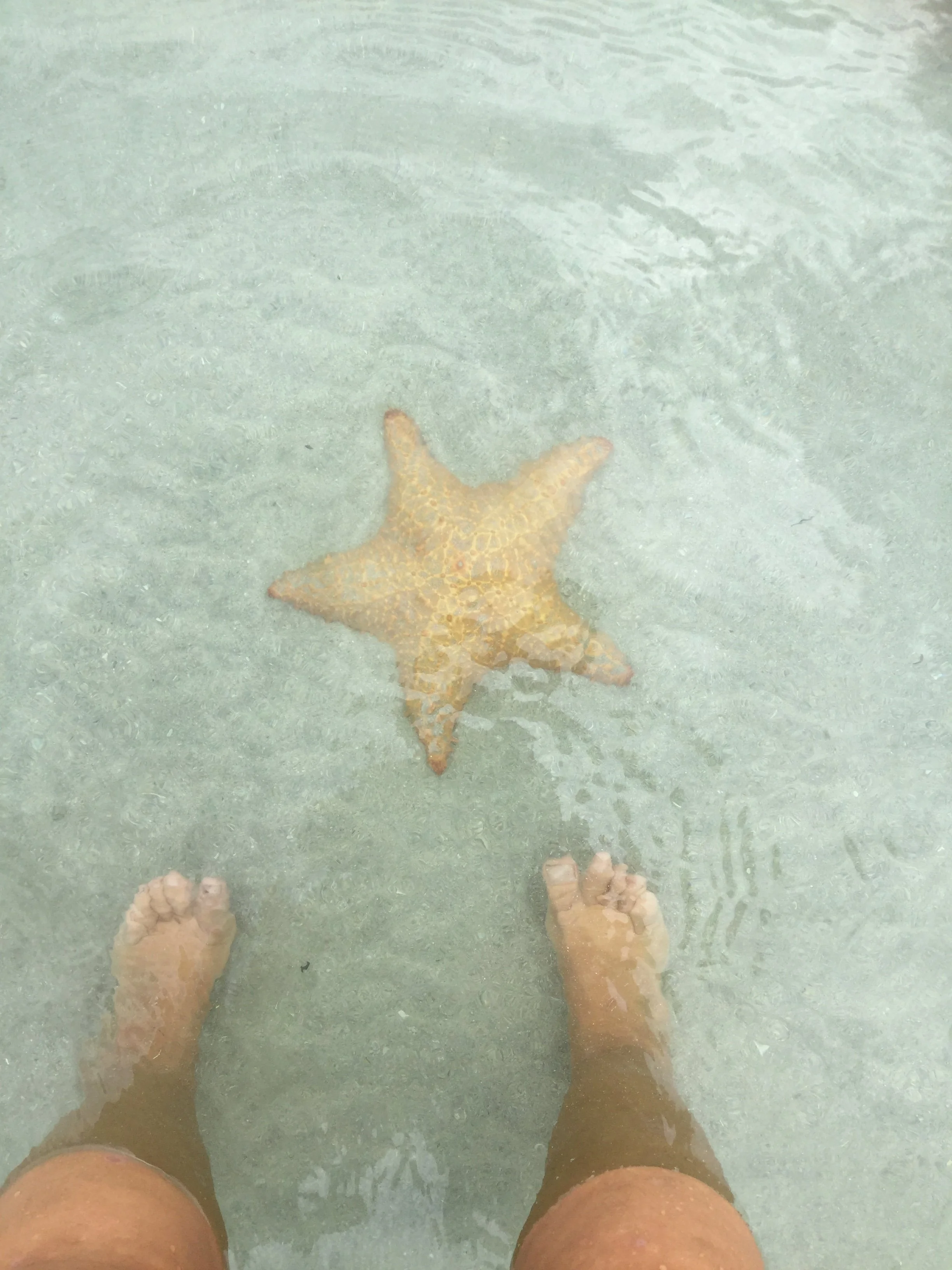
Starfish Beach in Bocas del Toro — one of the Caribbean stops worth adding to a Panama itinerary. And remember: look, but don’t touch!
Getting Around Panama
Getting around Panama is fairly straightforward, but travel times can be longer than they look on a map. Between local buses, long-distance buses, tourist shuttles, taxis and boats, you can travel through most of the country without renting a car.
Local Buses: The cheapest way to get around. Panama City has an extensive bus system, while smaller towns rely on local buses and minibuses. Fares can be very inexpensive, so keep small change handy.
Panama City Metro: The Metro is one of the easiest ways to travel around Panama City and is especially useful if you're staying near a station. You'll need a rechargeable transit card, which can also be used on city buses.
Long-Distance Buses: Buses connect Panama City with destinations throughout the country. Albrook Bus Terminal is the main transportation hub in Panama City and is where many long-distance journeys begin or end.
Tourist Shuttles: More expensive than local buses, but they can make complicated routes much easier — particularly between popular backpacker destinations such as Boquete and Bocas del Toro.
Taxis & Rideshares: Taxis are widely available in Panama City and larger towns, and rideshare apps such as Uber operate in Panama City. Agree on the fare before getting into a taxi if it isn't metered.
Boats & Water Taxis: Boats are simply part of getting around in places like Bocas del Toro and San Blas. Bocas Town is reached by boat from the mainland, and water taxis connect the different islands and beaches around the archipelago.
Domestic Flights: If you're short on time, flying can save you a long day of overland travel, particularly between Panama City and more distant destinations such as Bocas del Toro. It's considerably more expensive than taking the bus, but it may be worth it on a short trip.
Rental Cars: A car gives you more freedom, particularly if you want to explore less-visited areas, but you don't need one for the itinerary in this guide. I travelled through Panama entirely using buses, shuttles and boats.
What Overland Travel Is Actually Like
If you're backpacking, don't be intimidated by routes involving several buses. My journey from Santa Catalina → Soná → David → Boquete required three separate buses, and everything connected without a problem. Getting from Lost & Found toward Bocas was considerably less structured — I basically had to stand beside the road and wait until I could flag down a shuttle.
That's part of travelling independently through Panama: sometimes you have a proper terminal and timetable, and sometimes you ask someone where to stand and wait for something going in the right direction.
JD's Tip: Don't schedule an expensive tour or important flight too close to the end of a long overland journey. Give yourself some breathing room for missed connections, traffic, weather or simply waiting longer than expected for the next bus or boat.
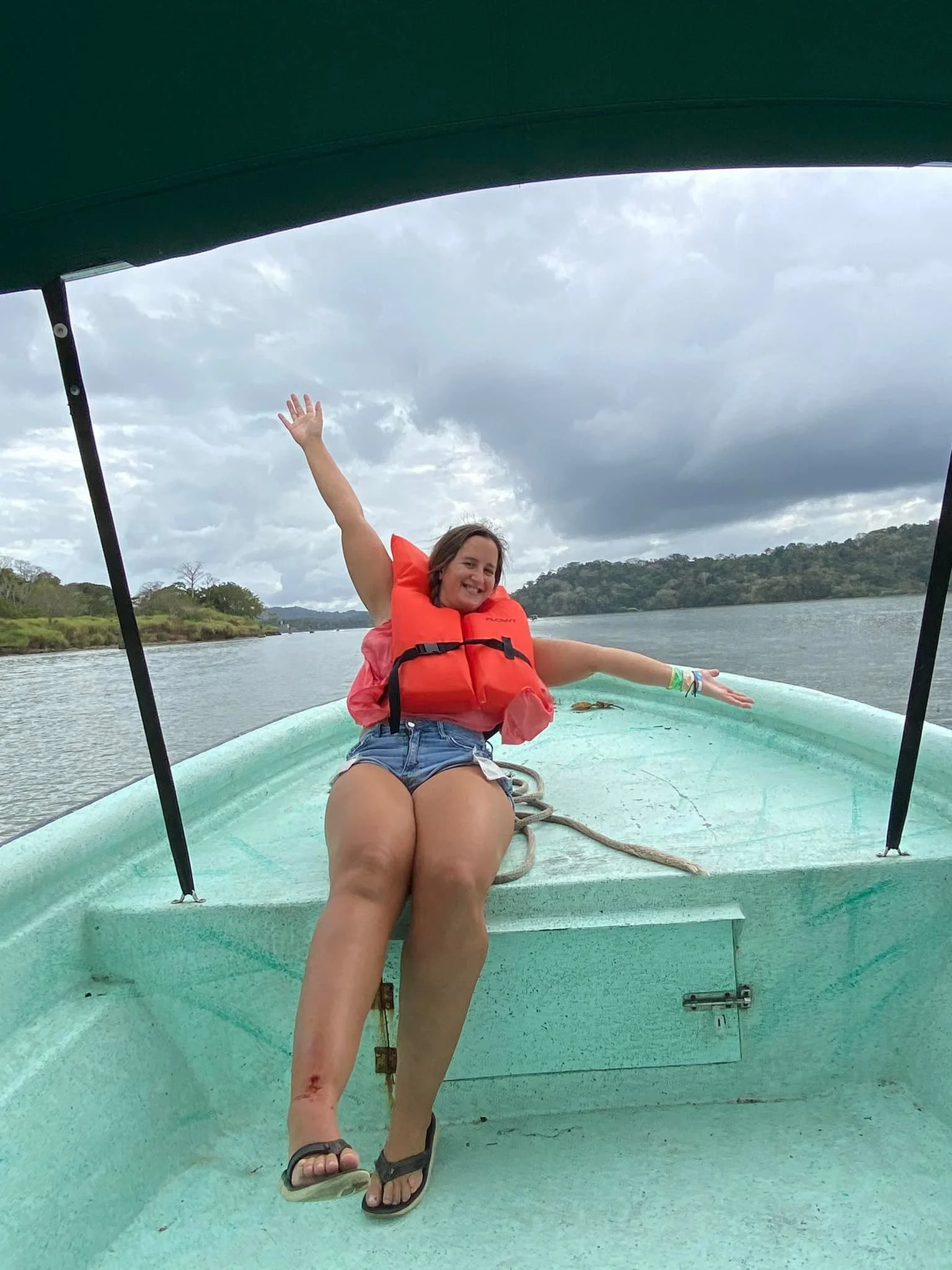
Buses will get you across Panama, but sometimes the next leg of the journey requires a boat.
Budget Breakdown Per Day (USD)
These are approximate per-person costs for 2026. They don't include international flights, travel insurance, shopping or major multi-day experiences such as sailing through the San Blas Islands.
Accommodation
Low: $15–25 — Hostel dorm or very basic budget accommodation.
Mid: $40–80 — Private hostel room, guesthouse or comfortable mid-range hotel.
High: $120+ — Boutique hotel, resort or higher-end accommodation, particularly in Panama City or the islands.
Food & Drink
Low: $15–25 — Local restaurants, bakeries, supermarkets and inexpensive meals.
Mid: $30–50 — A mixture of local food and sit-down restaurants, with the occasional drink.
High: $70+ — Restaurants, cocktails, rooftop bars and higher-end dining.
Local Transportation
Low: $3–10 — Local buses, Metro and walking whenever possible.
Mid: $15–30 — A mixture of public transportation, taxis, rideshares and occasional shuttles.
High: $40+ — Frequent taxis, private transfers or more expensive tourist transportation.
Attractions & Activities
Low: $5–15 — Beaches, hiking, exploring towns and mostly free or inexpensive attractions.
Mid: $25–60 — Museums, entrance fees and occasional organised tours.
High: $75–150+ — Wildlife tours, diving, snorkelling, island hopping and other organised excursions.
Estimated Total Per Day
Low: $40–75 USD
Mid: $110–220 USD
High: $300+ USD
You can also mix the levels. You might stay in a hostel dorm and eat at inexpensive local restaurants but spend $100+ on a tour you've travelled all the way to Panama to experience. For me, Panama was exactly that kind of destination — everyday travel could be inexpensive, while experiences such as Coiba, Monkey Island and San Blas were where I was willing to spend more.
JD's Tip: Keep your daily travel budget and activity budget separate. Panama has plenty of inexpensive days, but if Coiba, diving, wildlife tours or San Blas are on your must-do list, budget for those before your trip rather than trying to fit them into your normal daily allowance.
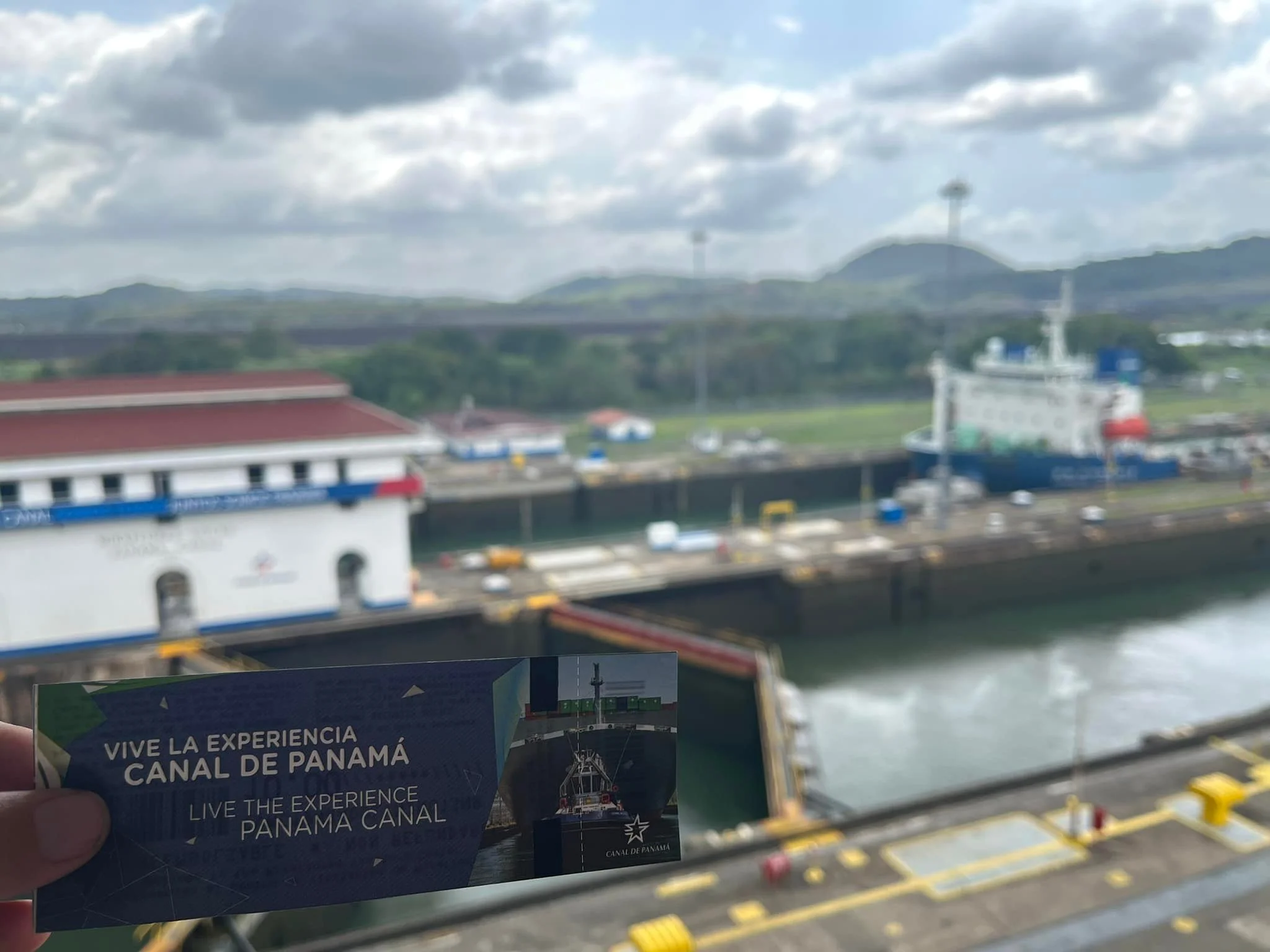
Travelling on a budget doesn’t mean skipping Panama’s big-ticket sights — just decide which experiences are worth the splurge.
Souvenirs to Buy in Panama
Panama has some genuinely distinctive souvenirs, particularly if you look beyond the standard magnets and T-shirts. Indigenous handicrafts, woven goods and locally produced food and drink are some of the best things to bring home.
Molas: Colourful, intricately layered textile art traditionally made by Guna women. You'll see molas sold as individual textile panels as well as incorporated into bags, clothing and other items.
Panama Hat: Despite the name, the famous Panama hat actually originated in Ecuador, not Panama. You'll still see plenty for sale, but if you want something authentically Panamanian, look for locally made traditional hats instead.
Sombrero Pintao: A traditional woven Panamanian hat and a much more authentically Panamanian alternative to the so-called Panama hat.
Handwoven Baskets: Indigenous communities produce beautiful woven baskets using natural fibres and traditional techniques. Quality pieces can take a considerable amount of time to make.
Guna Handicrafts: If you're visiting the San Blas Islands, you'll have opportunities to buy handmade items directly from Guna communities. Carry small U.S. dollar bills if you'd like to purchase something.
Panamanian Coffee: Panama produces some excellent coffee, particularly in the highlands around Boquete. Geisha coffee is especially famous — and can be extremely expensive — but there are plenty of more affordable locally grown varieties to bring home.
Local Rum: Panama produces several rums, including aged varieties. Just remember to check your home country's alcohol allowance before packing bottles in your luggage.
Panama Canal Souvenirs: If the Canal is one of the highlights of your trip, you'll find books, prints, models and other Canal-themed souvenirs around Panama City and the visitor centres.
JD's Tip: If you're travelling with a backpack, think about size and weight before buying souvenirs. Textiles, small handicrafts and coffee are much easier to carry across several countries than something large or fragile — especially if Panama isn't the end of your trip.
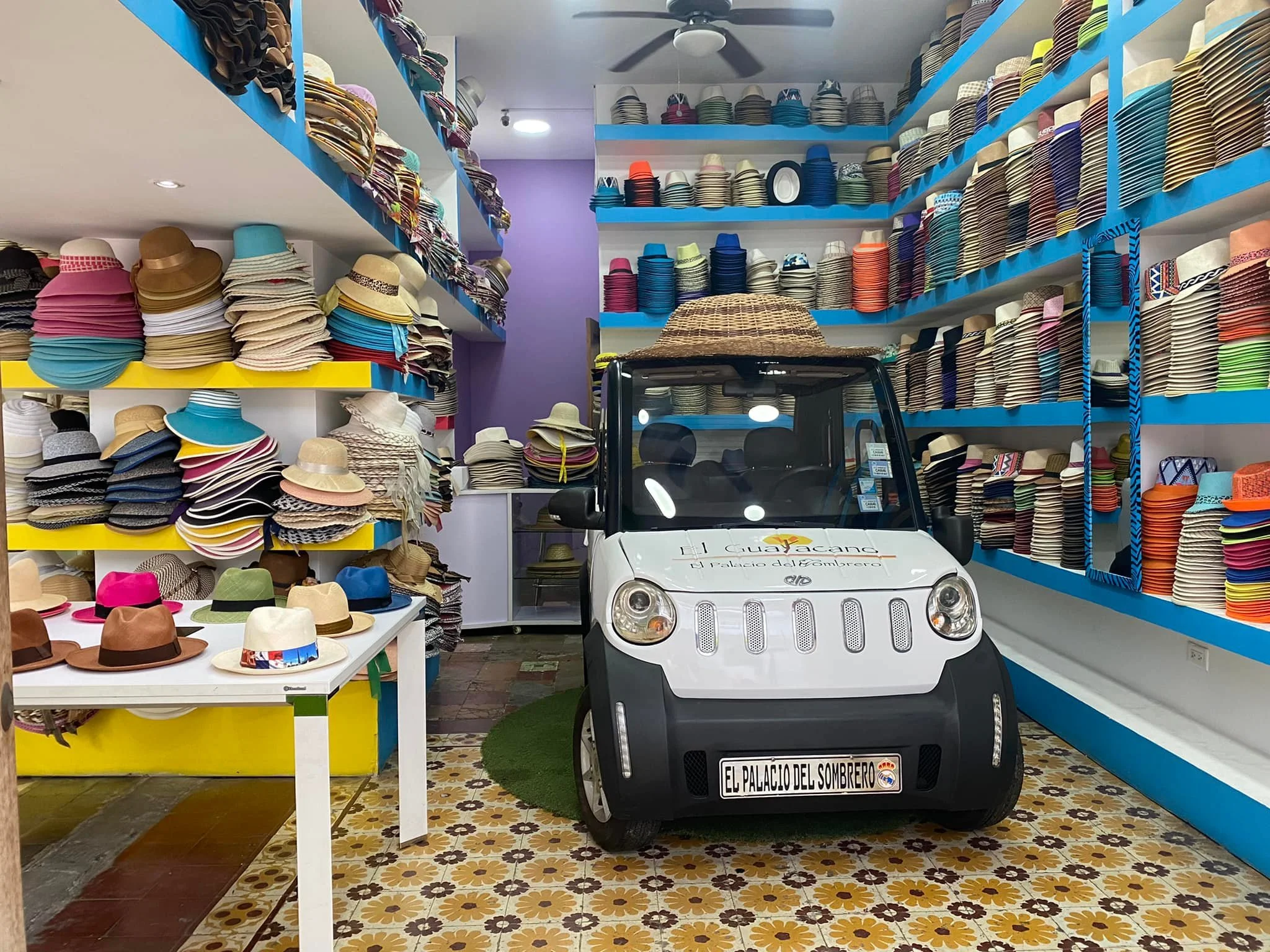
Hat shopping in Panama — although the famous “Panama hat” has an origin story that might surprise you.
💡 JD’s Personal Tips
These are the little things I learned while travelling through Panama that I wish I'd known before I arrived.
Don't underestimate travel times: Panama isn't huge, but getting between destinations can take most of the day. Local buses are cheap, but routes may require several connections.
Carry small U.S. bills and coins: They're useful for buses, small restaurants, water taxis and places that don't accept cards. You don't want to be trying to pay for a tiny bus fare with a $20 bill.
Bring a sweater for the highlands: Panama may be tropical, but Boquete can get surprisingly chilly, particularly at night.
Download or screenshot important information: Don't rely on having Wi-Fi or mobile data everywhere. Save tickets, accommodation addresses, maps and booking confirmations offline before you need them.
Leave room for expensive experiences: Local travel can be inexpensive, but some of Panama's best experiences — Coiba, wildlife tours, diving, island hopping and San Blas — can cost considerably more. Decide which ones matter most to you and budget around them.
Book San Blas ahead: If you're planning a multi-day sailing trip, particularly if you're using it to travel between Panama and Colombia, don't assume you'll be able to book at the last minute. My sailing date determined how much time I had to travel around the rest of Panama.
Don't skip Panama City: It's tempting to land and immediately head for the beaches, but the capital deserves a few days. Casco Viejo, the Canal, museums, rooftop views and Gatún Lake give you a completely different experience from the rest of the country.
Pack for boats: A dry bag or waterproof pouch is useful in Bocas del Toro, San Blas and anywhere else you're travelling by small boat. Keep electronics, passports and anything important protected from water.
Slow down occasionally: You don't need to cram an activity into every available hour. One of my favourite simple moments was sitting at the Miraflores Locks and just watching the ships pass through the Canal instead of rushing on to the next attraction.
JD's Tip: Leave some flexibility in your itinerary. I arrived in Panama with almost nothing planned and ended up discovering places and experiences I hadn't even known existed before I got there. You don't need to travel quite that unprepared, but Panama is a good country to leave a little room for plans to change.
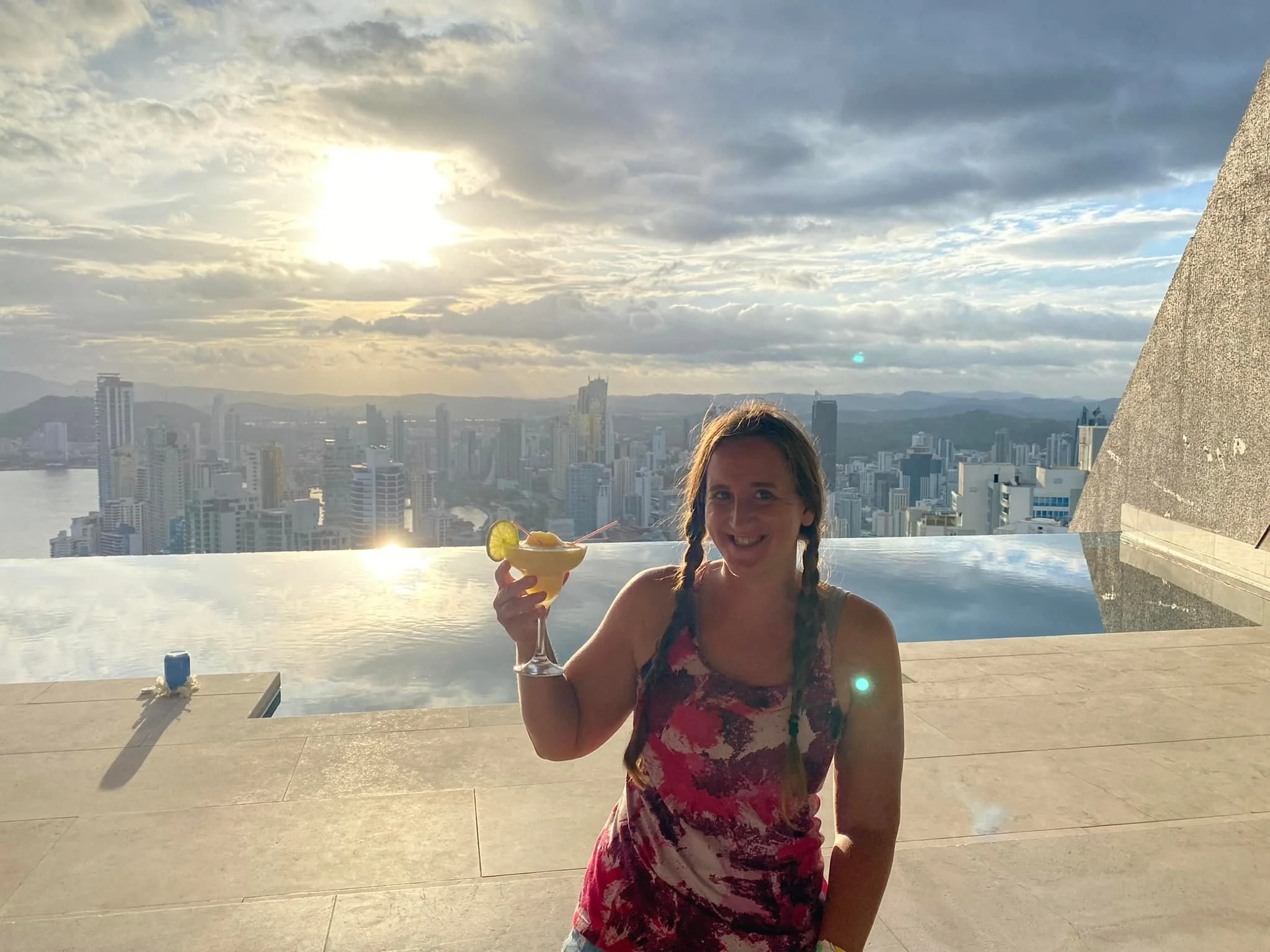
One of my favourite Panama City moments: a cocktail, an infinity pool and sunset over the skyline. Sometimes slowing down is the plan.
Solo Travel and Cultural Notes
Panama can be a comfortable country to explore independently, with a well-established backpacker route, inexpensive public transportation and plenty of activities that are easy to arrange as a solo traveller. However, conditions vary considerably between Panama City, small beach towns, islands and remote areas, so normal travel precautions still apply.
Solo Travel and Safety
Stay aware of your surroundings: Keep your phone, wallet, passport and cash secure, particularly in bus terminals, crowded areas, nightlife districts and busy parts of Panama City.
Be cautious at night: Avoid walking alone through unfamiliar or poorly lit areas after dark. In Panama City, use a taxi or rideshare when you're unsure about the neighbourhood or have a long journey back to your accommodation.
Plan remote journeys: Some of Panama's best destinations are not particularly easy to reach. Download maps, save your accommodation details offline and know roughly how you're getting there before setting out.
Protect your belongings on travel days: Long-distance buses, shared shuttles and boats often mean your main backpack will be stored away from you. Keep your passport, money, phone and other valuables in a smaller bag that stays with you.
Be careful around the water: Panama has both Pacific and Caribbean beaches, and currents can be strong. Pay attention to local warnings and ask locally about swimming conditions if you're unsure.
Trust your instincts: If a person, taxi, bar, street or situation makes you uncomfortable, leave. Travelling solo doesn't mean you need to accept a situation simply because you don't want to appear rude.
Cultural Etiquette
Greetings: A simple hola or buenos días/tardes before asking a question is polite and appreciated. Basic Spanish goes a long way, particularly outside the main tourist areas.
Dress: Beachwear is normal around beaches and islands, but cover up when heading into towns, restaurants, shops, churches and other everyday spaces.
Indigenous communities: If visiting Guna Yala/San Blas or another Indigenous community, remember that you're visiting someone's home and community. Follow local rules and ask permission before photographing people.
Wildlife: Observe wildlife without touching or feeding it. Some older wildlife-tour practices encouraged animals to approach boats for food, but travellers can make more responsible choices by choosing operators that allow wildlife to behave naturally.
Photography: Ask before photographing people, particularly in Indigenous communities. Don't assume that because somewhere is open to tourists, everyone there wants to be photographed.
Be patient: Transportation and service may not always run according to the schedule or pace you're used to. Give yourself extra time and don't plan connections too tightly.
JD's Tips: I travelled around Panama independently using local buses, shuttles and boats, including journeys that required several connections and trips to more remote areas. I generally felt comfortable travelling alone, and when I wasn't sure where to go, asking someone usually got me pointed in the right direction.
My biggest advice is to stay aware without being afraid to explore independently. Some of my favourite experiences happened because I went beyond the easiest tourist stops and figured things out as I went.
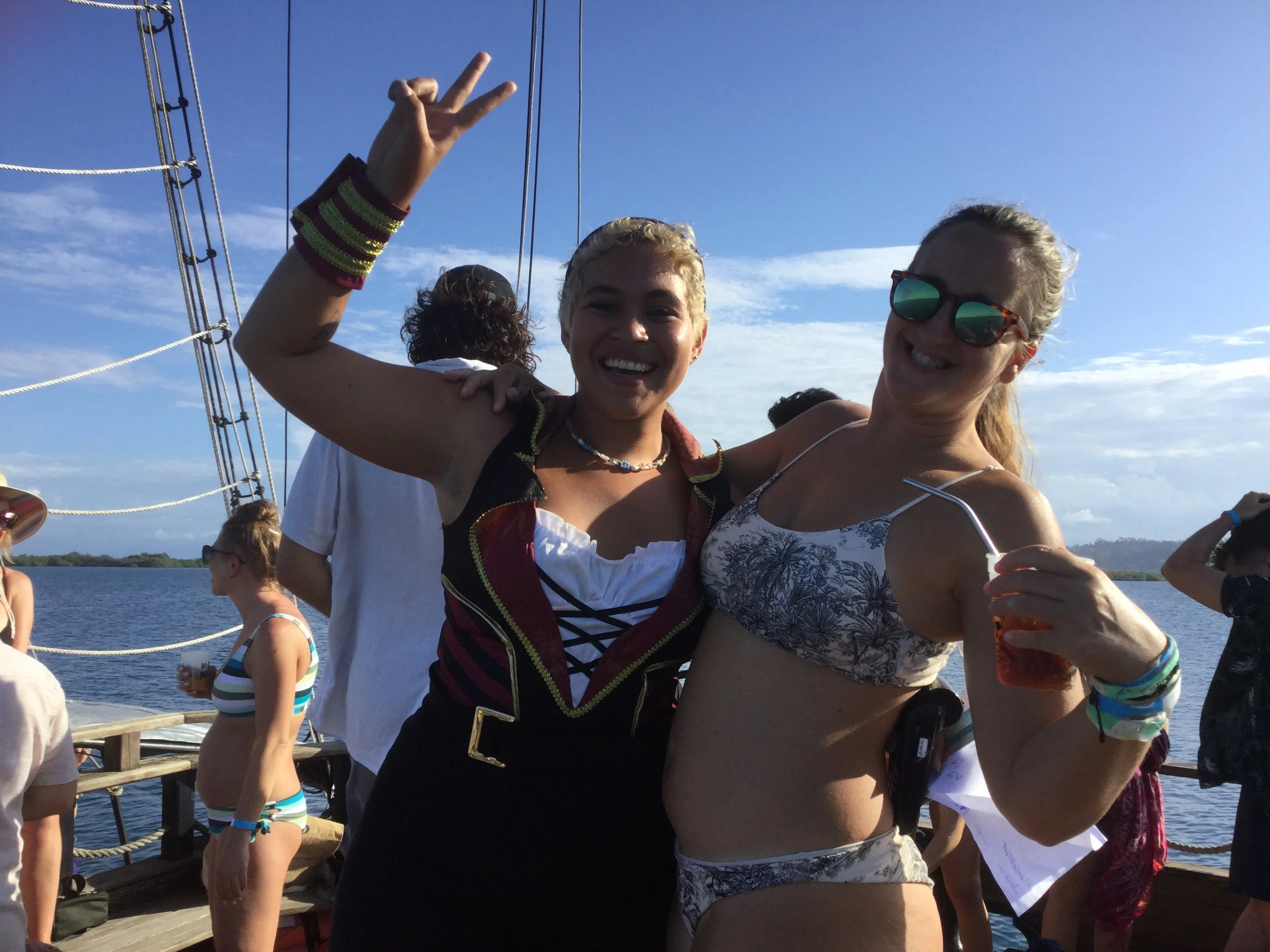
One of the best parts of solo travel is the people you meet along the way — including the crew who make the adventures happen.
Speak a Little Spanish
Sí — Yes — see
No — No — no
Hola — Hello — OH-lah
Buenos días — Good morning — BWEH-nos DEE-ahs
Buenas tardes — Good afternoon — BWEH-nas TAR-des
Buenas noches — Good evening / Good night — BWEH-nas NOH-ches
Gracias — Thank you — GRAH-syahs
Por favor — Please — por fah-VOR
Perdón — Excuse me / Sorry — pehr-DON
¿Cuánto cuesta? — How much does it cost? — KWAN-toh KWES-tah?
¿Dónde está…? — Where is…? — DON-deh es-TAH…?
¿Dónde está el baño? — Where is the bathroom? — DON-deh es-TAH el BAN-yoh?
¿Este bus va a…? — Does this bus go to…? — ES-teh boos vah ah…?
¿Habla inglés? — Do you speak English? — AH-blah een-GLEHS?
No entiendo — I don't understand — no en-TYEN-doh
💡 JD’s Tip: Even a few words in Spanish can go a long way, especially in smaller towns and when using local buses.
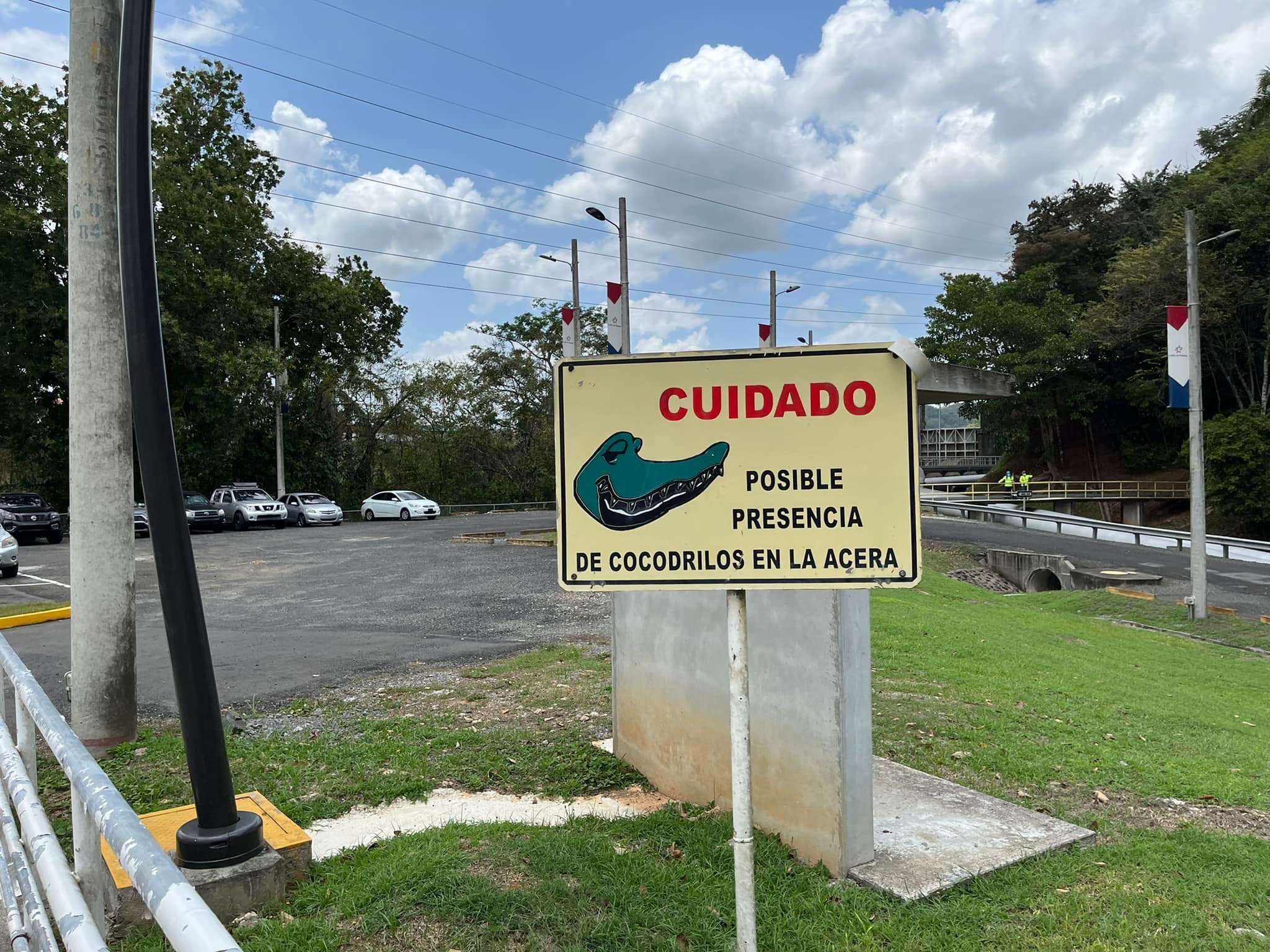
Warning: possible crocodiles ahead! Another good reason to know a little Spanish while travelling around Panama. 🐊
