Manuel Antonio: Beaches, Jungle Trails, and a Monkey Thief

One unforgettable day in Manuel Antonio National Park—crocodile warnings, quiet beaches, and plenty of monkeys.
From Jacó to Manuel Antonio
After two relaxing nights in Jacó, it was time to continue south along Costa Rica’s Pacific coast. My next destination was Manuel Antonio, a place known for its national park, beautiful beaches, and abundance of wildlife.
I travelled there by local bus from Jacó. By this point in my Costa Rica adventure, taking local buses had become a normal part of getting from one destination to the next. They weren’t always the fastest or most straightforward option, but they were affordable and eventually got me where I needed to go.
Manuel Antonio was different from what I had pictured. Instead of arriving in a compact beach town where everything was within walking distance, I found a destination stretched along one main winding road. The road runs from Quepos toward Manuel Antonio National Park, climbing through the hills before eventually descending toward the beach. Hotels, restaurants, shops, and businesses are scattered along the route rather than gathered around one central area.
For someone travelling without a car, the local bus running between Quepos and the national park is essential. Thankfully, it travels along the main road, making it relatively easy to get around—even if Manuel Antonio itself doesn’t feel particularly walkable.
I was staying for two nights at Teva Hotel & Jungle Reserve, a hostel surrounded by tropical greenery along the main road. It even had a swimming pool, which, of course, I didn’t use. Apparently, I enjoy choosing accommodation with pools just so I can look at them before heading somewhere else.
By the time I arrived and dropped off my backpack, it was already the middle of the afternoon. I didn’t have enough time to do anything major, so I decided to take a walk and see what was around me.
The answer was: not much.
There were a few businesses scattered along the road, but there wasn’t a town centre or an obvious place to wander. It felt as though everything I might want to visit was either farther down the road or hidden behind the surrounding jungle.
I had hoped to find somewhere to watch the sunset, but I never managed to get a particularly good view. Once darkness settled over the road, I returned to the hotel and called it a night.
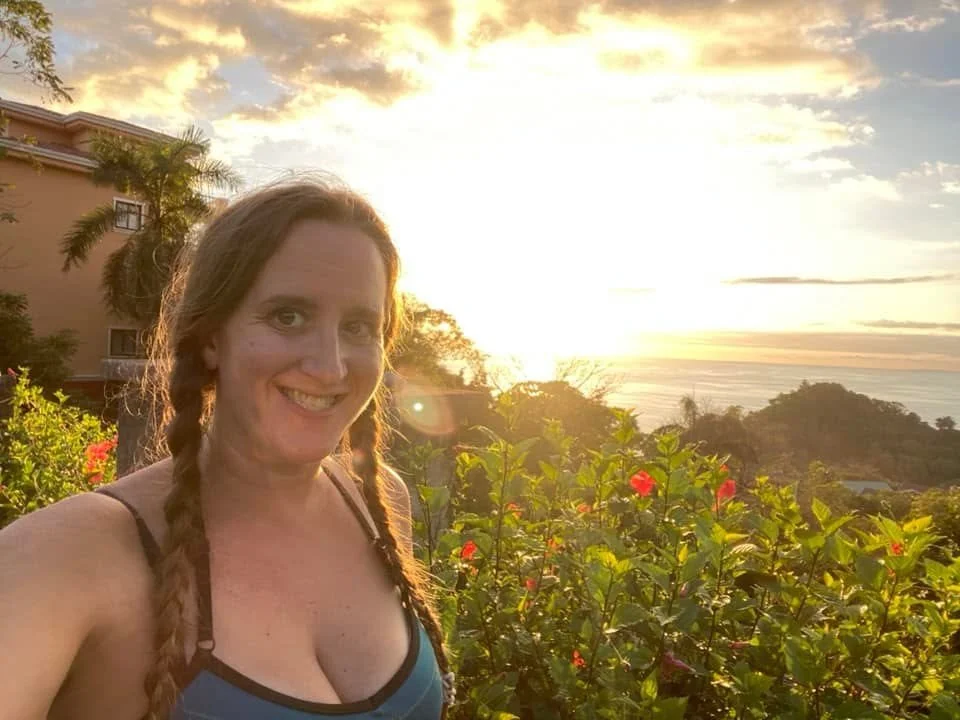
My first evening in Manuel Antonio, catching a glimpse of the Pacific sunset from the side of the road.
Espadilla Beach and the Apple Thief
The next morning, I took the local bus all the way down the main road toward Manuel Antonio National Park. My timed entry wasn’t until around 11:00 a.m., which gave me some time to explore the area before heading inside.
Just outside the national park is Espadilla Beach, a long stretch of sand that is open to the public. Since I had time to spare, I found a spot on the beach and relaxed while waiting for my entry time.
I wasn’t doing much beyond ticking away the minutes, but there are certainly worse places to wait. After spending the previous afternoon wandering along the main road without finding much of a sunset view, it was nice to finally reach the coastline and see the beach Manuel Antonio was known for.
Eventually, it was time to make my way toward the park entrance. I had packed an apple and some lunch, assuming I would be able to eat inside the park while spending the day exploring.
That plan started falling apart before I even reached the entrance.
As I walked along the beach eating my apple, a monkey suddenly appeared and grabbed it directly out of my hand.
I barely had time to process what had happened before the little thief escaped with the rest of my apple. Apparently, the monkeys around Manuel Antonio have learned that tourists are an excellent source of snacks—even when those tourists have no intention of sharing.
I wasn’t very happy about losing my apple, but I did manage to take a picture of the culprit afterward. If a monkey is going to steal food straight out of my hand, the least it can do is pose for photographic evidence.
When I reached the park entrance, I discovered that my lunch wasn’t coming inside with me either. Visitors aren’t allowed to bring food into Manuel Antonio National Park, and staff thoroughly check bags before allowing anyone to enter. My lunch had to be placed in a locker outside the park.
It was something I wished I had known beforehand. I had planned to spend several hours inside and expected to eat my lunch somewhere along the way. However, the rule makes sense. With so many monkeys and other wild animals living inside the park—and apparently already comfortable stealing food from people—allowing visitors to carry snacks would create even more opportunities for the animals to be fed, intentionally or otherwise.
Between the monkey stealing my apple and the park staff confiscating my lunch, I entered Manuel Antonio National Park with considerably less food than I had arrived with.
Thankfully, the disappointment didn’t last long. Once I passed through the entrance, I found well-maintained pathways leading into the forest, and I was finally ready to see what made Manuel Antonio one of Costa Rica’s most famous national parks.
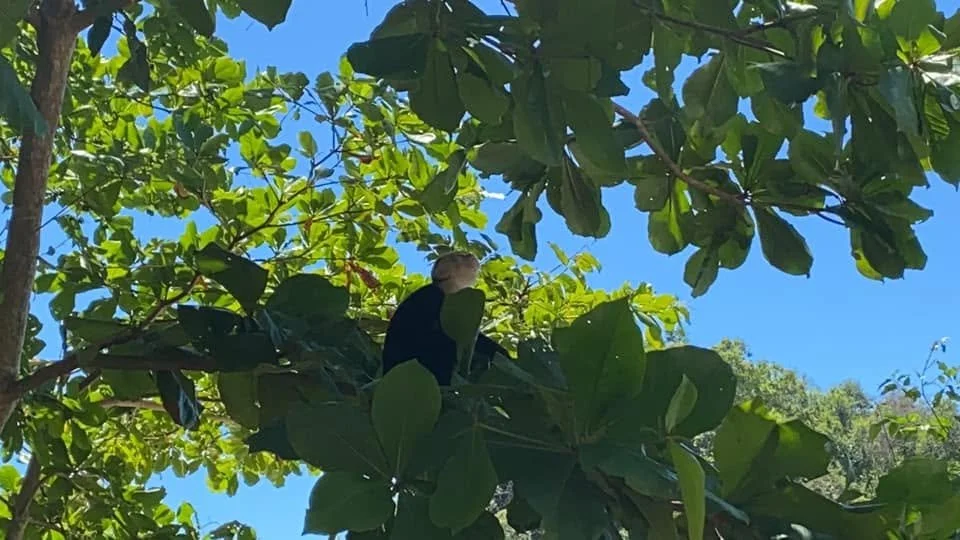
The little thief who stole my apple directly out of my hand—and then hid in the trees to enjoy it.
Walking into the Jungle
Once I passed through security, I began following the pathways leading deeper into Manuel Antonio National Park.
I’m not entirely sure what I had expected, but the trails were much more developed than I imagined. Instead of climbing over roots or pushing through dense jungle, I found wide, well-maintained footpaths, raised walkways, and clearly marked routes directing visitors toward the different beaches and viewpoints.
It almost felt too orderly for a rainforest.
That didn’t mean I was willing to wander away from the designated paths. There were signs warning visitors about crocodiles in the area, and I took those warnings very seriously. I had already lost an apple to a monkey that morning; I didn’t need to lose a limb to a crocodile as well.
I stayed exactly where I was supposed to be.
Even without venturing off the path, there was plenty to enjoy. The walk was surrounded by thick tropical vegetation, and I kept looking into the trees in case I spotted something moving among the leaves. Manuel Antonio is known for its wildlife, but I hadn’t booked a guided tour. I was exploring independently, taking my time and hoping I would be lucky enough to spot some animals on my own.
Eventually, the pathway led me toward the section of the park where its two most popular beaches sit on opposite sides of a narrow strip of land.
On one side was Playa Espadilla Sur, the protected continuation of the public Espadilla Beach where I had spent my morning. On the other was Playa Manuel Antonio, a sheltered crescent of soft sand surrounded by lush forest.
This was also when I realized that people were allowed to swim inside the national park.
Apparently, my research had been going exceptionally well.
Had I known more before arriving, I might have planned my day differently. Thankfully, I had come prepared enough to enjoy the beach, even if I hadn’t understood how much of the park experience revolved around its coastline.
I decided to visit Playa Manuel Antonio first.
The beach was beautiful. The sand felt soft beneath my feet, the water was calm, and there were hardly any people around. After visiting the much busier public beach outside the park earlier that morning, it felt as though I had stumbled onto a quieter, more secluded corner of the coastline.
For a while, I simply relaxed and enjoyed having so much space around me.
It would have been easy to stay there for the rest of the afternoon, but I knew the park closed at 4:00 p.m. I had entered at 11:00, which meant my time was already limited. As much as I loved the beach, I hadn’t come all this way to spend the entire day sitting in one place.
After approximately 30 minutes, I gathered my things and returned to the trails. There was still more of the park to explore—and somewhere beyond the beach, a mirador was waiting.
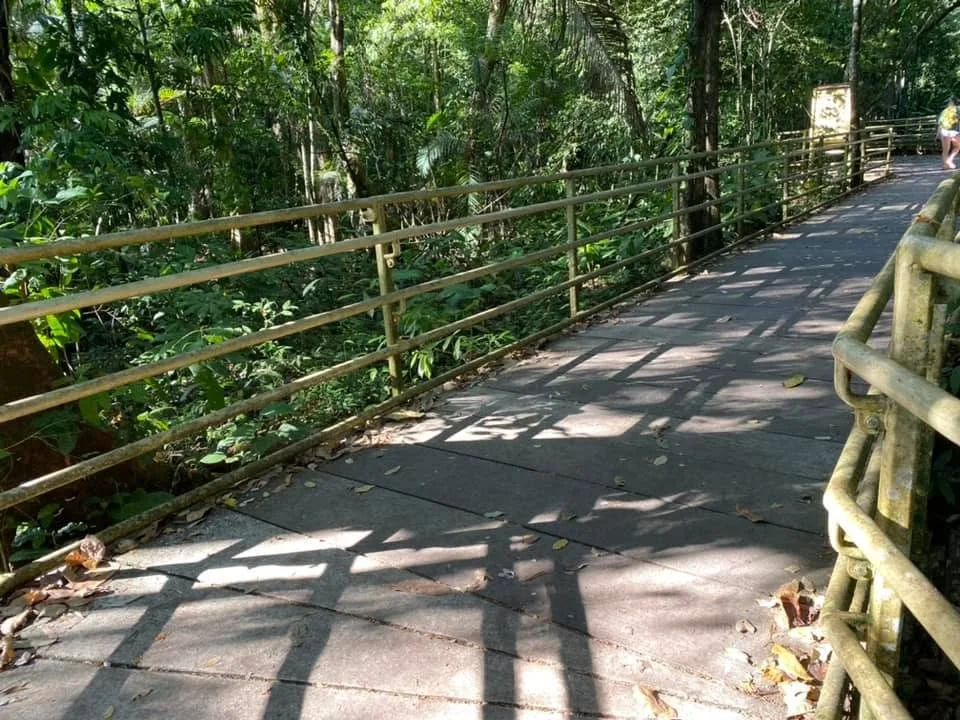
The well-maintained boardwalks made exploring the rainforest in Manuel Antonio National Park surprisingly easy.
Hiking to the Mirador
After pulling myself away from Playa Manuel Antonio, I returned to the trails and continued exploring the park.
My next destination was the mirador, which simply means “viewpoint” or “lookout” in Spanish. By this stage of my travels through Latin America, I had learned that whenever a sign pointed toward a mirador, it usually meant two things: there would be a beautiful view at the end, and I would probably have to climb something to reach it.
The trail took me farther into the forest and away from the beach. Although the park’s main pathways were relatively easy to walk, reaching the lookout required more effort than my relaxing start to the day. Still, I enjoyed having a chance to see another side of Manuel Antonio National Park.
The beaches might receive most of the attention, but the park is also filled with trails leading through the rainforest and toward different coastal viewpoints. From the mirador, I could look out over the rugged shoreline, where the forest-covered land met the Pacific Ocean.
It was the kind of view that reminded me why I had come to Manuel Antonio in the first place.
After taking my fair share of pictures, I began making my way back through the forest. Somewhere along the trail, I spotted a group of monkeys moving through the trees.
Naturally, I started following them.
I kept my distance, but I was curious to see where they were going. They moved easily through the branches while I attempted to keep track of them from the pathway below. Every time I thought I might lose sight of them, another monkey would appear farther ahead.
Ironically, after following them around for a while, I realized they were leading me directly back toward the beach.
Apparently, even the monkeys knew where the best part of the park was.
Since I was already back near the coastline—and had taken enough pictures of the monkeys—I decided it was time to visit the beach on the opposite side. I crossed over to Playa Espadilla Sur, which faces back toward the longer public beach and the developed hills of Manuel Antonio beyond the park.
It offered a completely different view from Playa Manuel Antonio. Instead of looking into a small, sheltered bay surrounded almost entirely by forest, I could see more of the coastline and the buildings scattered across the hills in the distance.
I spent some time there enjoying the scenery, but I still had to keep checking the time. The park closed at 4:00 p.m., and I didn’t want to be so distracted by the beach that a park ranger had to come looking for me.
My visit had gone by much faster than I expected. Between walking the trails, relaxing on the beaches, climbing to the mirador, and following monkeys through the forest, there never seemed to be enough time to see everything.
I absolutely loved Manuel Antonio National Park. With an earlier entry—or perhaps another full day—I could have explored even more. Still, I wasn’t finished yet. There was one last thing I wanted to do before returning to my hotel: watch the sunset from Espadilla Beach.
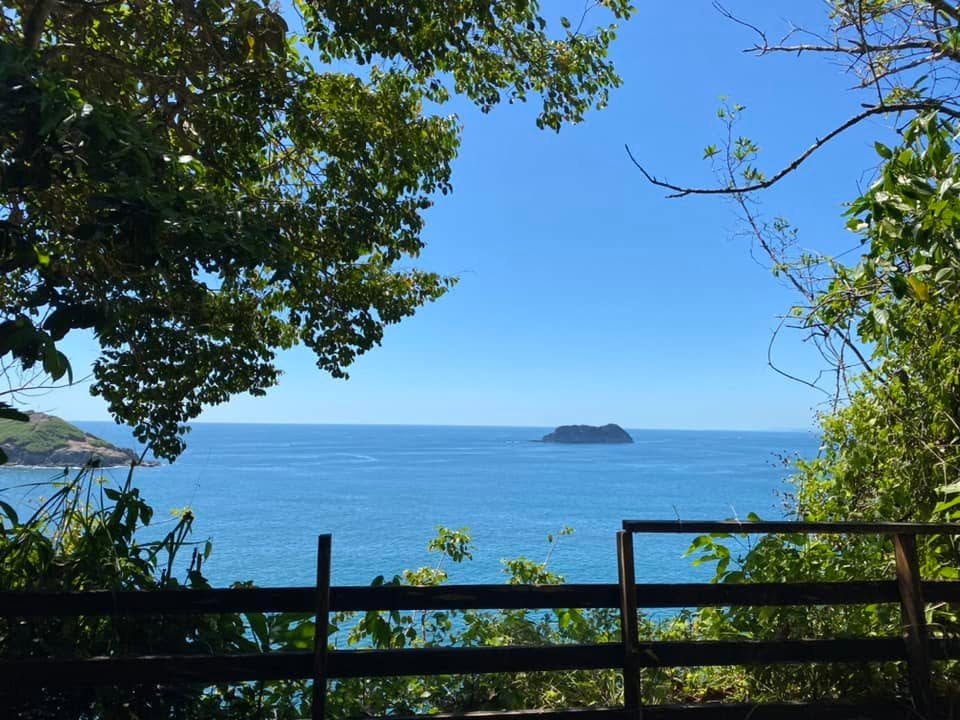
One of the beautiful coastal views that made the hike to the mirador worth the effort.
One Last Sunset in Manuel Antonio
Eventually, it was time to leave the national park.
I could have happily stayed longer, but the 4:00 p.m. closing time didn’t leave me much choice. I followed the pathways back toward the entrance, collected the lunch I had been forced to leave behind, and returned to the public beach outside the park.
After failing to find a good sunset view on my first evening, I finally had the opportunity to watch the sun disappear over the Pacific from Espadilla Beach.
It was the perfect way to finish my only full day in Manuel Antonio. That morning, I had relaxed on the same beach while waiting for my park entry. Since then, I had been robbed by a monkey, had my lunch rejected at security, walked through the rainforest, worried about crocodiles, discovered two beautiful beaches, hiked to a mirador, and followed more monkeys through the trees.
Now, I could simply sit and watch the sunset.
Once the light began to fade, I made my way toward the road to wait for the local bus back to my hotel. Even then, Manuel Antonio’s monkeys weren’t finished entertaining me.
Near the bus stop, I spotted several of them attempting to raid a local convenience store. They climbed onto the ice machine and searched for a way inside, clearly hoping to find something worth stealing.
After what had happened to my apple earlier that day, I knew exactly what those monkeys were capable of.
I couldn’t help laughing at the fact that local businesses had to monkey-proof their stores. In Canada, we worry about raccoons getting into garbage bins or bears trying to reach food. In Manuel Antonio, the criminals are smaller, faster, and apparently willing to steal your lunch directly from your hand.
Watching them investigate the store gave me one final wildlife encounter before my bus arrived.
Back at Teva Hotel & Jungle Reserve, I packed my belongings and prepared to leave again the following morning. My stay in Manuel Antonio had been short—only two nights with one full day to experience the area—and I was sad that it had ended so quickly.
I wished I had done more research before arriving. Had I understood how much there was to see inside the national park, I might have booked an earlier entry or added another night to my stay. I would have given myself more time to explore the trails, relax on the beaches, look for wildlife, and see more of Manuel Antonio beyond the national park.
Even so, I had made the most of the time I had.
Manuel Antonio gave me one of my favourite days in Costa Rica: a day filled with beautiful beaches, jungle trails, ocean views, and more monkeys than I expected—including one particularly bold thief.
The following morning, I left the Pacific coast behind and began a long journey across Costa Rica. My next destination would take me all the way to the Caribbean side of the country, where colourful streets, reggae rhythms, and a completely different coastal atmosphere were waiting.
Next up: Puerto Viejo.

From a quiet morning on the beach to jungle pathways, more beach time, and monkeys plotting their next convenience-store raid.
Enjoyed this story? Toss a tip in the jar—thanks for reading.
Costa Rica Travel Guide & Tips
Top 10 Places to Visit in Costa Rica
Costa Rica Story #1: My first Days in Costa Rica
Costa Rica Story #2: Three Days in Tamarindo: Three Hostels, an ATV Tour, and New Beginnings
Costa Rica Story #3: Three Weeks in Cabuyal: Volunteering with Sea Turtles in Costa Rica
Costa Rica Story # 4: Monteverde: Costa Rica's Misty Cloud Forest
Costa Rica Story #5: Sloths, Volcanoes, and Hot Springs: My 2 Days in La Fortuna
Costa Rica Story #6: Jacó: Two Nights of Sunsets, Rum, and Slowing Down
