How to Volunteer with Sea Turtles in Costa Rica
Finding the Right Sea Turtle Volunteer Program
Volunteering with sea turtles had been something I'd wanted to do for years, and when I started planning my trip through Costa Rica, it seemed like the perfect opportunity to finally do it.
It also didn't hurt that volunteering could help keep my travel costs down.
After searching through volunteer websites, I came across The Leatherback Trust, an organization involved in sea turtle research and conservation along Costa Rica's Pacific coast. Rather than booking through a third-party volunteer website, I contacted The Leatherback Trust directly and began emailing with Dr. Pilar "Bibi" Santidrián Tomillo, who helped start the sea turtle research project at Playa Cabuyal in 2011.
She was very upfront about what volunteering there would actually involve.
Cabuyal was remote. There was no mains electricity, no reliable internet, cold water, basic accommodation, shared cooking and cleaning duties, and a lot of walking. Night patrols meant working while everyone else was sleeping, and there was never a guarantee that a turtle would actually appear.
I wasn't entirely sure how I'd handle living completely off the grid, so instead of committing to several weeks, I signed up for one.
If I hated it, I could leave.
If I loved it, I could ask to stay longer.
Spoiler alert: I stayed for three weeks and would happily have stayed even longer.
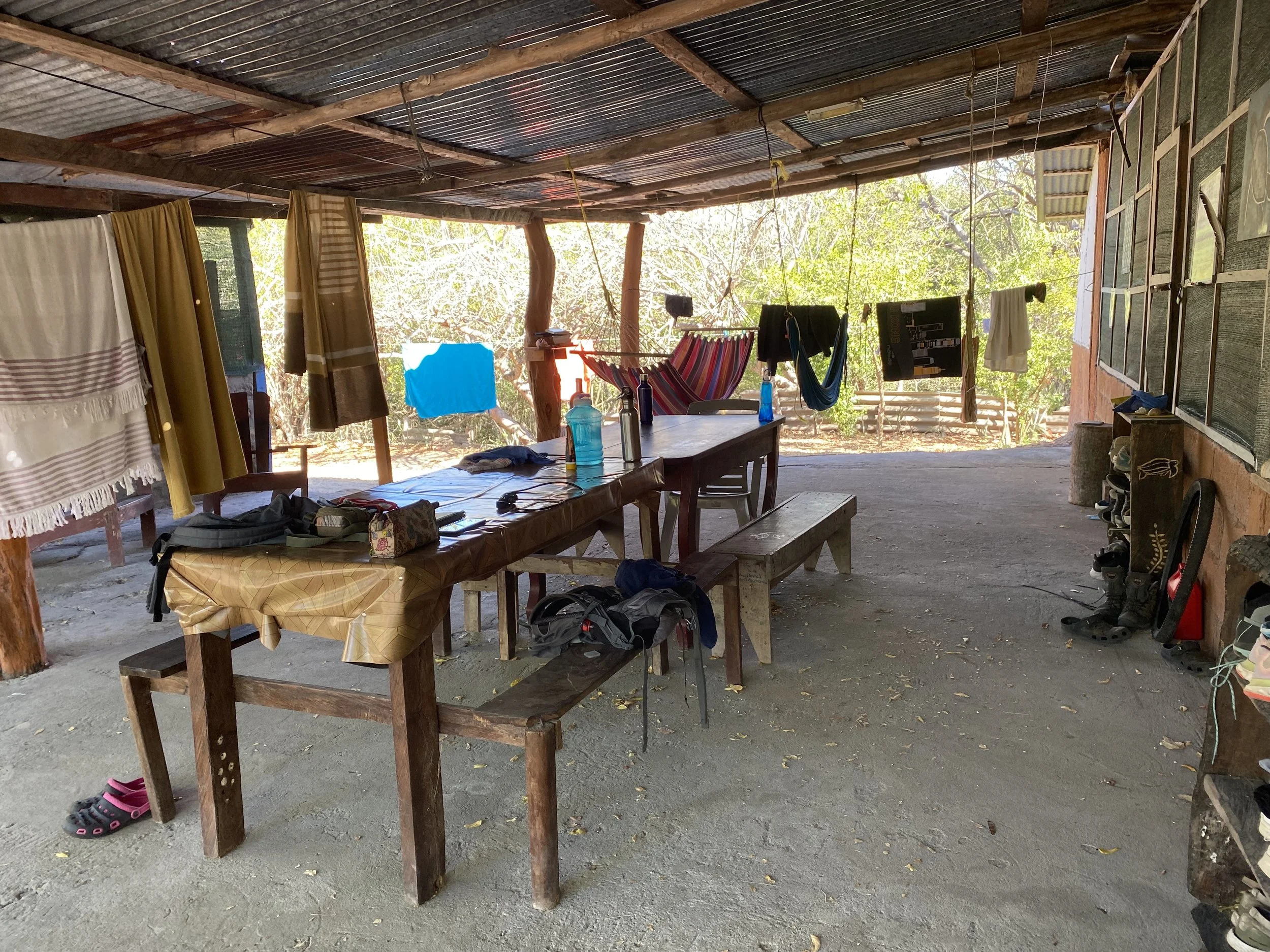
Life at Cabuyal was simple and very much off the grid. This shared space became our kitchen, dining room, laundry area, charging station, and general hangout spot for the weeks I was there.
Research the Program, Not Just the Turtles
If you're thinking about volunteering with sea turtles in Costa Rica, contact the conservation organization directly and ask what everyday life actually looks like.
Sea turtle volunteering sounds amazing—and it is—but the reality can involve long walks through soft sand, disrupted sleep, basic accommodation, cooking, cleaning, bugs, wildlife, and hours of walking a beach without seeing a single turtle.
You don't necessarily need previous experience. I certainly didn't.
Everything I needed to know about identifying turtle tracks, locating nests, recording data, monitoring nesting turtles, and helping with conservation work was taught to me at Cabuyal.
What you do need is a willingness to learn and an understanding that you're there to help with conservation research—not simply to have close encounters with sea turtles.
Timing matters too.
Sea turtle projects operate around nesting seasons, and the beginning and end of the season can be quieter. I volunteered in late January and early February and was incredibly lucky: I saw at least one turtle on every night patrol I worked.
At Playa Cabuyal, green turtles were the species I encountered most often, followed by Olive Ridleys. Leatherbacks were much rarer—I only saw one adult during my three weeks there, and I'll never forget just how enormous she was.
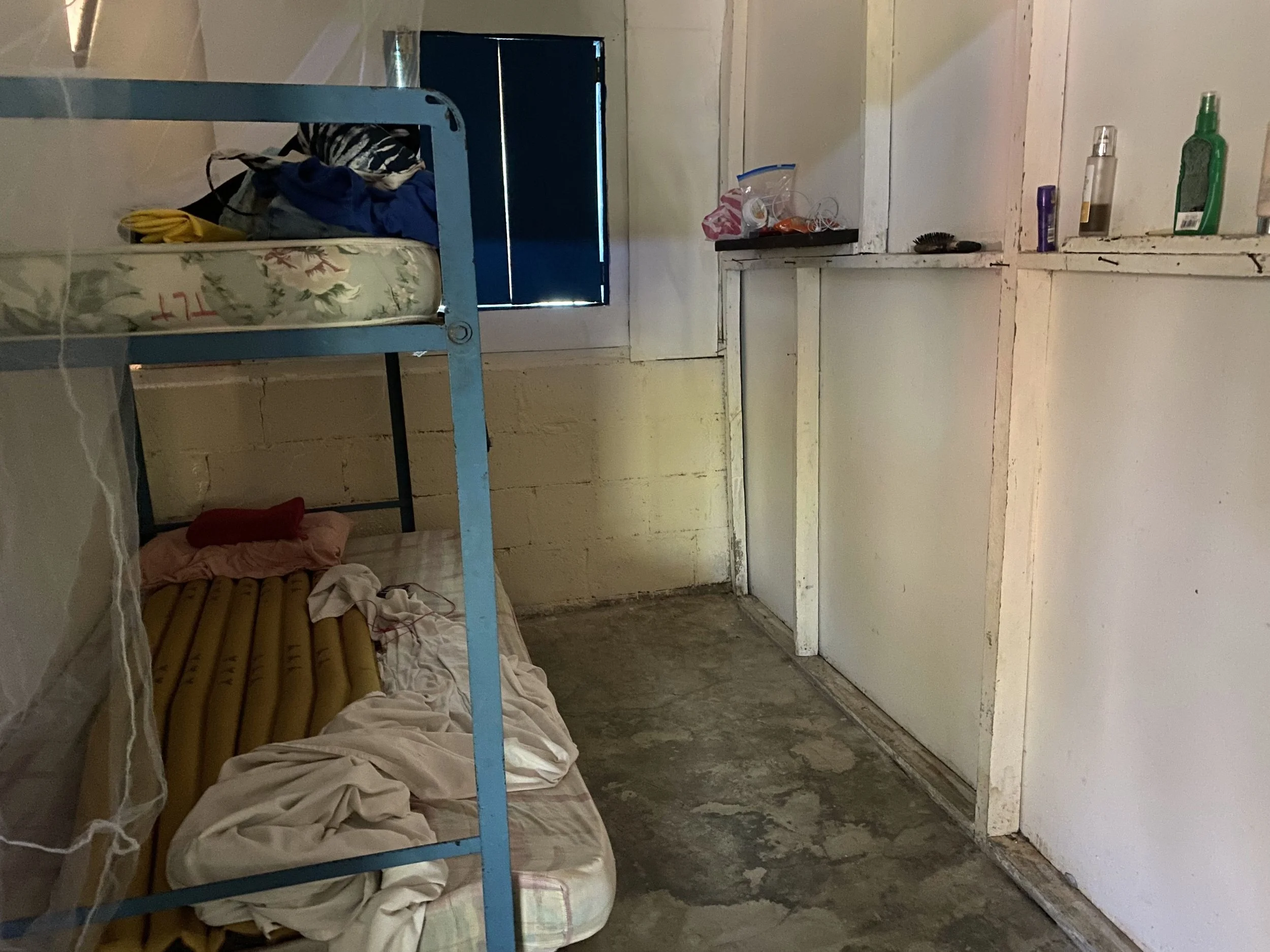
My room at the Cabuyal conservation camp—bunk beds, mosquito nets, a concrete floor, and not a whole lot else. Definitely basic, but it had everything I needed for three weeks.
How Long Should You Volunteer?
If you have the time, I'd recommend staying longer than a week.
One week was enough for me to decide whether I liked the experience, but just as I started understanding the routine and becoming comfortable with the work, that first week was already over.
Three weeks felt much better, and I actually would have stayed longer if I'd had more time left in Costa Rica.
The program at Cabuyal has changed since I volunteered. The Leatherback Trust currently operates its Sea Turtle Biology Training Camp from September 15 through March 31 and requests a minimum commitment of 15 consecutive days, with longer stays preferred. The current program is also geared toward early-career conservationists, so always check the latest eligibility requirements before planning your trip.
Volunteer programs change. Prices change. Requirements change.
Use personal travel stories like mine to understand what the experience can be like, but always contact the organization directly for current information.
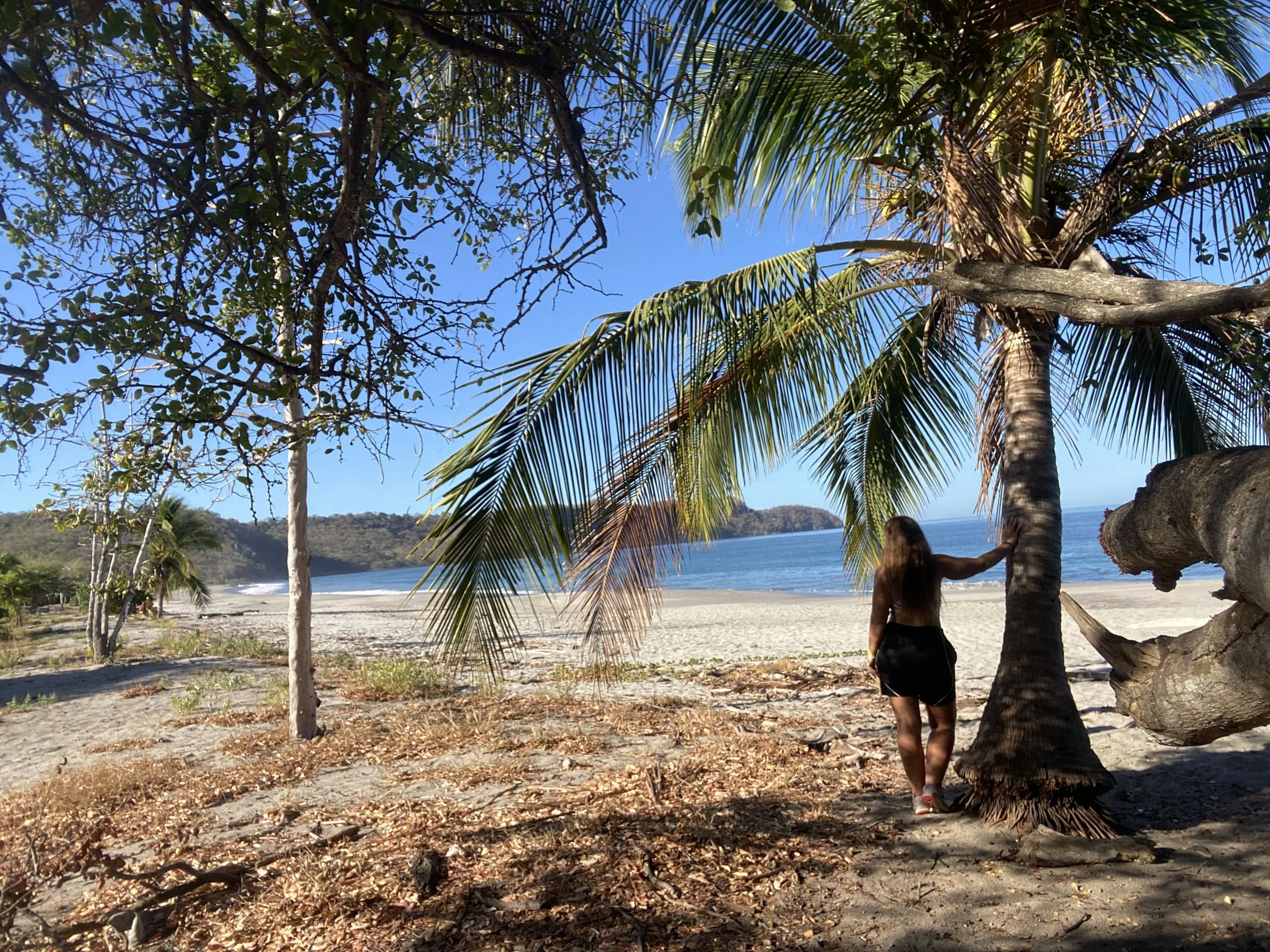
With views like this, why would you want to leave? I originally planned to volunteer for one week at Cabuyal and ended up staying for three. And yes, I basically had the beach to myself.
How Much Does Sea Turtle Volunteering Cost?
One of the reasons volunteering appealed to me was the cost.
Costa Rica isn't necessarily a cheap country to travel through, and volunteering allowed me to stay in one place for a while, participate in something I genuinely wanted to do, and dramatically reduce my daily expenses.
When I volunteered at Cabuyal, I paid approximately $8 USD per day, which included basic accommodation and three meals a day.
Yes, $8.
Even at the time, I thought that was ridiculously cheap.
However, that was the price when I volunteered. Don't assume that's what you'll pay today. Volunteer fees and what's included can change, so check directly with the organization for current rates.
Cabuyal was a working conservation camp, not an eco-resort disguised as a volunteer project. We had beds, bathrooms, a shared kitchen and common areas, but no hot showers or traditional refrigerator.
Instead, ice was used to keep food cold. Once a week, Keilor went into town for more ice and enough groceries to feed everyone for the week.
The volunteer fee covered three meals a day, and everyone helped with cooking. If we wanted something particular, we could ask Keilor before the grocery run and, as long as it fit within the food budget, it could usually be added.
Anything extra was our responsibility.
I bought extra mayonnaise and ranch dressing because apparently those were the luxuries I couldn't live without while staying off the grid.
And plantains.
So many plantains.
If you have allergies or dietary restrictions, discuss them with the organization before arriving. When you're somewhere remote and groceries only arrive periodically, your options are more limited.
I'd also budget for a few personal extras. Every now and then I'd walk to Casa del Mar, the nearby restaurant, where I could connect to Wi-Fi and buy a drink or something to eat.
Before choosing any volunteer program, find out exactly what your fee covers: accommodation, meals, bedding, transportation, equipment and any additional costs.
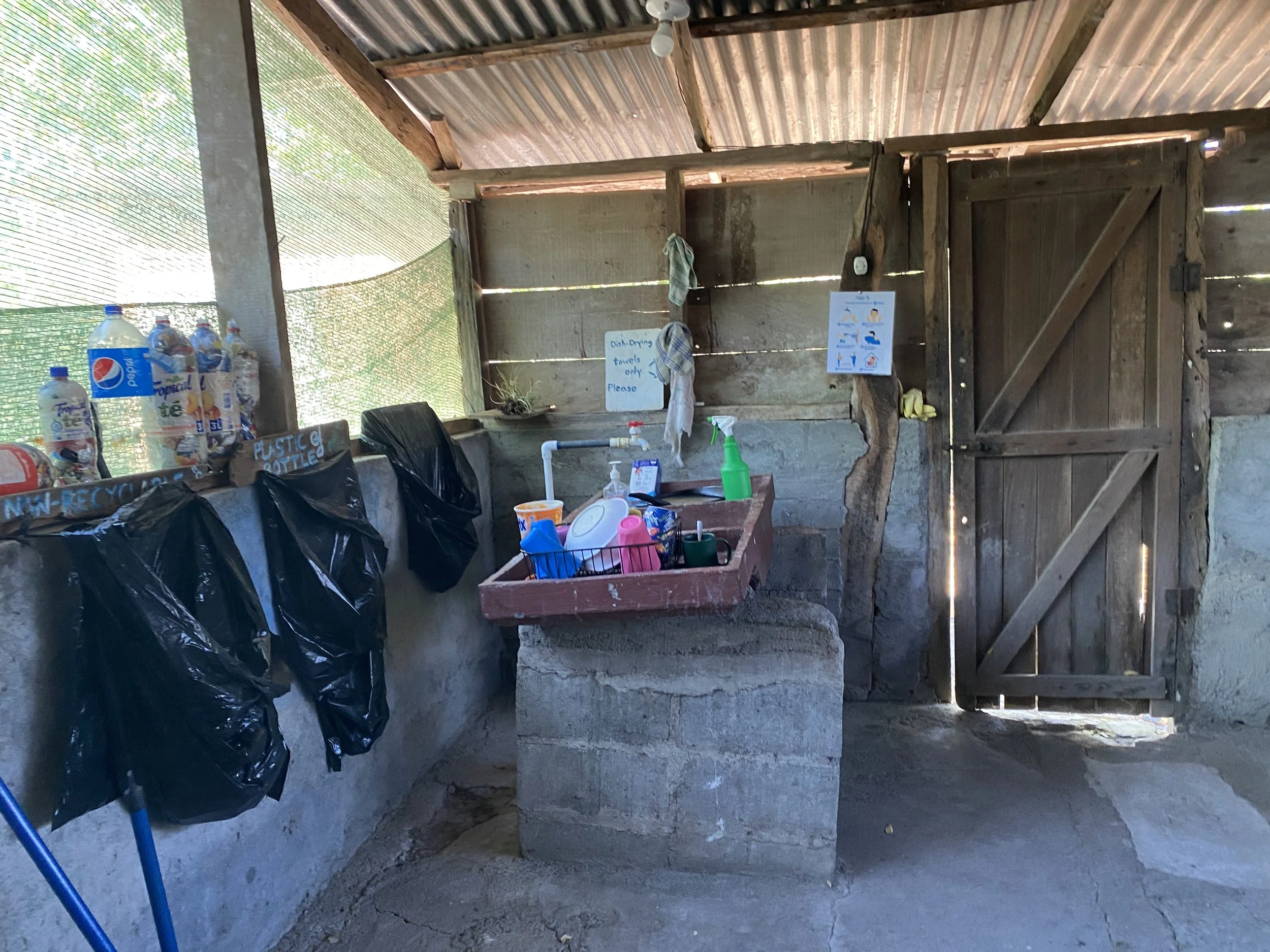
And here was our kitchen sink! Camp life at Cabuyal was definitely basic—washing dishes, sorting recycling, and keeping everything running with what we had became part of everyday life.
What Do Sea Turtle Volunteers Actually Do?
Before volunteering, I knew I'd be walking beaches and looking for sea turtles.
I didn't realize just how much went into monitoring them.
At Cabuyal, there were night patrols, morning beach surveys, nest excavations, hatchling releases, temperature readings, cooking, cleaning and plenty of data collection.
And there was a lot of walking.
Night Patrols
Night patrols were probably the part I looked forward to most.
Two people would patrol the beach from approximately 11 p.m. until 4 a.m., repeatedly walking its length looking for nesting turtles or fresh tracks. Walking from one end to the other took roughly an hour.
Once we reached the beach, our lights stayed off.
Artificial light can disturb nesting sea turtles, so we walked in darkness and learned to watch for movement, silhouettes and tracks. A full moon made life considerably easier.
If we found a nesting turtle, we kept our distance while she selected her nesting site and dug her nest. Once she began laying her eggs, we could approach and collect the necessary data.
Depending on the situation, that could include counting eggs, recording the nest location, measuring the turtle's carapace and checking for identification tags.
The experienced staff taught me what to look for and how to work around the turtles without unnecessarily disturbing them.
And sometimes, nothing happened.
Sea turtles don't work around volunteer schedules. Even if you don't find one, you still patrol.
That's conservation work too.
Morning Beach Surveys
Morning shifts usually began around 6 a.m.
We walked the beach looking for fresh nesting crawls, checking known nests and looking for evidence of turtles that may have nested after the night patrol ended.
We also looked for hatchling tracks.
Tiny tracks leading from a nest toward the ocean could indicate that hatchlings had recently emerged. We could then check the records and determine whether the nest was ready to be excavated.
Learning to read the sand became surprisingly important. I had to learn the difference between adult turtle tracks, hatchling tracks, crab marks and other disturbances.
Nest Excavations and Research
When a turtle laid her eggs, the date and location of the nest were recorded so the team could monitor it and eventually excavate it.
Once we located a nest ready for excavation, we'd carefully dig down to the egg chamber and examine what remained.
Every egg was counted and recorded, including whether it had successfully hatched. Eggs that hadn't hatched could also be examined to determine how far they had developed.
Some nests were incredibly successful.
Others weren't.
One excavation revealed around 80 live hatchlings still trapped underground because a tree branch above the nest had prevented them from escaping.
Moments like that demonstrated exactly why excavations mattered.
We also recorded sand temperatures from probes placed at different locations and depths along the beach.
I quickly learned that sea turtle conservation involves a lot more than turtles: there are measurements, coordinates, temperatures, dates and records behind everything.
Releasing Hatchlings
If live hatchlings were found during an afternoon excavation, they weren't immediately taken to the ocean.
They were placed in a bucket with sand and covered, keeping them in a dark environment similar to being underground until sunset.
Then came one of my favourite parts.
We'd take the bucket to the beach, put on gloves and masks, and carefully tip it onto its side.
The hatchlings did the rest.
They crawled across the sand and made their own way toward the Pacific. If one headed in the wrong direction, we could help guide it, but otherwise we stood back and watched.
Seeing tiny turtles disappear into the waves never got old.
Camp Life Was Part of the Job
Conservation work didn't stop when we left the beach.
Our weekly schedule included cooking, cleaning the kitchen and bathrooms, maintaining common areas and our conservation shifts.
Everyone contributed.
For three weeks, this wasn't somewhere I visited to see turtles.
It was simply everyday life.
What Is It Like Living at a Remote Sea Turtle Camp?
The conservation work was only one part of volunteering in Cabuyal.
You also had to live there.
And if you're considering a remote project, I'd spend just as much time researching the living conditions as the turtles.
Limited Electricity and Internet
The camp relied on solar power, with research equipment taking priority.
Once the equipment was charged, volunteers could use the remaining electricity for phones, headlamps and power banks. I learned pretty quickly to charge things whenever power was available.
Internet was even more limited.
Casa del Mar had Wi-Fi, but eventually I became pretty comfortable being disconnected. During downtime, I'd read on the beach, exercise or watch things I'd downloaded to my phone.
I ended up watching all of Ozark.
If you're heading somewhere remote, download your movies, shows, podcasts, books, music and maps before you arrive.
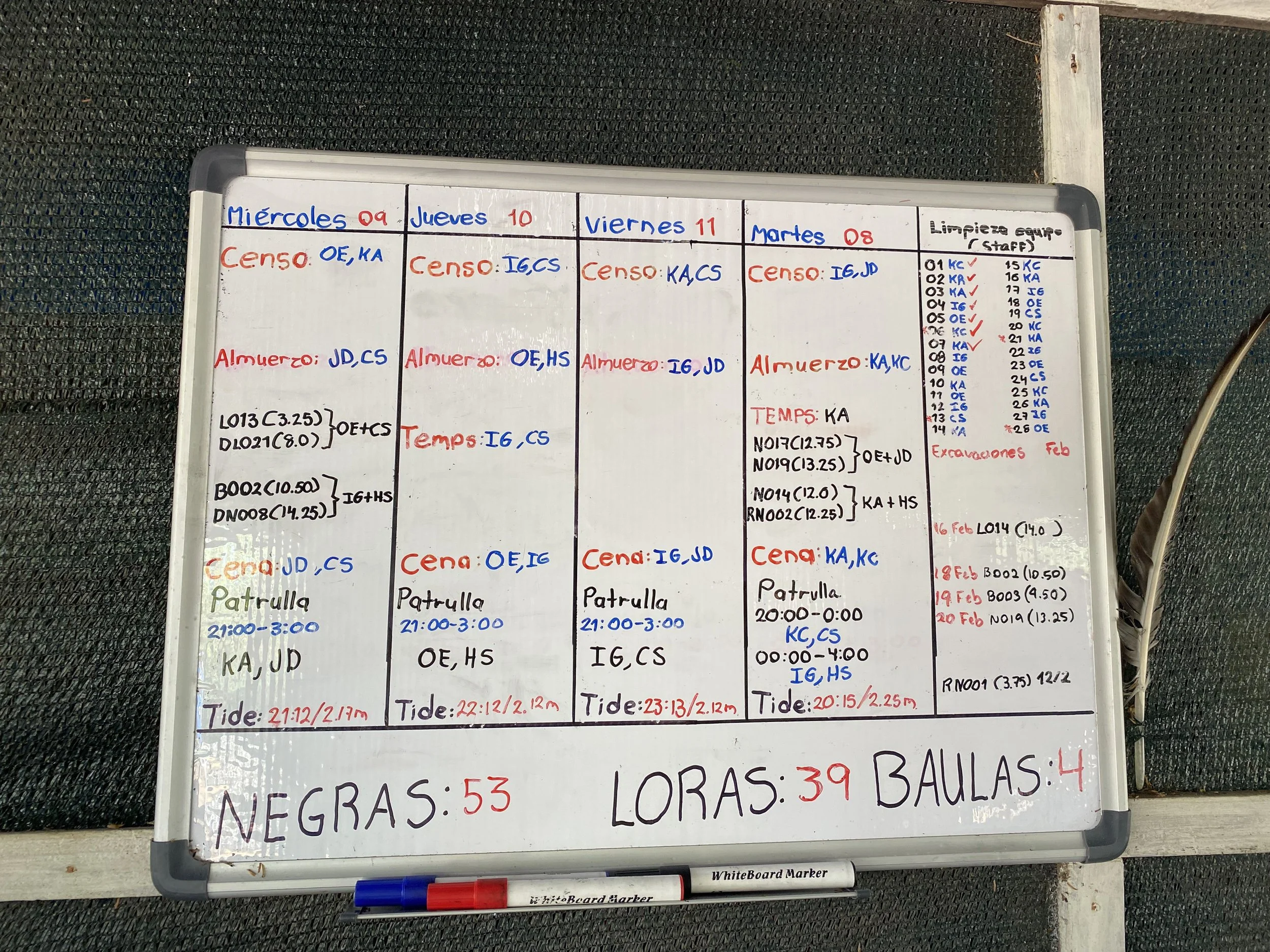
Our weekly schedule at Cabuyal—and yes, it was entirely in Spanish. I only speak English, so I learned pretty quickly what censo, patrulla, almuerzo, and cena meant.
Expect Lots of Walking—and Surprisingly Cold Nights
If there's one physical requirement I'd emphasize, it's walking.
Getting from camp to the beach usually took around 20 to 30 minutes.
Then we walked the beach.
Then we walked back.
Morning surveys meant more walking, and nest work meant another trip to the beach. There wasn't much heavy lifting during my experience, but you should be comfortable spending hours on your feet and walking through sand.
We were also required to wear shoes rather than sandals while working on the beach.
And don't assume that because you're going to Costa Rica, you'll never be cold.
Most volunteers wore yoga pants or other long pants and a sweater during night patrol.
Costa Rica.
Pacific coast.
Beach.
Bring a sweater.
Trust me.
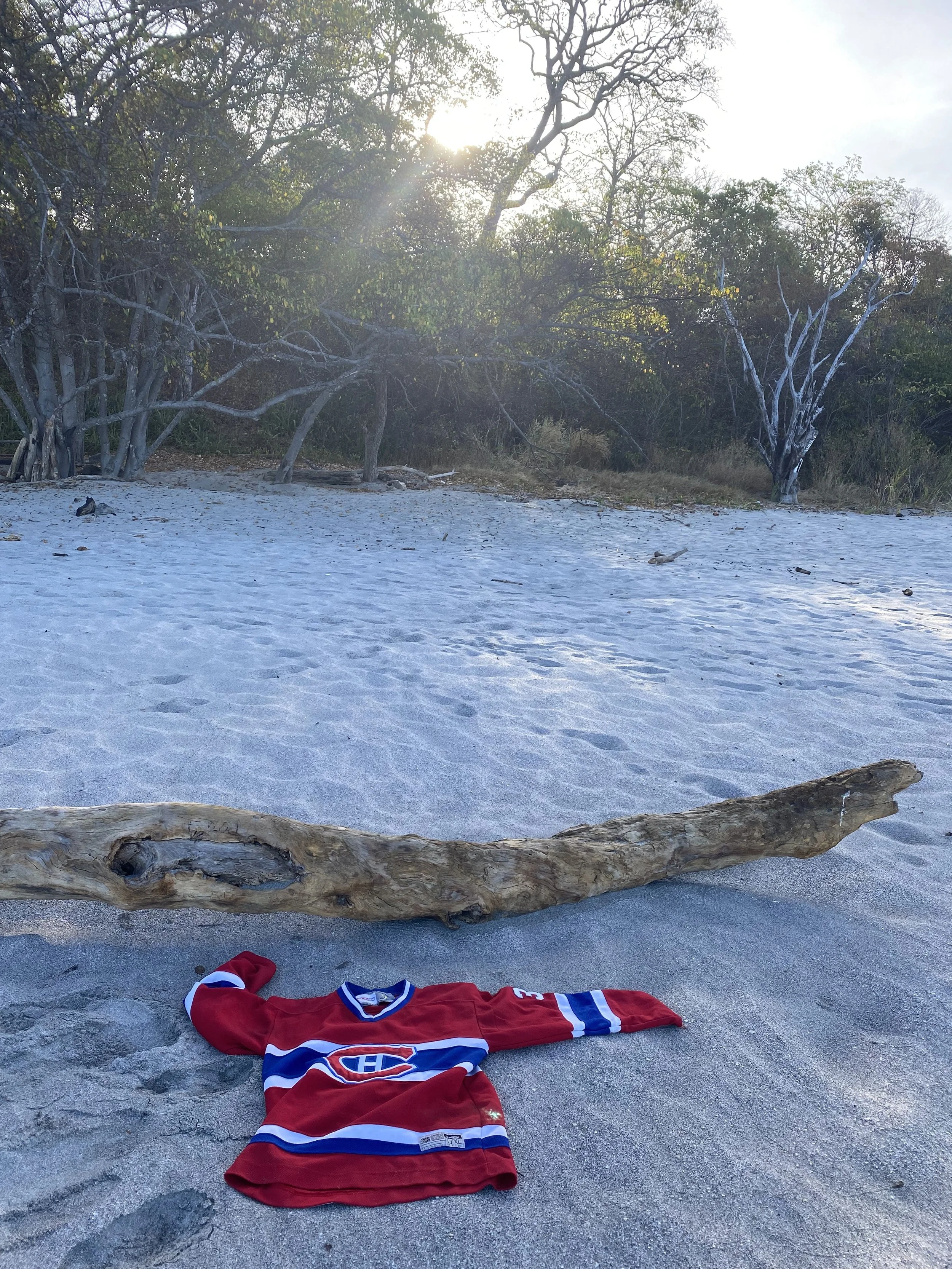
Yes, that is a hockey jersey on a beach in Costa Rica. Night patrols got surprisingly cold, and the sand was even colder. Bring a sweater—you'll thank me later.
Wildlife Comes With Remote Living
You're also sharing the area with wildlife.
There were camera traps in the surrounding forest, a skunk once appeared in the bathroom, and there was a crocodile near one of the routes we regularly walked.
I originally thought everyone was joking about the crocodile because I didn't even realize Costa Rica had them.
Then I saw its eyes glowing in the darkness.
Living somewhere remote means remembering that you're entering the animals' environment, not the other way around.
Do You Need to Speak Spanish?
I only spoke English.
Thankfully, the staff and other volunteers were bilingual and switched to English whenever I was around.
The paperwork wasn't quite as accommodating.
Our schedules and conservation records were in Spanish, so I quickly learned the words I needed.
You don't necessarily need to be fluent in Spanish to have an experience like mine, but knowing some basic Spanish would definitely make life easier.
What Should You Pack for Sea Turtle Volunteering?
Packing for sea turtle volunteering is a little different from packing for a normal Costa Rica beach vacation.
You may be walking a beach at 2 a.m., sitting on cold sand, working in darkness, getting dirty and living somewhere with limited electricity and internet.
Headlamp With a Red-Light Setting
This was something I specifically needed to bring.
Your headlamp should have a red-light setting, not just a regular white light.
At Cabuyal, our lights remained off while walking the beach. The red light could be used when appropriate during conservation work.
I had a rechargeable headlamp, and it worked fantastically.
Always check your individual project's requirements because lighting rules may differ.
Power Bank
A good power bank is incredibly useful somewhere with limited electricity.
One of the researchers even had a small travel-size solar panel for charging electronics. If I were planning another extended off-grid trip, I'd consider bringing one myself.
Proper Shoes and Warm Clothing
Bring shoes comfortable enough for hours of walking and that you don't mind filling with sand.
You'll also want comfortable long pants and a sweater for night patrol.
I'd rather bring one warm layer I don't need than spend five hours wishing I had one.
Bedding and Personal Supplies
Ask exactly what your program provides.
At Cabuyal, volunteers were supposed to bring their own sheets. Since I was already backpacking internationally, I used extras available at camp.
I'd also bring enough toiletries, sunscreen, insect repellent, medications and other personal essentials for your stay.
Conservation equipment such as gloves and masks was provided during my stay. Volunteers could bring extra supplies to donate, although I'd contact the organization first and ask what they actually need.
Something to Do Offline
Books.
Downloaded movies.
Podcasts.
Cards.
Whatever works for you.
There will probably be downtime, and learning to enjoy that downtime became one of my favourite parts of volunteering.
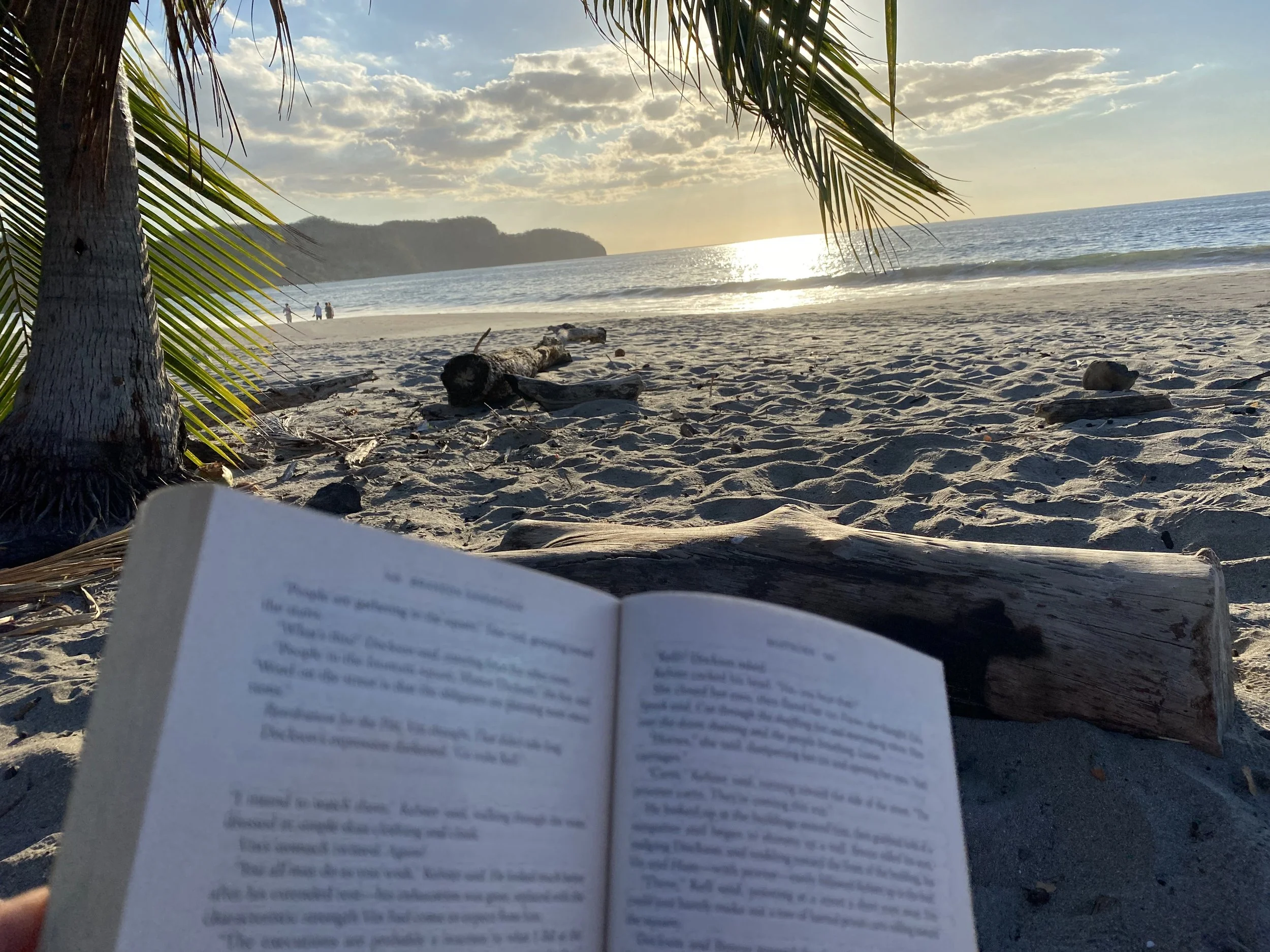
Bring something to keep yourself entertained! With no electricity or Wi-Fi at camp, I spent plenty of my downtime reading on the beach. Honestly, there are worse places to be disconnected.
Is Volunteering with Sea Turtles in Costa Rica Worth It?
For me, absolutely.
I originally signed up for one week because I wasn't sure how I'd feel about living somewhere so remote.
I stayed for three.
Volunteering gave me an experience I never would have had simply travelling from destination to destination. I wasn't visiting a conservation project for an afternoon or joining a tour hoping to see a nesting turtle.
I was living there, learning from the people doing the research and slowly becoming part of the routine.
Being off the grid also gave me something I hadn't realized I needed: a chance to slow down.
I'd been travelling constantly, and suddenly I had afternoons when I could sit on an almost empty beach and read. I could stare at the stars during night patrol and enjoy having nowhere else I needed to be.
That doesn't mean sea turtle volunteering is right for everyone.
If you hate basic accommodation, disrupted sleep, limited electricity, cold showers, lots of walking, wildlife, shared chores or being disconnected from the internet, a remote conservation camp probably isn't going to feel like paradise.
I'd also think about why you want to volunteer.
If your only goal is to hold baby turtles and get cute photos, this probably isn't the experience you're imagining.
There are incredible moments, but there's also data collection, cooking, cleaning bathrooms, walking the same beach repeatedly, excavating unsuccessful nests and waiting for wild animals that may never appear.
For me, those less glamorous parts made the experience more meaningful.
I arrived knowing almost nothing about sea turtle conservation and left knowing how to identify tracks, monitor nesting turtles, help excavate nests, record research data and understand just how much work goes into protecting these animals.
Would I volunteer with sea turtles again?
100%.
I'd pack my headlamp, charge my power bank, download a ridiculous number of shows before losing Wi-Fi and happily head back to the beach.
Maybe this time I'd even stay longer.
And if you want to know what my three weeks in Cabuyal were actually like—including night patrols, wildlife encounters, life off the grid, and the time I accidentally got into a random stranger's car and started heading straight back toward Tamarindo—read my full story: Three Weeks in Cabuyal: Volunteering with Sea Turtles in Costa Rica.
