10 Things That Happened While Volunteering with Sea Turtles in Costa Rica
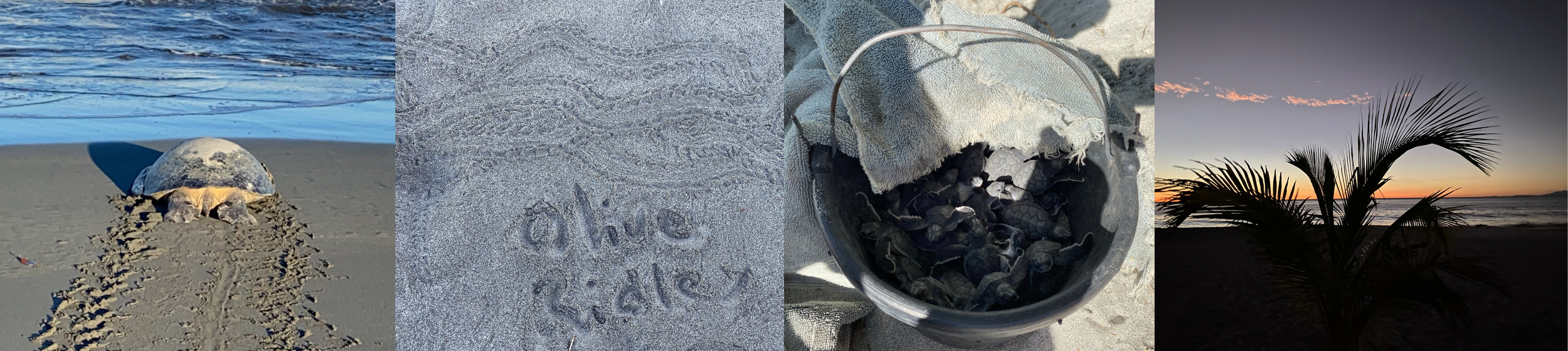
From night patrols and turtle tracks to surprise buckets of hatchlings, three weeks in Cabuyal gave me plenty of stories to bring home.
When I signed up to volunteer with sea turtles in Costa Rica, I originally planned to stay for one week.
I ended up staying for three.
During those three weeks at a remote conservation camp in Cabuyal, I learned far more about sea turtles than I ever expected. I learned how to identify tracks in the sand, monitor nesting turtles, count eggs, excavate nests, record research data, and help release hatchlings into the Pacific Ocean.
But some moments stood out more than others.
There were nights watching enormous green turtles slowly make their way up the beach, mornings when turtles were still nesting after sunrise, and afternoons when digging into a nest revealed something completely unexpected.
There were exciting moments, funny moments, and some that showed me the harsher reality of sea turtle conservation.
And then there were the baby turtles.
So many baby turtles.
Choosing only ten moments wasn't easy, but these are the experiences that immediately come to mind when I think back to my three weeks volunteering with sea turtles in Costa Rica.
1. We Found Around 80 Baby Turtles Trapped Underground
During one afternoon nest excavation, we discovered something none of us expected.
There were around 80 live baby turtles still trapped beneath the sand.
A tree branch above the nest had prevented the hatchlings from making their way to the surface. They had successfully hatched—they simply couldn't get out.
We carefully removed them and placed them in a bucket, where they were kept safely covered until sunset.
For someone who absolutely loved the baby turtles, finding a nest filled with roughly 80 of them was basically heaven.
Later that evening, we carried the bucket down to the beach. Wearing gloves and masks, we carefully tipped it onto its side and watched as dozens of tiny turtles crawled out onto the sand.
From there, they made their own way toward the Pacific. Occasionally, one would start heading in the wrong direction and need a little help getting turned around, but otherwise, we simply watched them go.
I'd already helped release hatchlings before.
But watching around 80 baby turtles at once scramble across the sand and disappear into the ocean was something else entirely.
Of all my memories from Cabuyal, this one is almost impossible to beat.
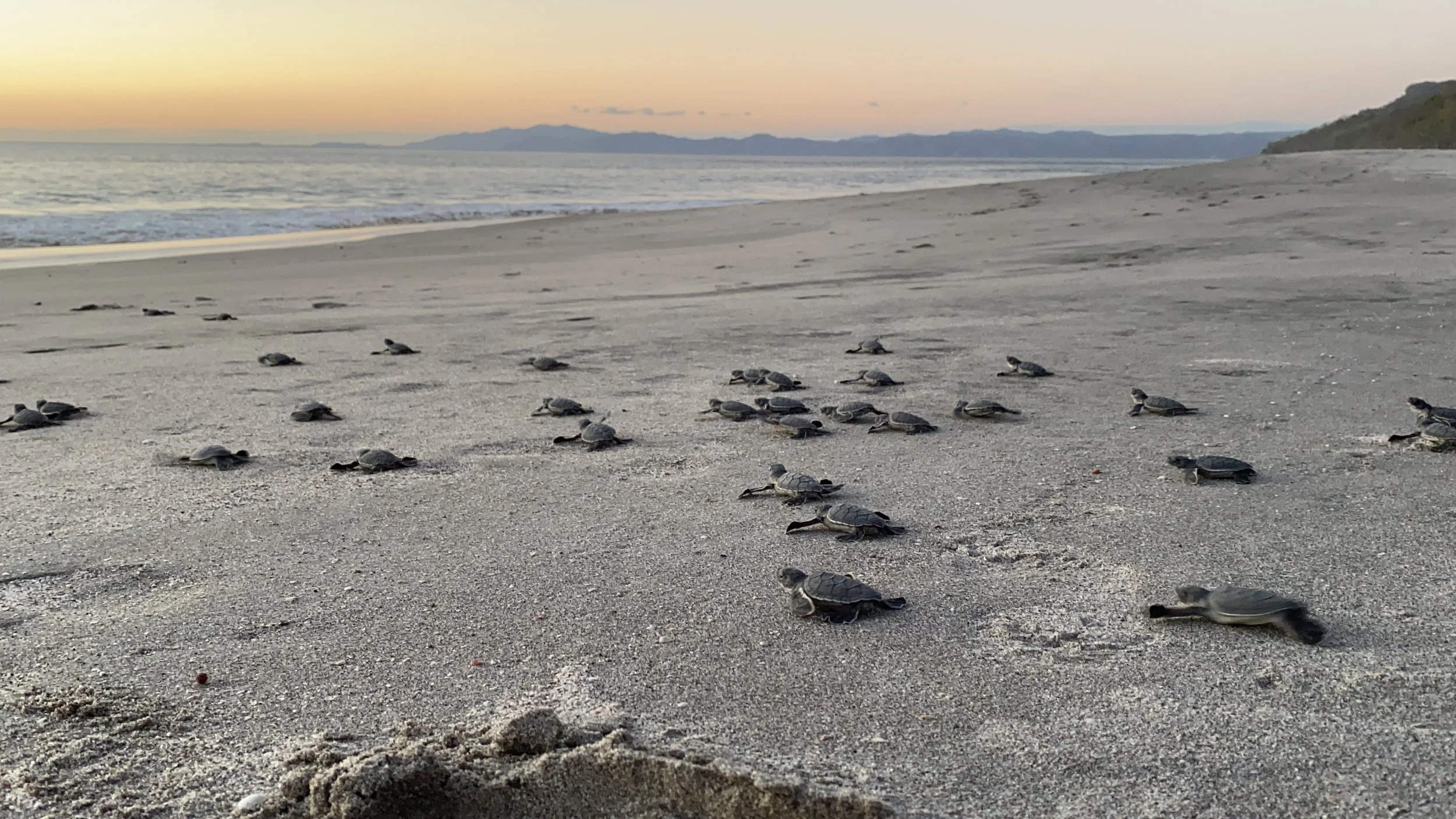
Around 80 baby turtles making their way toward the Pacific — easily one of my favourite moments from three weeks in Cabuyal.
2. I Spotted My First Green Turtle Coming Out of the Ocean
My first night patrol was already exciting because I had absolutely no idea what to expect.
The patrol the night before hadn't seen any turtles, so I knew there was a chance I wouldn't see one either.
As we walked, I kept looking toward the ocean.
Then I noticed something bobbing in the water.
"I think there's a turtle out there."
Catalina wasn't convinced.
I kept watching.
"No, I'm pretty sure that's a turtle."
And I was right.
Eventually, a green turtle emerged from the Pacific and slowly made her way onto the beach.
I was ecstatic.
We kept our distance while she chose her nesting spot and dug her nest. Green turtles, I quickly learned, aren't exactly in a hurry.
Eventually, she began laying her eggs, and we could approach to collect the necessary research data.
Then Catalina let me count the eggs.
There I was on my very first night patrol, crouched behind my first nesting green turtle in the darkness, counting eggs as they dropped into the nest.
The previous night's patrol hadn't seen a single turtle.
On my first night, I'd spotted one while she was still swimming toward shore.
That was the moment it really hit me:
I was actually volunteering with sea turtles in Costa Rica.
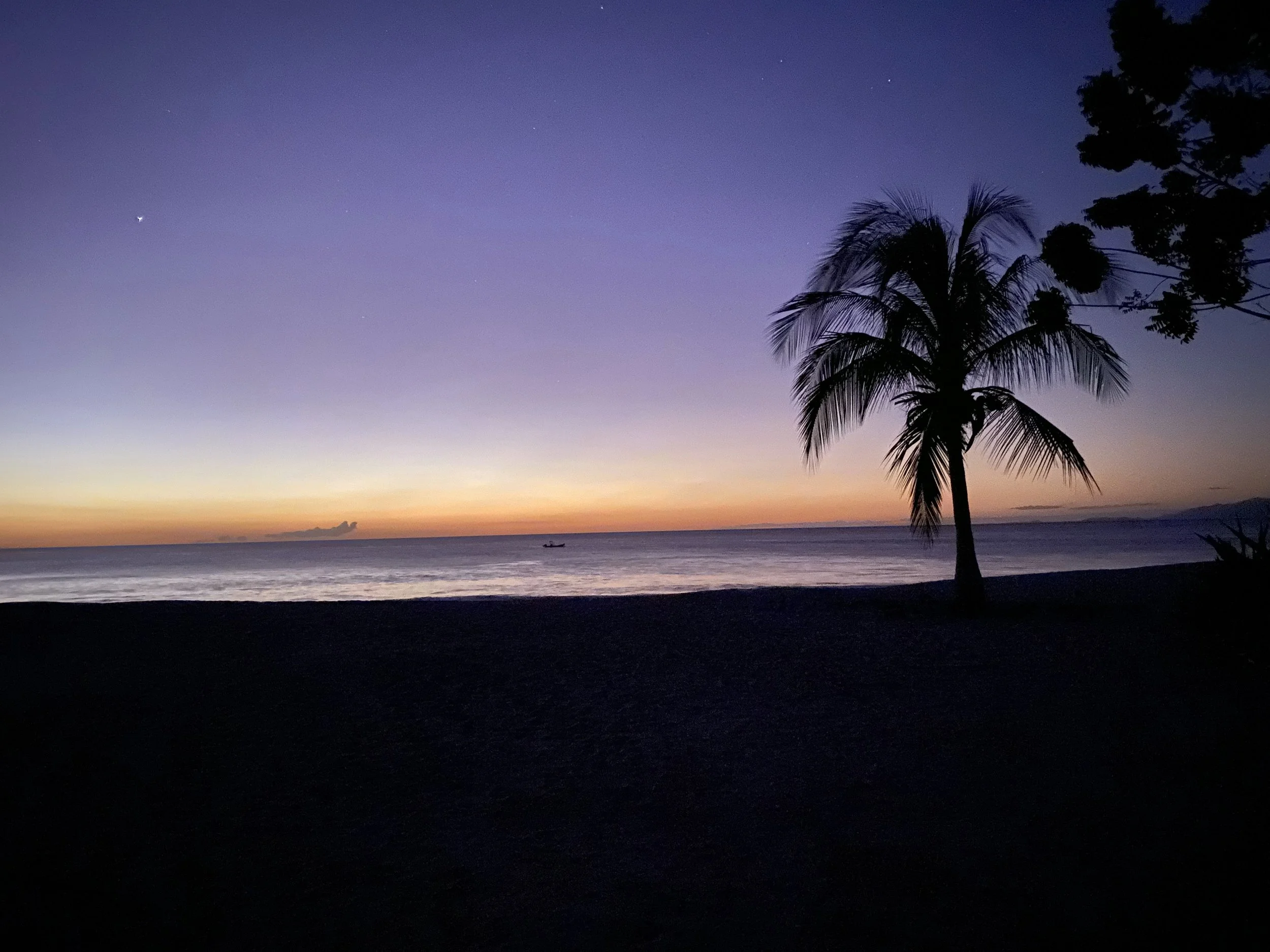
Night patrols began after dark, and on my very first one, I spotted my first green turtle still swimming toward shore.
3. Keilor Surprised Me With My First Baby Turtles
Seeing my first nesting green turtle was incredible, but there was still something I hadn't seen yet.
Baby turtles.
One day, Keilor came back to camp and told me he had a surprise for me.
Naturally, my immediate response was:
"Baby turtles? Where?"
Apparently, it didn't take everyone very long to figure out what made me happy.
That's when he showed me the bucket.
Inside were the first baby sea turtles I'd ever seen.
They had been found during a nest excavation and were being kept safely covered until sunset. Then Keilor asked if I wanted to help release them.
Hell yes.
There was absolutely no hesitation.
At sunset, we took the hatchlings down to the beach and tipped the bucket onto its side.
I stood there watching these ridiculously tiny turtles crawl across what must have seemed like an enormous stretch of sand toward the Pacific.
Later, I'd help release around 80 hatchlings at once.
But you only get one first bucket of baby turtles.
And I was in heaven.
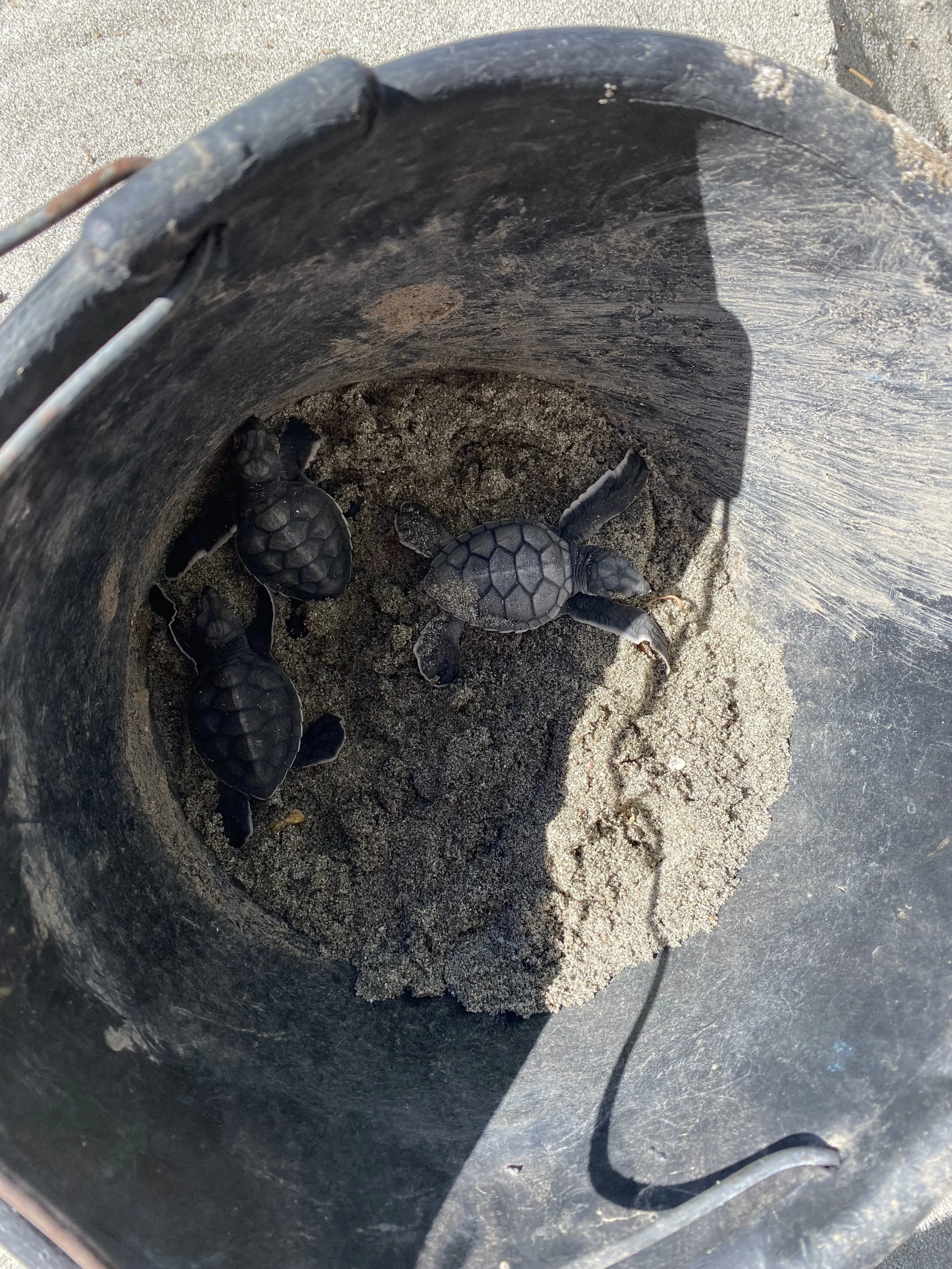
The surprise I was hoping for — my very first baby sea turtles, waiting in their bucket for their sunset release.
4. Keilor and I Had to Help a Green Turtle Out of the Forest
One morning, Keilor and I were doing our beach survey when we came across a green turtle who had managed to get herself into trouble.
Instead of heading back toward the ocean after nesting, she'd ended up caught in the forest growth near the edge of the beach.
She was basically stuck in a ditch.
Under Keilor's direction, we positioned ourselves on opposite sides of her near the back of her carapace, away from her front flippers.
Then we carefully lifted her from underneath and moved her forward.
Once wasn't enough.
So we did it again.
I think we ended up lifting her forward about three times before she finally reached a point where she could get herself out and continue on her own.
Most of our work involved observing turtles rather than interfering with them, but occasionally one genuinely needed some help.
Apparently, this mama had simply chosen the most complicated route possible.
Definitely not what I expected to be doing during a morning walk.
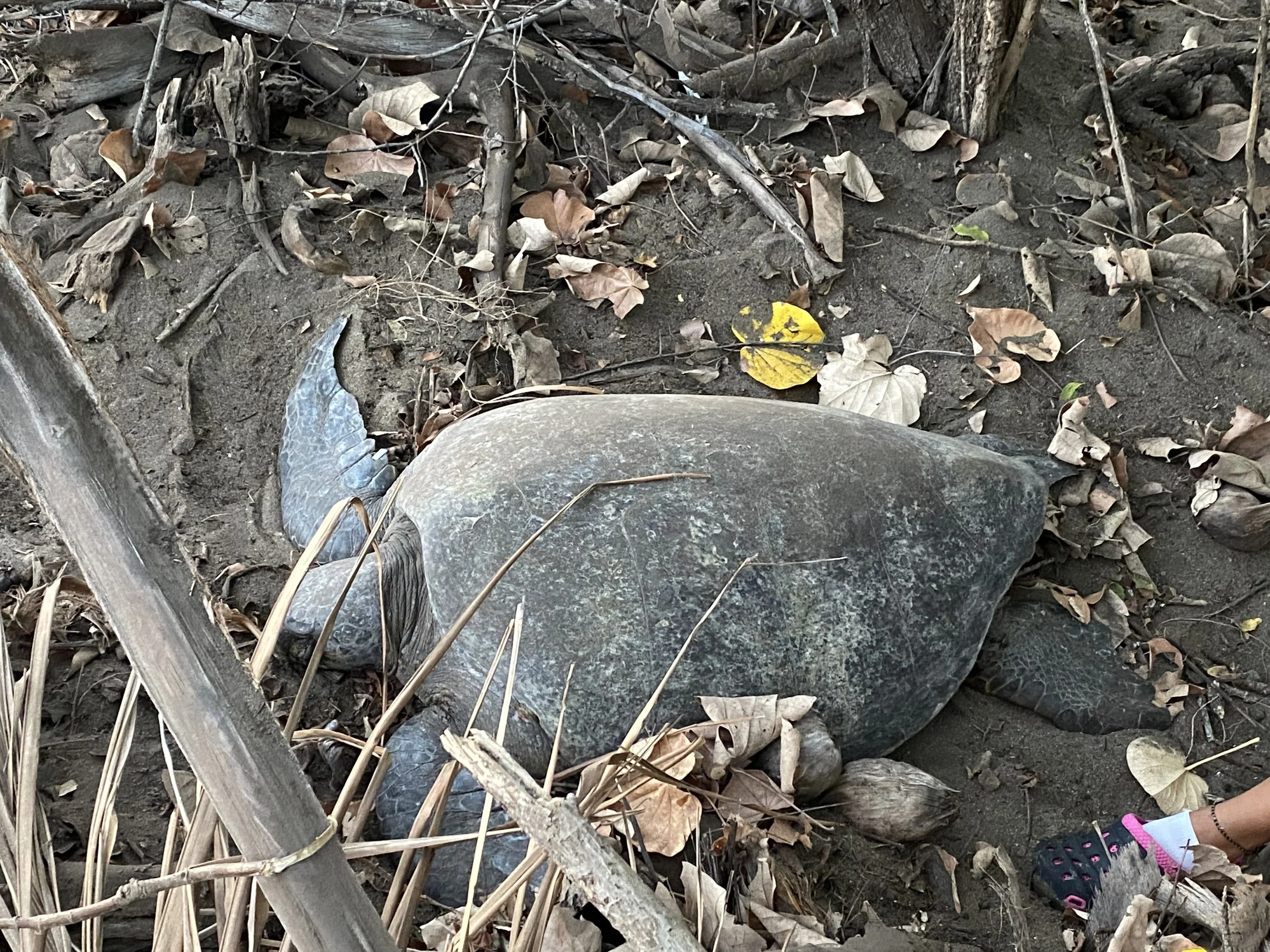
This mama green turtle somehow got herself stuck in the forest growth after nesting, so Keilor and I had to help her find her way back out.
5. I Excavated My First Leatherback Nest
Before I ever saw an adult leatherback, I saw just how difficult the beginning of their lives could be.
One afternoon, we excavated a leatherback nest.
By then, I was becoming familiar with nest excavations, but this one was different.
There were quite a few hatchlings that hadn't survived.
Until then, many of my turtle experiences had been exciting—watching mothers nest, counting eggs, finding hatchling tracks, and releasing babies.
This was a much sadder side of the work.
I remember looking at those tiny leatherback hatchlings and realizing I'd now seen baby leatherbacks before I'd ever seen a full-grown one.
It was also a reminder that conservation isn't only about the happy moments. Recording unsuccessful eggs and hatchlings was part of understanding what happened within each nest too.
Later in my stay, I would finally see an adult leatherback.
After seeing those tiny hatchlings first, I was completely unprepared for just how enormous she would be.
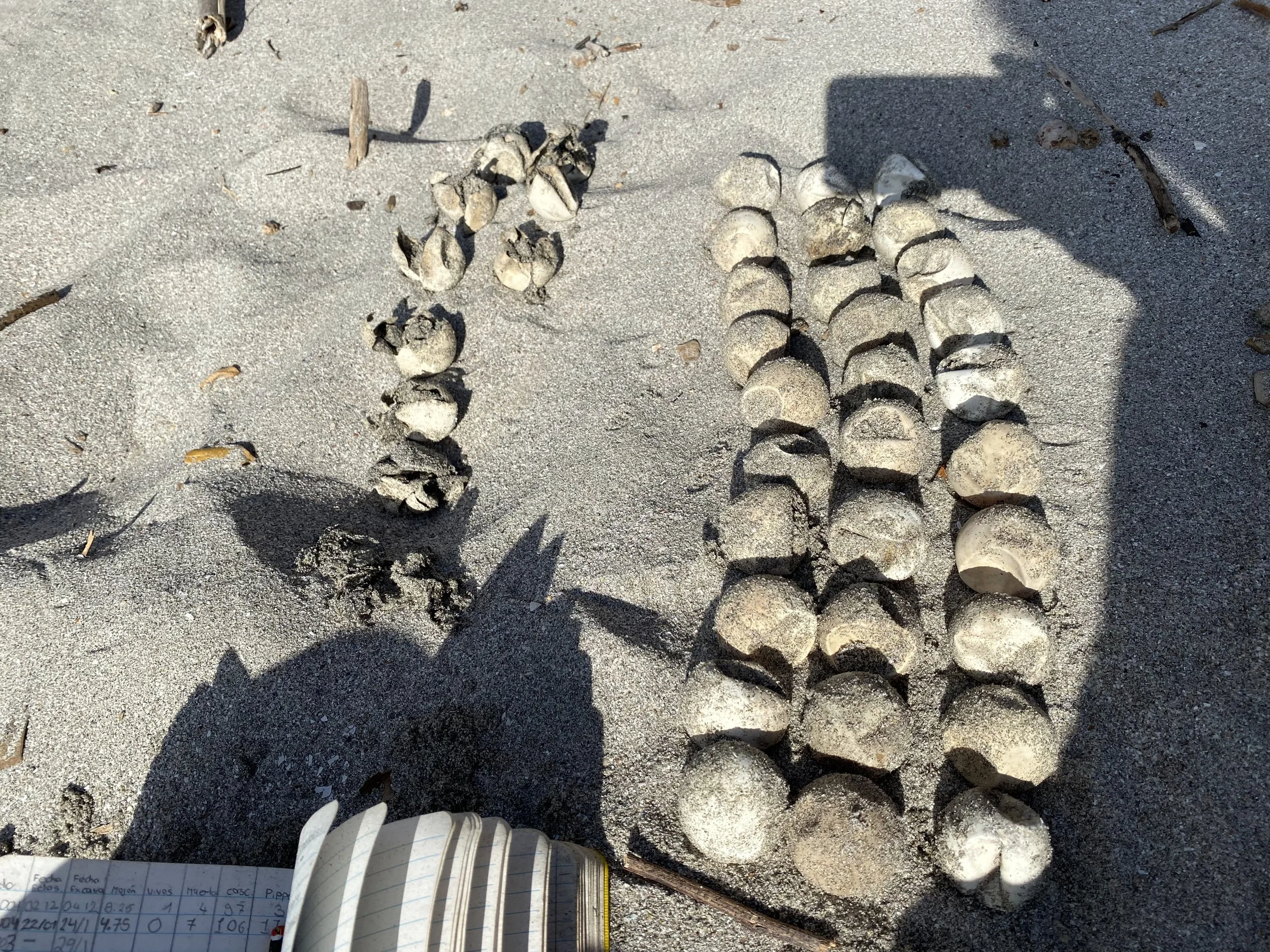
Hatched and unhatched eggs from my first leatherback nest excavation — a reminder that not every nest has a successful outcome.
6. We Walked Over an Hour to Survey Another Secluded Beach
One day, Keilor asked if anyone wanted to survey another beach in the area.
I volunteered.
So did Catalina and Katherine.
What I apparently didn't think to ask was how we were getting there.
For some reason, I assumed we were driving.
Nope.
We were walking.
And I remember the walk taking at least an hour, possibly longer.
Thankfully, the secluded beach was worth it.
We walked along the sand counting turtle tracks, identifying which species had come ashore, looking for signs of disturbed nests, and checking for hatchling tracks.
Most appeared to be green turtles, with some Olive Ridleys mixed in.
We only made this particular trip once during my three weeks, and it was a nice change from our normal surveys at Playa Cabuyal.
We could even go swimming there, and I remember seeing what looked like a few turtles out in the bay.
It turned into a pretty great day.
There was just one minor problem I'd temporarily forgotten:
We still had to walk all the way back.
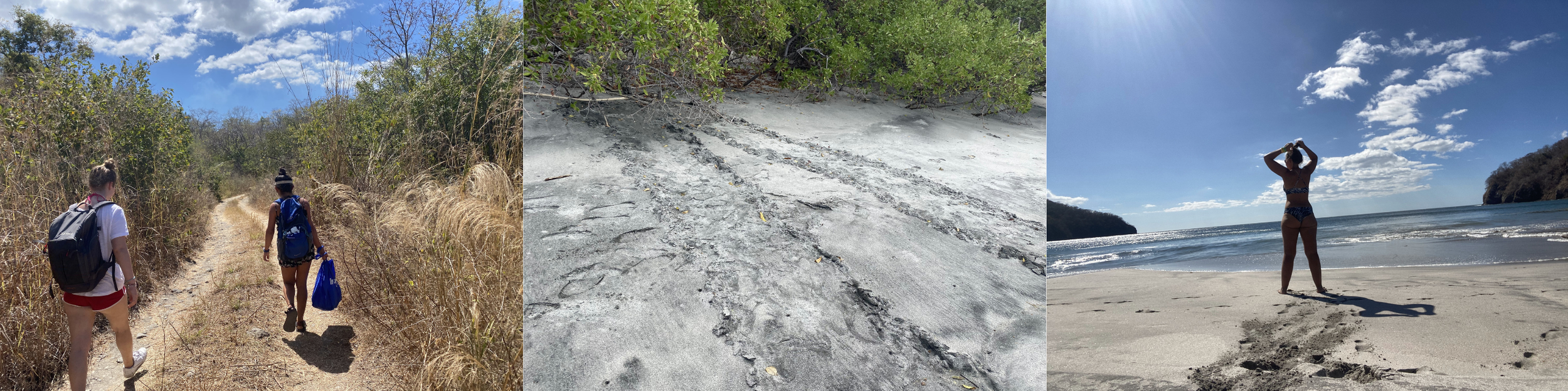
The full adventure: walking to the secluded beach, surveying turtle tracks, and finally getting some time to enjoy the beach ourselves.
7. I Learned How to Read Turtle Tracks
Before Cabuyal, marks in the sand were just marks in the sand.
By the end of three weeks, I was staring at them trying to determine exactly who—or what—had made them.
Different turtle species leave different tracks, so we could often tell whether a green turtle or Olive Ridley had visited the beach even if she'd returned to the ocean hours earlier.
Then there were the tiny tracks.
Hatchling tracks were particularly exciting because they meant baby turtles had emerged from a nest and headed toward the ocean.
There was just one problem.
Hermit crabs.
Apparently, hatchling tracks and tiny crab tracks can look remarkably similar when you're still learning.
I'd stare at the sand thinking:
Baby turtles?
Hermit crab?
Baby turtles?!
Eventually, I got much better at recognizing the difference.
It sounds like a small thing compared with seeing an actual turtle, but learning to read the beach was one of my favourite parts of volunteering.
The sand could tell you what had happened while you weren't there.
You just had to learn its language.
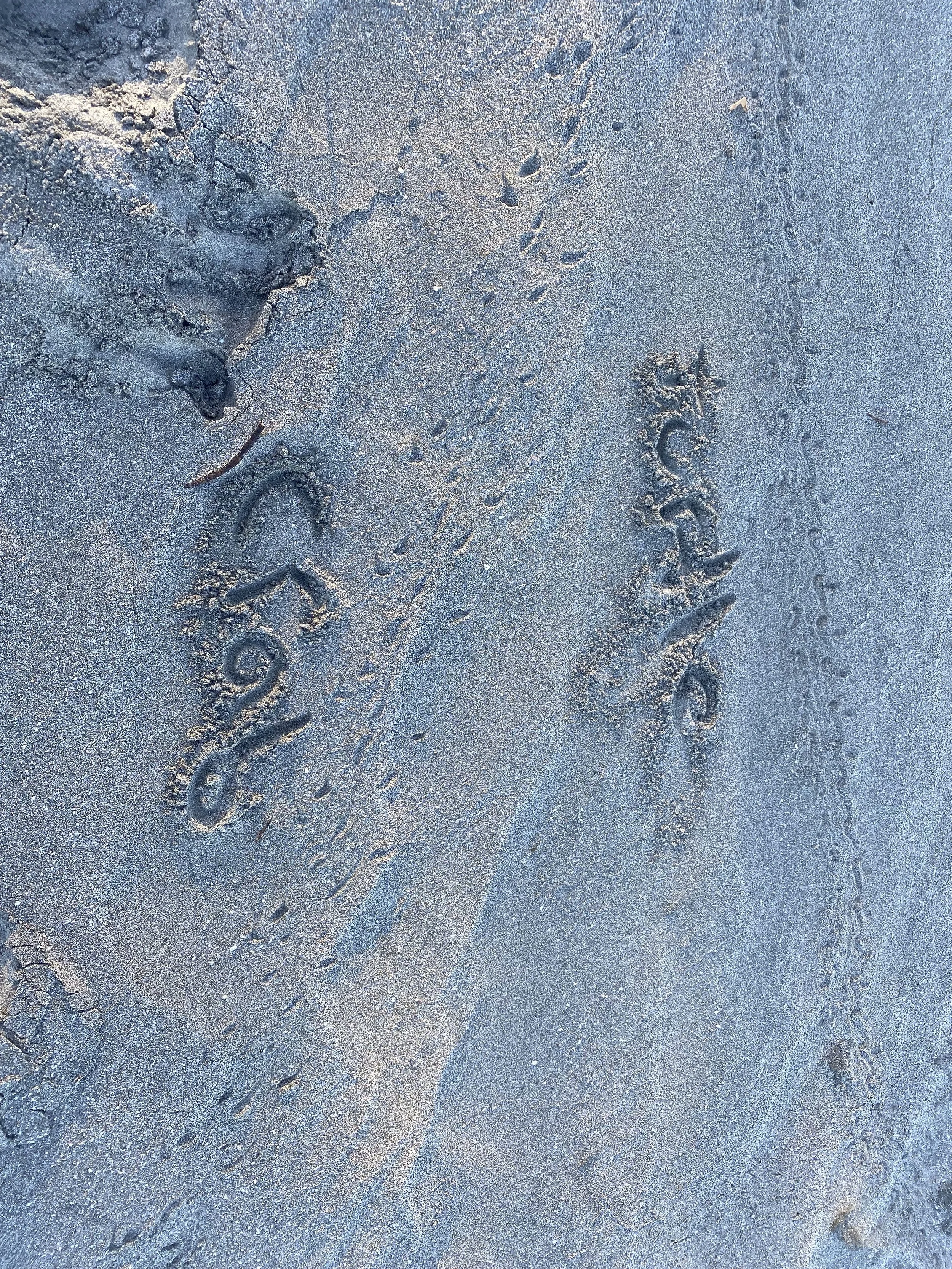
One of the unexpected skills I picked up in Cabuyal: trying to tell baby turtle tracks from hermit crab tracks.
8. An Olive Ridley Made Us Run
By this point, I'd become pretty familiar with green turtles.
They weren't exactly in a hurry.
One night near the end of our patrol, Catalina was resting while I looked out toward the ocean.
Then I spotted another turtle.
Of course, I woke Catalina up.
At first, she thought it was probably another green turtle.
No rush.
We had time.
Except this turtle seemed to be moving considerably faster than the greens I'd gotten used to.
Then I realized something.
I thought she was already laying eggs.
Suddenly, there was a rush.
We hurried over and discovered she was an Olive Ridley.
She'd come onto the beach, chosen her spot, built her nest, and started laying eggs ridiculously fast compared with the green turtles we'd been watching.
A few minutes earlier, we'd been peacefully sitting on the beach thinking there was plenty of time.
Now we were scrambling to start collecting the data before she finished.
Apparently, Olive Ridleys did not care that we were on a break.
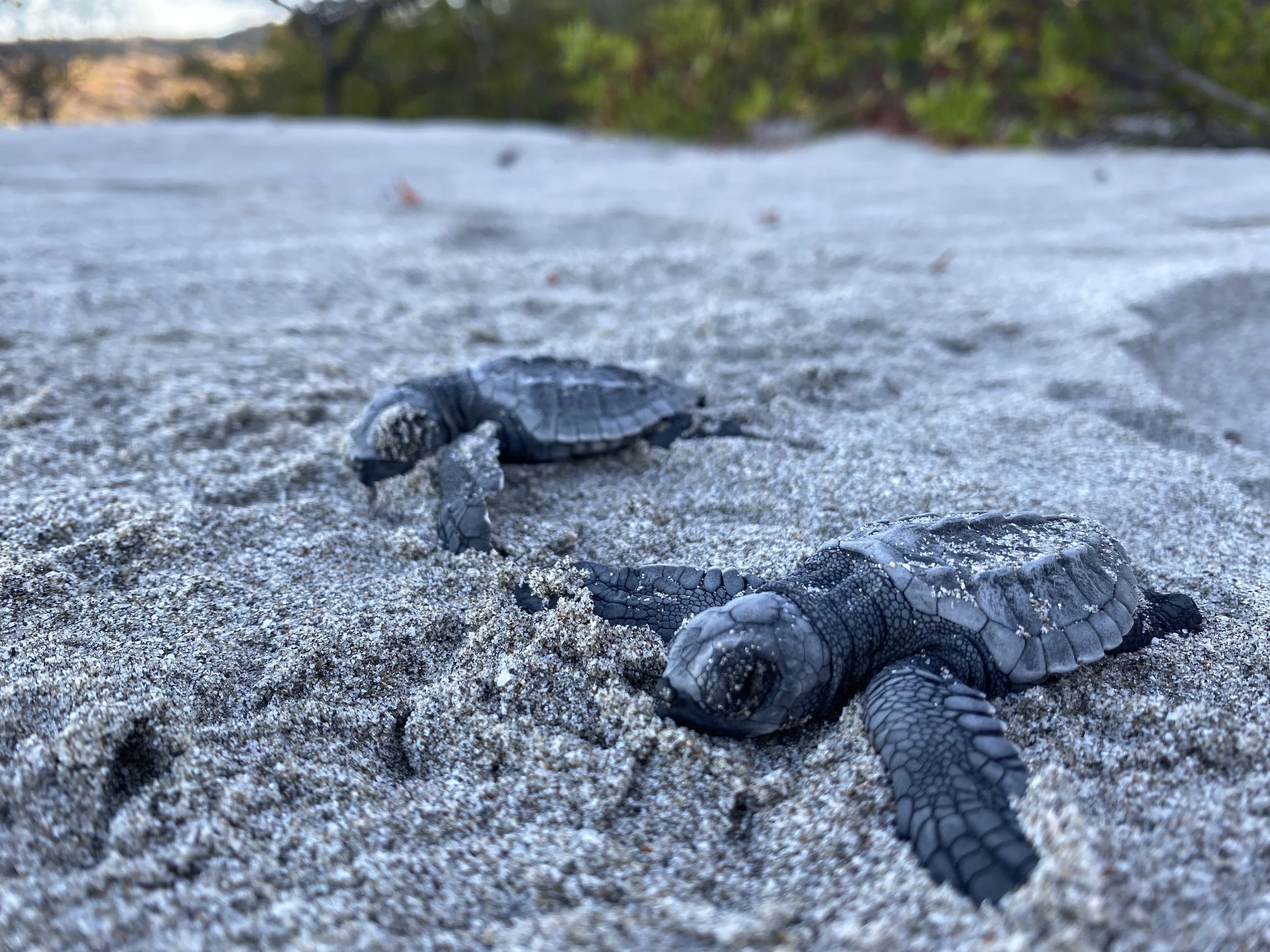
Olive Ridley hatchlings found during a nest excavation. Not every hatchling survived, but seeing them helped me understand just how small these turtles start out.
9. I Helped Measure a Massive Leatherback
Leatherbacks were much rarer in Cabuyal than green turtles or Olive Ridleys, and I didn't see an adult until closer to the end of my stay.
We'd already had a green turtle nesting that night when we spotted a leatherback heading back toward the ocean.
And she was huge.
She was over two metres long and bigger than the Spanish staff member I was patrolling with.
We needed to check her for a tag and measure her carapace before she disappeared back into the Pacific.
Normally, I wouldn't have been the one helping with the measurement, but there were only two of us on patrol—and this turtle was simply too big for one person.
So I helped.
One of us took each end of the measurement while she continued moving toward the water.
She was not interested in waiting for us.
After first encountering leatherbacks as tiny hatchlings during a nest excavation, standing beside a full-grown adult really put their size into perspective.
Tiny baby leatherback to a turtle more than two metres long.
The difference was incredible.
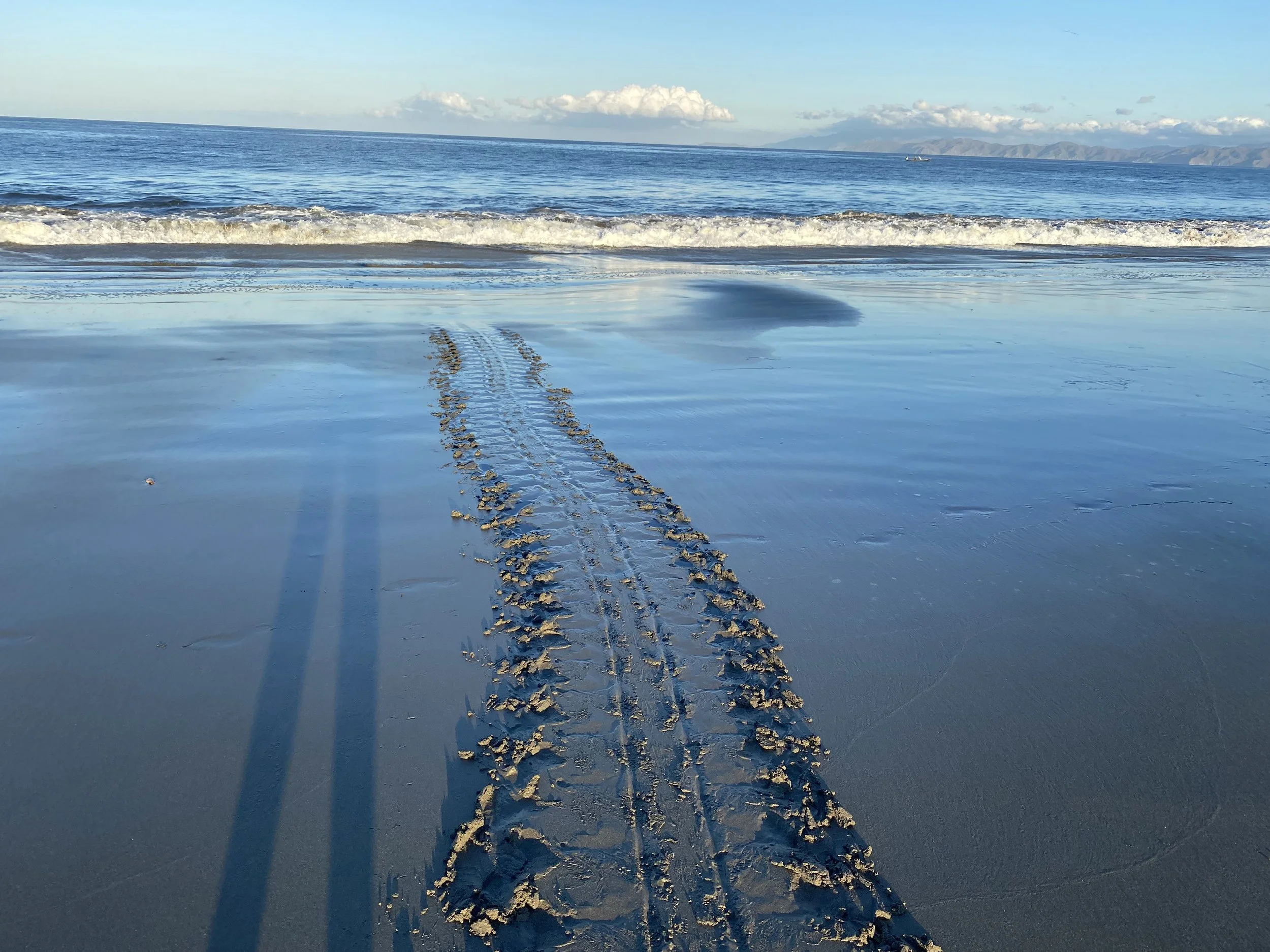
Back to the Pacific. I couldn't photograph the massive leatherback we encountered on night patrol, but watching her disappear into the ocean is something I won't forget.
10. My Last Morning Patrol Ended With a Green Turtle Still Nesting
My last morning patrol gave me one final turtle encounter before leaving Cabuyal.
We headed down to the beach expecting the usual morning survey.
Instead, there was still a green turtle nesting.
Night patrol had ended.
The sun was up.
And this mama was apparently working on her own schedule.
She'd also chosen a nesting spot surprisingly high up the beach. Looking at where she was, I remember wondering how she'd managed to haul herself that far up the sand.
But her late finish gave me something I hadn't really had during my night patrols:
Daylight.
Most of my nesting turtle encounters happened in darkness, so I don't have many photos from them. This time, I finally had the opportunity to take some daytime photos while we waited for her to finish.
Eventually, she completed her nest and headed back toward the Pacific.
It felt like a fitting ending.
On my first night patrol, I'd watched my first green turtle emerge from the ocean in darkness.
On my last morning patrol, I watched another finish nesting in daylight.
Three weeks earlier, I hadn't known how to read turtle tracks or count nesting data.
Now, somehow, all of this felt normal.
And I still wasn't quite ready to leave.
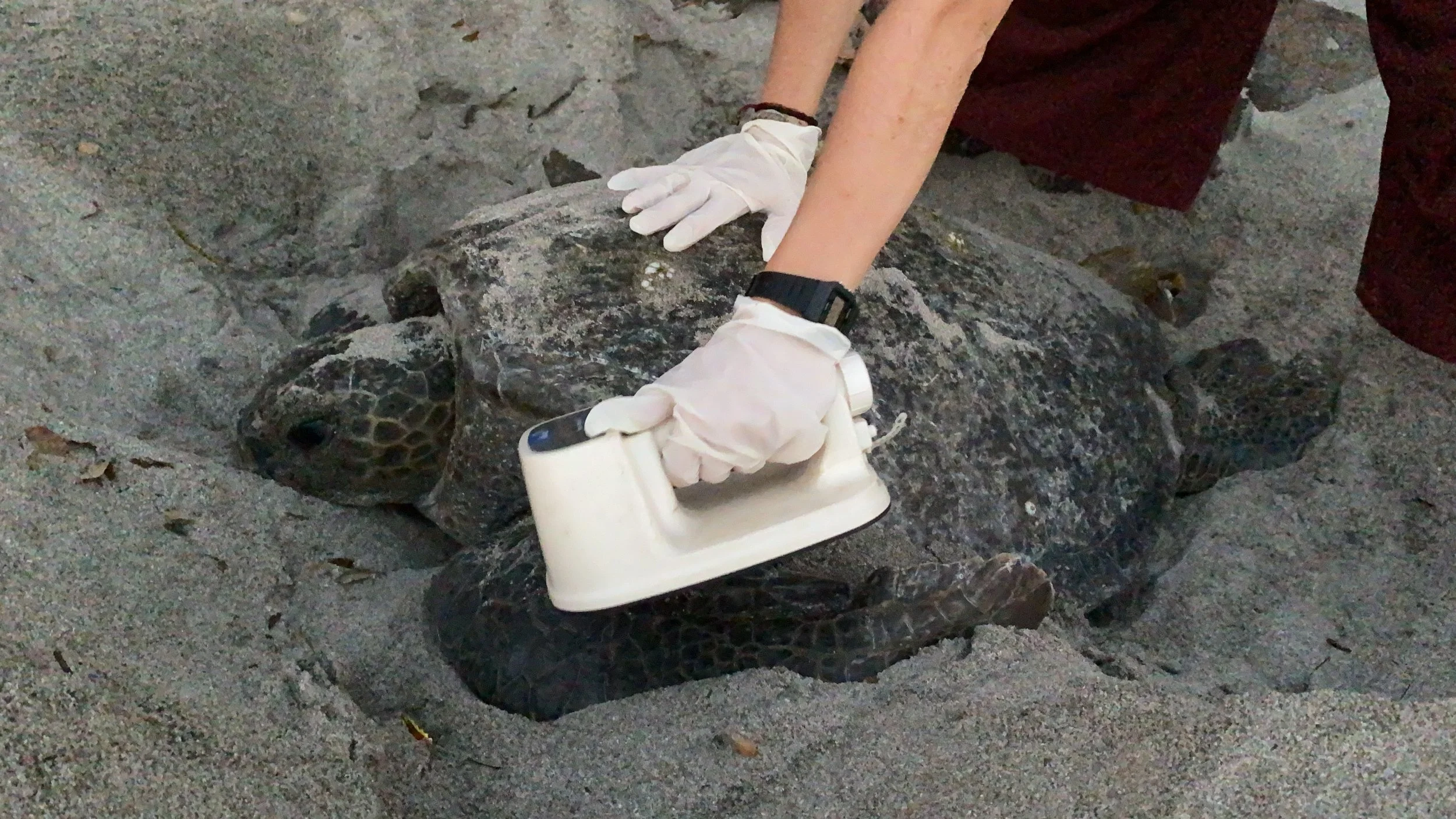
My final morning patrol gave me one last green turtle encounter — and, for once, enough daylight to actually photograph the work.
Final Thoughts
When I signed up to volunteer with sea turtles in Costa Rica, I expected to see turtles.
I didn't expect to help free one from the forest, learn to identify species from their tracks, discover dozens of hatchlings trapped beneath the sand, or find myself measuring an enormous leatherback determined to get back into the ocean.
Some moments were exciting.
Some were heartbreaking.
And some involved staring at the sand wondering whether I was looking at baby turtle tracks or a hermit crab.
But the babies will probably always win.
Seeing my first hatchlings was incredible.
Finding around 80 of them alive beneath the sand and later watching them scramble toward the Pacific?
That's going to be very hard to beat.
I arrived in Cabuyal planning to volunteer for one week and stayed for three.
Given the chance, I'd absolutely do it all over again.
Preferably with another bucket of baby turtles.
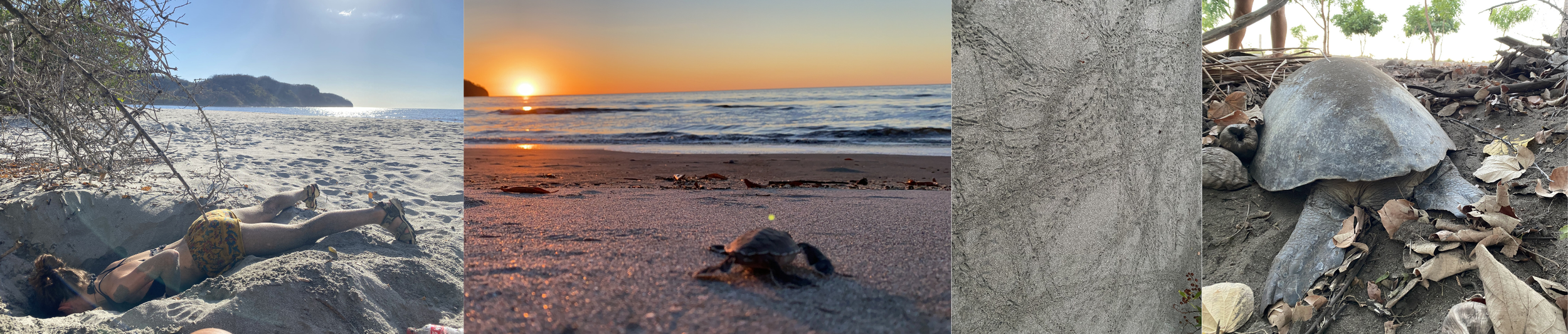
Three weeks in Cabuyal gave me plenty of turtles, quiet beaches, unforgettable moments — and more than a few reasons to want to come back.
