Beach Hopping in El Salvador: Quiet Mornings, Loud Beaches & Learning When to Move On
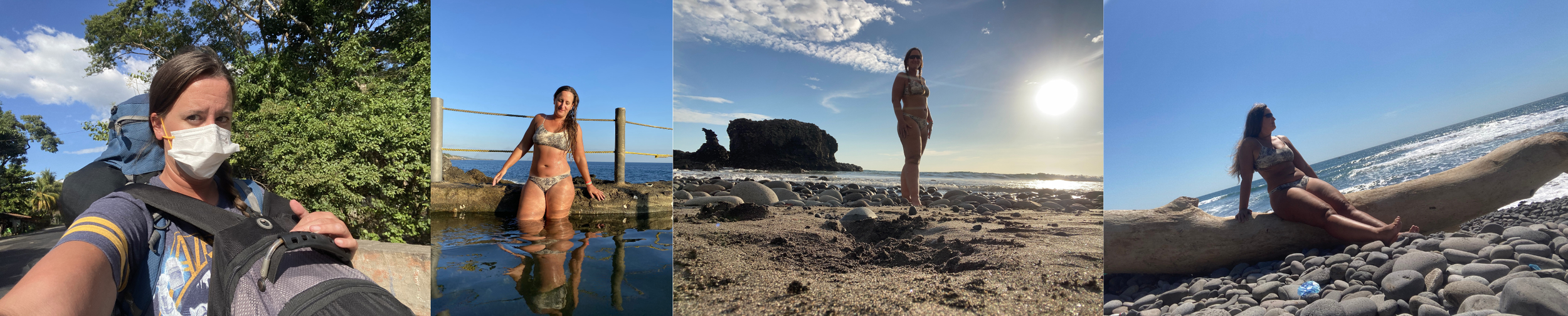
Beach hopping along El Salvador’s coast, without a plan — just paying attention.
After two days at Lake Coatepeque, it was time to go somewhere else.
Sitting by the lake, watching the water change colour depending on the light, I decided to plan the rest of my trip. The idea was simple: spend about a week along the coast, moving slowly from beach to beach. No strict itinerary. No must-see list. Just sun, water, and a different rhythm than the one I’d had inland.
Getting there, though, would take some effort.
To reach the coast, I needed to take a bus to San Salvador and then catch a shuttle heading toward the beach towns. Getting to San Salvador was the easy part. There were several buses leaving directly from the hostel, Captain Morgan. Once I arrived in the capital, things became more improvised.
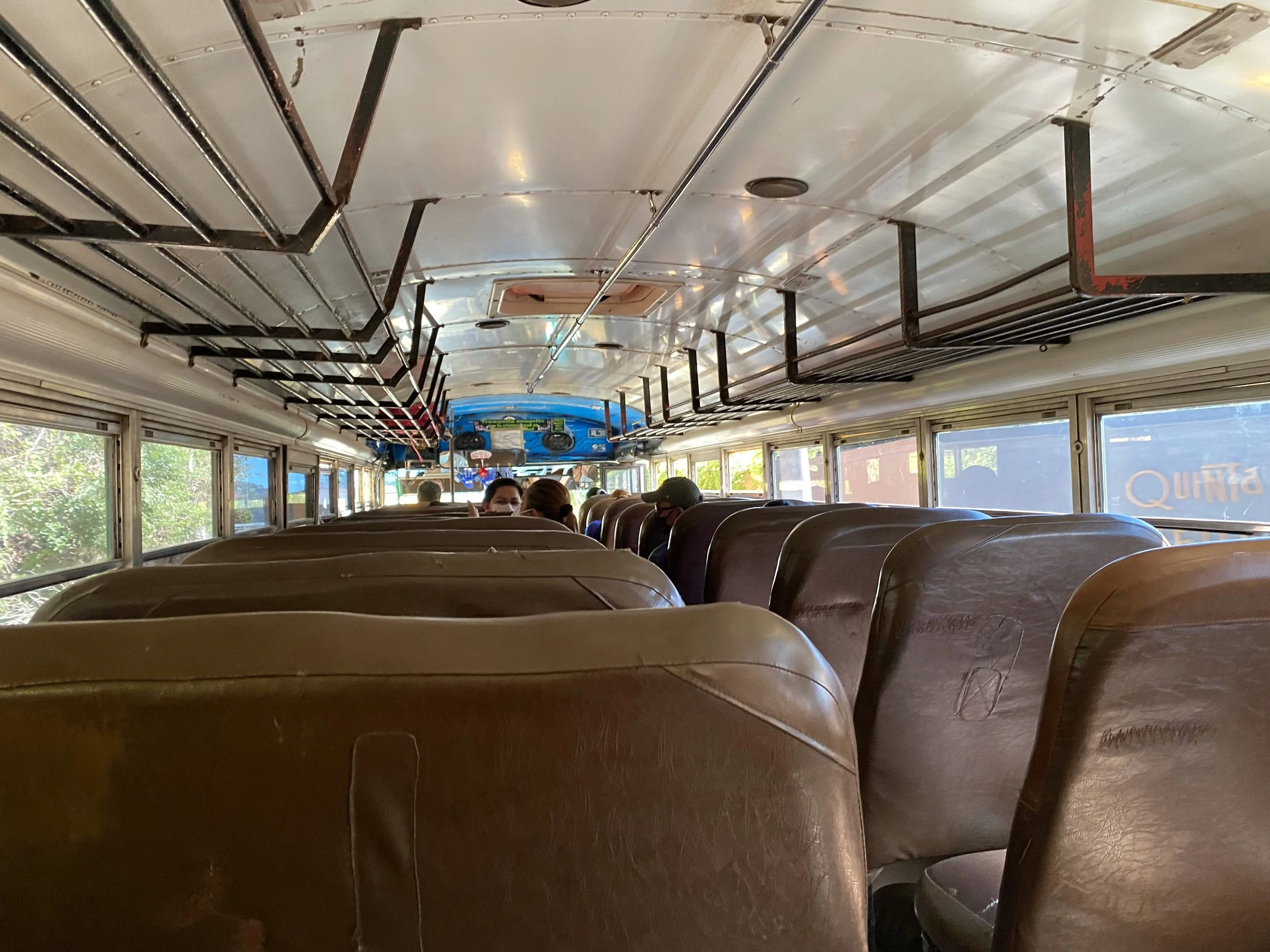
On the bus to San Salvador — where the plan was clear, but everything after that was about patience and timing.
Getting to the Coast: Waiting, Watching & a Blue Gatorade
In San Salvador, you’re dropped off on the side of a busy highway and you are expected to flag down the correct shuttle as it passes by. There’s no station, no clear signage — just traffic, heat, and patience.
A nice older man selling drinks along the side of the road noticed me wandering and pointed me in the right direction to catch my bus south. For the help, I bought a bottle of water for fifty cents. We chatted briefly about El Salvador — how cheap it is, how some people survive on around $300 a month. In my head, I kept thinking, Is that even possible?
Once I found the location to wait for a bus, I stood there alone with my big backpack, watching the world move around me. Cars passed. Buses came and went — none of them mine. I did feel a little vulnerable standing there by myself, but no one really paid me any attention, which was oddly reassuring. It felt exposed, but not unsafe. Just one of those in-between travel moments where you wait and trust that things will eventually line up.
While I waited, I watched life unfold. Vendors weaving through traffic. People hopping on and off buses. Drivers shouting destinations out open windows. Time slowed down.
Eventually, boredom set in, and I decided I needed a drink — specifically a blue Gatorade. I only drink the blue one. I quickly looked up how to say blue in Spanish: azul. Easy enough.
Or so I thought.
I walked up to a woman selling drinks and confidently said, “Azul Gatorade.”
She looked at me like I had just made up a word.
I tried again. Same look.
I simplified. “Gatorade.”
That worked.
I tried the colour again. No luck.
I tried English. “Blue Gatorade.” Still nothing.
At this point, I was convinced I wasn’t getting my drink. She pulled out a red one. Close, but no. I searched red on my phone, said the word, and suddenly something clicked. After some rummaging, she pulled out her last blue Gatorade.
Apparently, in Central America, Gatorade flavours are referred to by their names, not their colours. Cultural fail.
(Yes, ours have names too — I just ignore them.)
After what felt like an hour or two, the right shuttle finally arrived. I had to pay an extra fee for my backpack as large packs count as another person since there’s no storage underneath. Thankfully, the shuttle itself was cheap, so I didn’t worry about it.
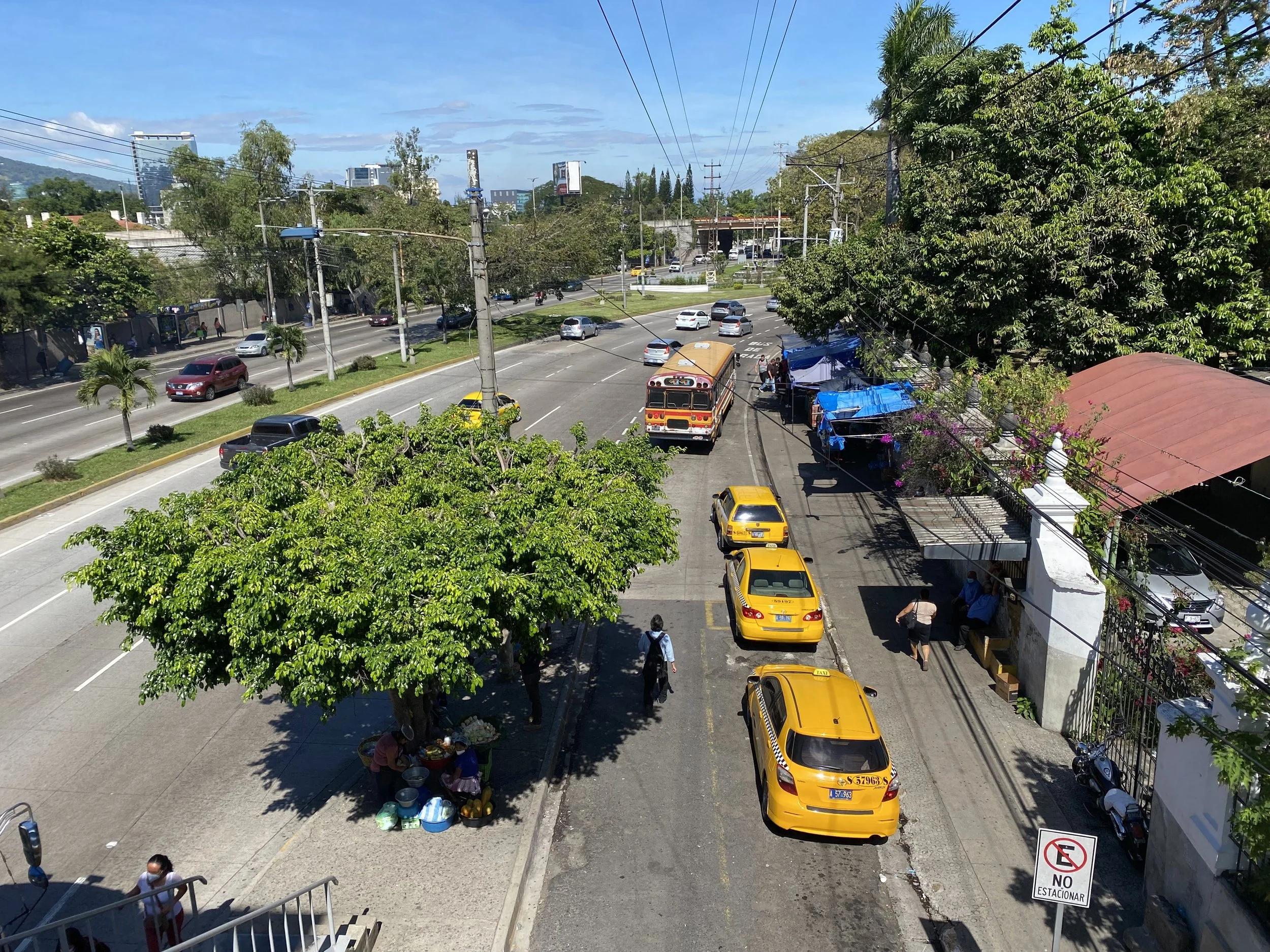
Crossing the road to find the right bus stop — no signs, no station, just timing and a bit of trust.
Playa El Palmarcito: Quiet Sand & an Easy Sunset
Once the bus hit the coast, the shuttle stopped often, letting people on and off. I was one of the last stops. I was dropped off on a quiet street and walked about seven minutes to my hostel, Hammock Plantation.
I picked it because it had a pool, lots of hammocks, was close to the beach, and the price was right. I had originally thought I was staying closer to El Zonte — turns out, I was actually in Playa El Palmarcito. I didn’t realize it until I saw the beach sign and had a small ohhh moment.
Like always, I checked in, found my dorm room, changed into a bathing suit, grabbed my waterproof backpack, and headed straight to the beach.
My first impression was simple: quiet.
There weren’t many people around, which I loved. I found a sandy patch — thankfully no pebbles — dipped my toes into the water, and stayed put on dry land. I don’t swim much. I like the sun. Water is usually too cold for me. If I’m hot, I’ll cool off for a few minutes, but that’s about it.
The sounds were minimal: waves hitting the sand and, every so often, children laughing somewhere nearby.
I watched the sun sink into the horizon and felt my shoulders finally drop.
After sunset, I picked the busiest of the three restaurants nearby — because that’s usually the safest bet. I ordered a local beer and dinner and ended up chatting with a local couple beside me as they watched their kids play in the water.
Their daughter didn’t want the fruit drink they’d ordered and offered it to me. I hesitated, but the dad assured me it was untouched. I don’t usually drink fruit juice, but when in Rome.
We talked for a while, and I found out he owned a restaurant in El Tunco. I wrote the name down, so I could check it out later.
As the night went on, I ended up talking with the restaurant owner, Tuila, as most locals had already gone home and I was the last one there. We talked until around 11 p.m. and exchanged numbers. I was staying in the area for a week, and if he had time, he offered to show me around.
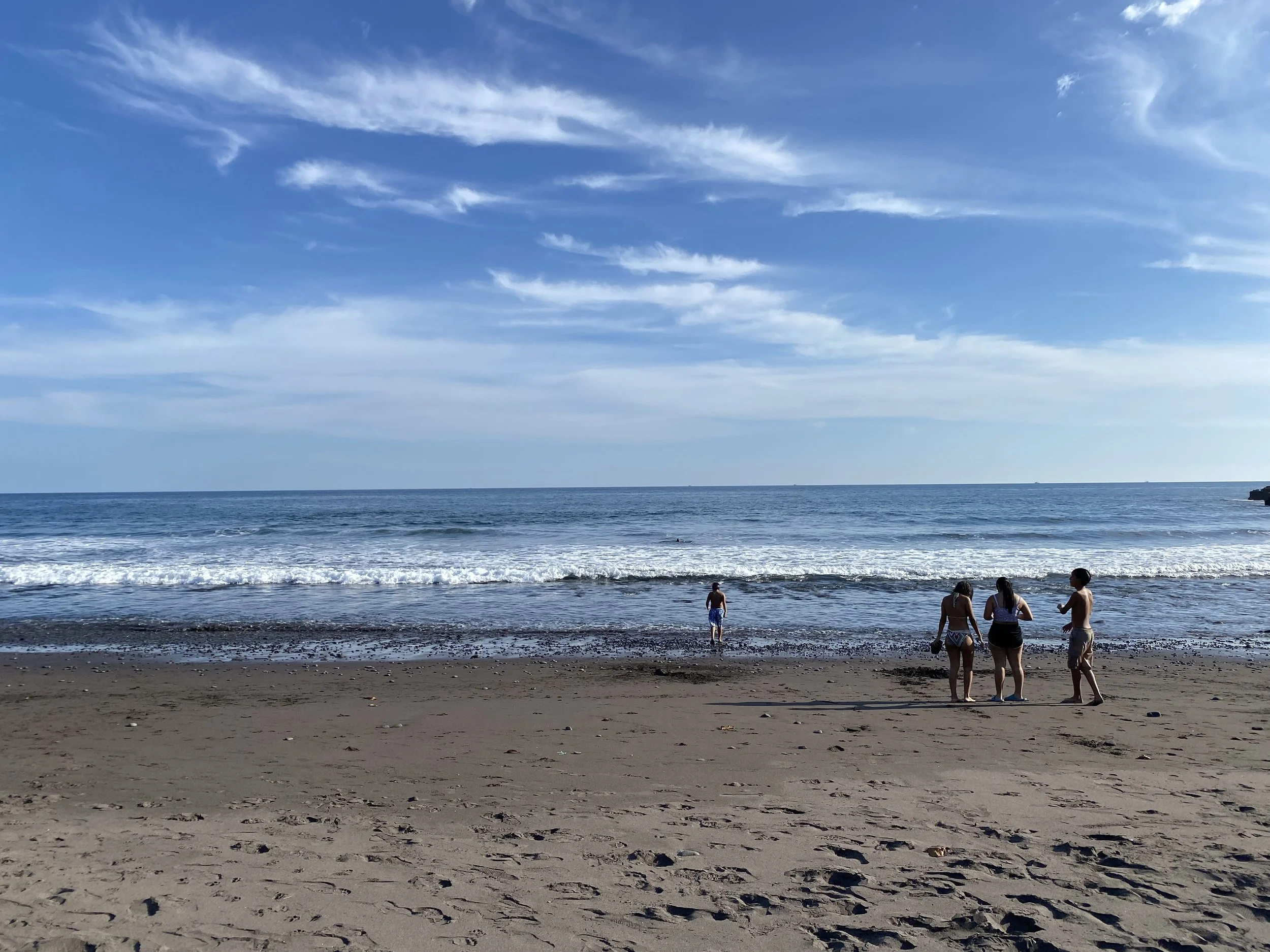
Playa El Palmarcito — quiet sand, warm sun, and the first real pause of my beach week.
El Tunco: Pebbles, Noise & Sensory Overload
The next morning, I returned to the beach before checkout. Getting a shuttle this time was easy — I already knew the routine. I paid extra for my backpack again and was dropped on the side of the road near El Tunco, followed by a short walk to my next hostel: Hotel Mopelia (now closed).
I picked it for the price, location, and pool. I dropped my bags and headed straight to the beach.
And wow — sensory overload.
El Tunco was packed. Backpackers everywhere. Loud music blasting from shops and bars. Mostly surfers wandering around with their surfboards and wall-to-wall people. Coming from the quiet lake and Palmarcito, it was a lot.
The beach itself was completely pebbled. No soft sand in sight. Pebbles are terrible for sunbathing — they dig into your back and make it impossible to get comfortable. I decided to walk and see if I could find sand somewhere else.
I stood there for a moment, looking left, then right, trying to decide which way to go. Pebbles stretched in both directions, and neither option looked particularly inviting. Since I’d come from Playa El Palmarcito, I figured I might as well head the other way and see what was there.
I headed left, carefully navigating the stones until I finally found a wooden path. Eventually, I spotted the El Tunco sign and learned they host world surf competitions. Nearby, I noticed a statue dedicated to a local female surfer who was lost at sea, which made me pause. It felt like a quiet moment of respect tucked into an otherwise loud, busy place.
Eventually, I reached a river and decided that was far enough. I turned back, hoping to find a sandy spot to watch the sunset. I found one briefly — until the tide came in fast and nearly claimed my phone. That was my cue to move.
As the sun set, locals gathered along the beach. I ended up chatting with a young guy who wanted to practice his English. That didn’t bother me — I taught ESL for years in Asia. He told me English lessons cost him $1 USD for an hour long session, which shocked me.
He showed me the best street food in town — tacos — and ordered for me, which I appreciated because I knew I was getting the good stuff. Afterward, I headed back to the hostel. I wasn’t in a party mood, and I didn’t feel comfortable going to a nightclub alone.
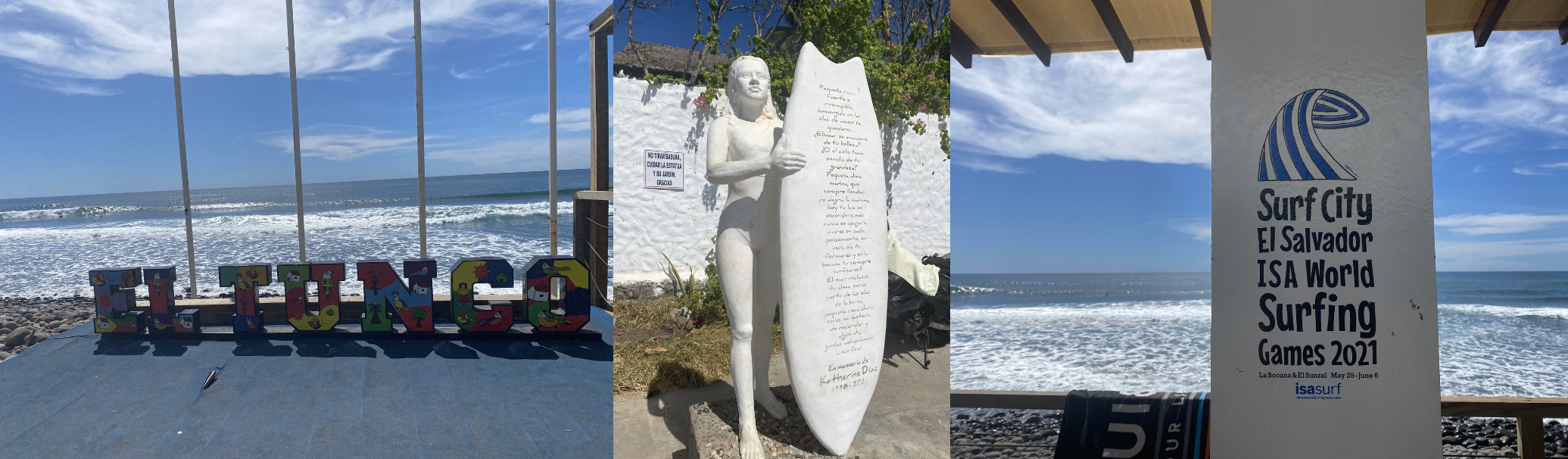
El Tunco is built around surfing, and you feel it the moment you arrive.
A Quieter Lunch & a Pool Day Reset
The next day, I checked out the restaurant the local couple from Playa El Palmarcito had told me about. The dad owned it, and when I arrived, I immediately understood why he’d recommended it.
The place was quiet, peaceful, and surrounded by greenery — a total contrast to El Tunco’s chaos. It felt like a small oasis tucked just far enough away from the noise. The owner reminded me of a Latino Jason Momoa — laid-back, friendly, and completely at ease in his surroundings.
I asked if he was around, but he wasn’t there that day. After eating, I went back to the hostel and actually used the pool — which was the whole reason I kept booking places with pools in the first place.
Later, I grabbed my bags and waited for another shuttle, this time heading toward La Libertad. I almost got on a few wrong buses, but I always tell the driver where I’m going to make sure I end up on the right one.
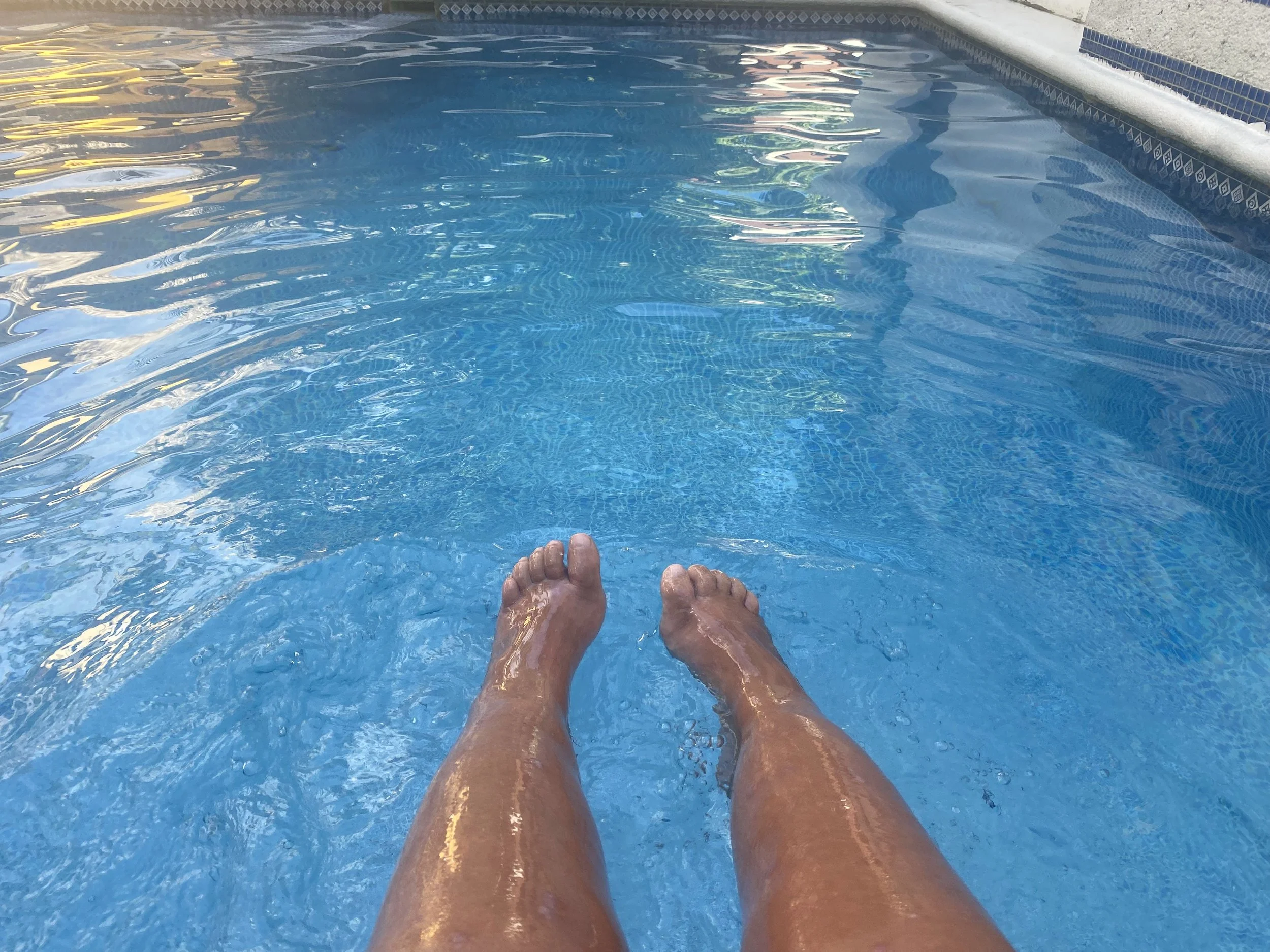
I book hostels with pools and rarely use them. This is proof I did.
Playa Conchalio: When a Hostel Isn’t for You
This time, I landed at Playa Conchalio, staying at Pelican Surf Camp.
Online, it looked cool. In person? Not for me.
This place was built for hardcore surfers. Sand floors. Cold outdoor showers behind plastic sheets. Rustic in a way that stops being charming very quickly. I was glad I was only staying one night.
I dropped my bags and headed to the beach. At least it wasn’t as pebbly. I didn’t swim — just lay in the sun and accidentally dozed off. As sunset approached, an older man struck up a conversation, asking lots of questions. I just wanted peace and quiet.
After sunset, I ordered dinner onsite and called it a night.
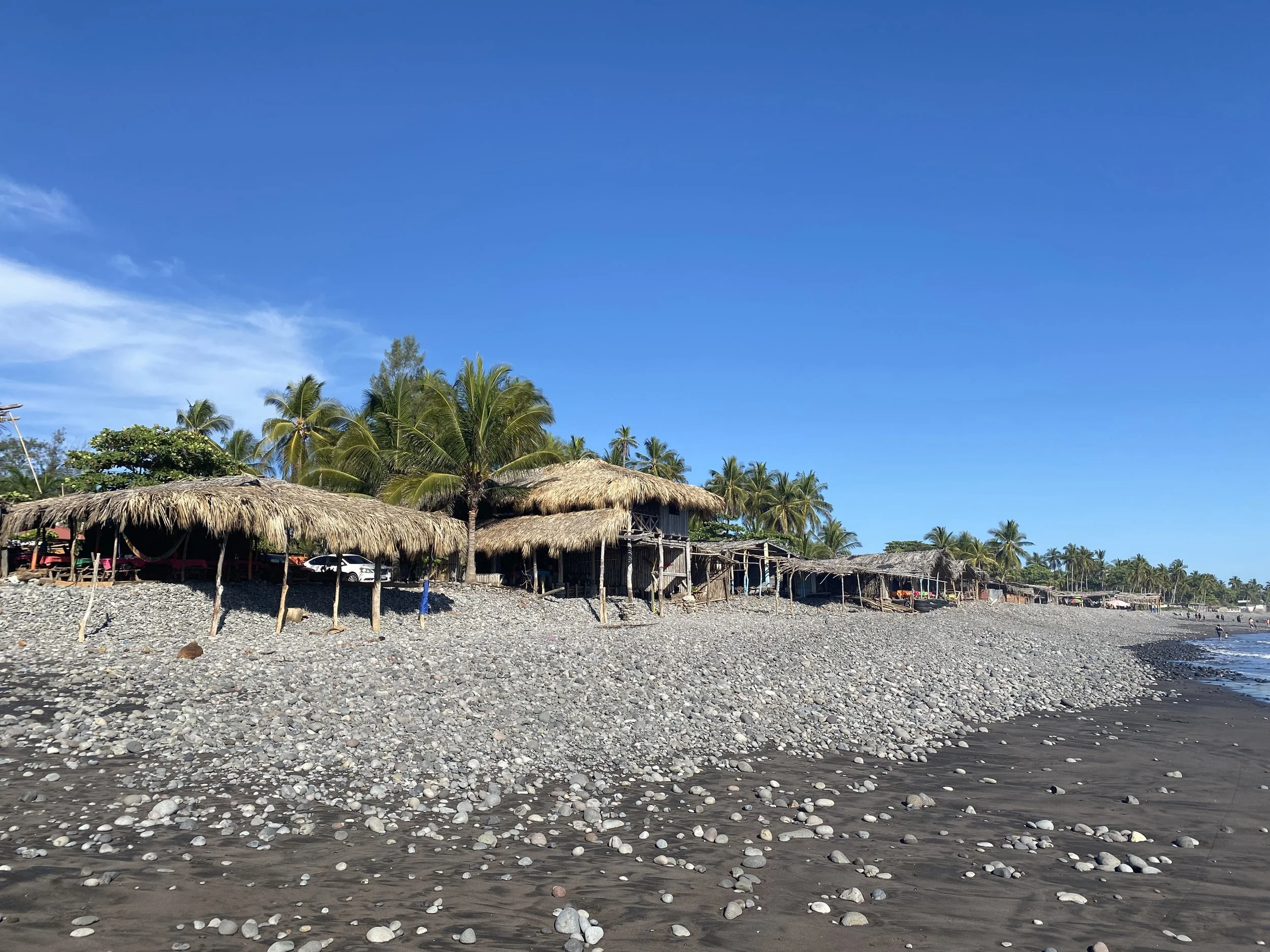
An interesting place to stay… just not the right fit for me.
Tide Pools, Dominoes & Saying Yes (Again)
Tuila dropped me off at Hostal El Balsamo and waited while I checked in. I didn’t even fully unpack — I just grabbed my waterproof backpack and we headed straight back out. We had planned to explore Playa El Palmarcito a bit more, and I wasn’t going to waste daylight sitting in a dorm room.
This was when I finally found the natural rock pools.
I’d been chasing that “perfect tide pool moment” for days, and of course it happened when I wasn’t even trying that hard. The water was calmer there, tucked in behind the rocks, and it was one of the only times during my beach week that I actually stayed in the ocean longer than five minutes. I cooled off, took photos, and floated around just enough to feel refreshed — then went right back to doing what I do best: baking in the sun.
Afterward we ended up at his restaurant, playing dominoes like we had nowhere else to be. At some point, he asked if he could teach me how to surf. I laughed and politely declined — my balance isn’t great on solid ground, let alone on a moving board.
Later, his cousin stopped by on his way to go surfing and asked the same thing. I had to decline again, for the exact same reasons. It turned into a bit of a running joke. It never felt uncomfortable — just light, friendly, and very El Salvador.
As evening rolled in, we went out for dinner and ate pupusas, which felt like the perfect end to a salty beach day. After that, we met up with a group of backpackers that Tuila knew, and the group of us decided to go out in La Libertad.
I wasn’t planning on clubbing that night — but I also didn’t want to say no to a safe group situation, especially since I didn’t feel comfortable going somewhere like that alone.
The nightclub was fun… but the thing I remember most was the security. It was the first time I’d ever seen security guards with massive guns inside a club. At first, it was jarring — like, am I really dancing right now with that in the corner of the room? But after a while, you adjust. When you’re chatting, laughing, and trying to make the most of a night, your brain stops zooming in on it.
We stayed out late, drank too much, and didn’t get back until the early morning hours. Since I barely spent any real time at the hostel, I stayed an extra night. The next day was exactly what I needed — quiet, beach, sun, and a reset.
Before I moved on, Tuila handed me a small handmade bracelet. He told me it was so I’d never forget him — or El Salvador.
At the time, it felt like a simple gesture. Nothing flashy. Nothing expensive. But it stuck with me in a way most souvenirs don’t.
I still wear it to this day.
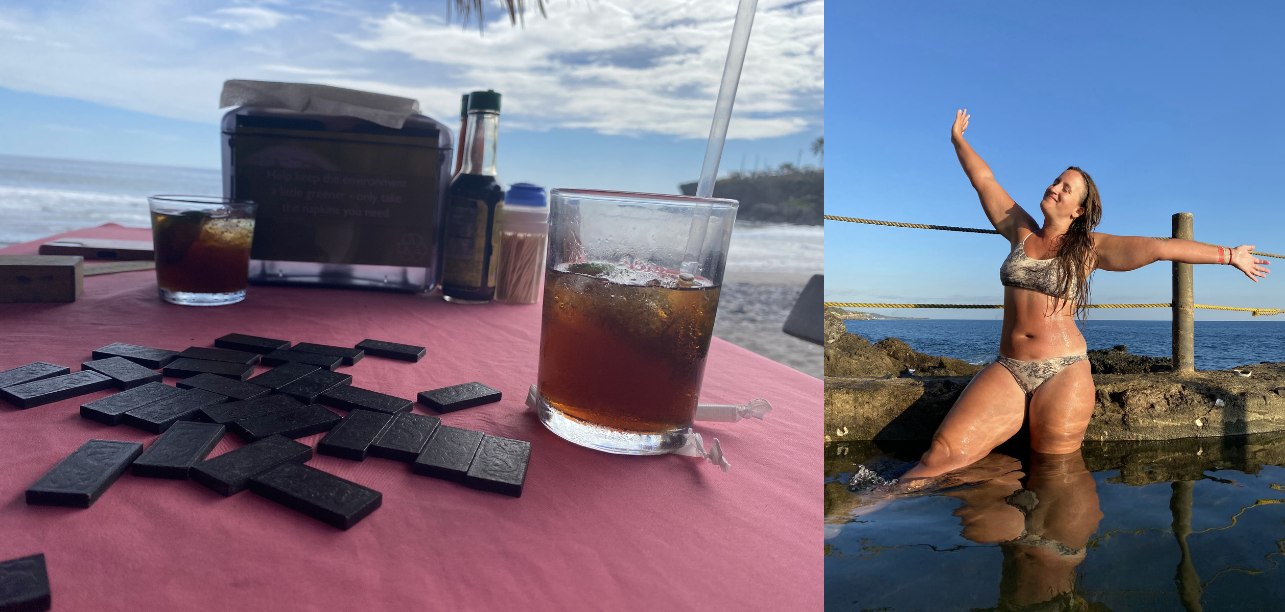
Rock pools, rum and Coke, and a game of dominoes by the sea — slow moments done right.
Los Cóbanos: Expectations vs Reality
My last beach stop was Los Cóbanos. I’d heard good things and pictured it as the perfect place to end my beach week — quiet, scenic, and easy before heading inland toward Ruta de las Flores.
When I arrived, I was dropped off and had to walk along the beach with my big backpack to reach my guesthouse. It was the quietest and most direct route, but also one of those moments where you become very aware of yourself — hot, tired, and carrying everything you own while the ocean stretches out beside you.
It was peaceful, though. No crowds. No music. Just the sound of the waves and my footsteps in the sand.
Once I checked in and found my room, I realized I had the entire guesthouse to myself. No other guests. No noise. Just me. It felt like an unexpected bonus, especially after the busy beaches I’d just left behind.
I dropped my bag, changed, and headed straight to the beach to enjoy what little daylight I had left. I sat quietly, watching the sky change colours as the sun went down, soaking in the stillness. After days of moving, adjusting, and navigating new places, it felt good to stop — even briefly.
Once the sun disappeared, I figured I’d find some food.
That’s when I realized how different Los Cóbanos really was.
As night fell, everything closed. Restaurants shut their doors. Streets emptied. There were no backpackers wandering around, no places staying open late, and no obvious options for dinner. I walked along the beach for over an hour in one direction, hoping to find something — ideally food that wasn’t seafood — but came up empty.
Eventually, I turned back and found a small mom-and-pop shop selling packaged snacks. I bought a few mini bags of chips and called it dinner.
It wasn’t what I’d imagined, but I was grateful that I ate something.
The next morning, my guesthouse provided breakfast, which I was genuinely thankful for. After the night before, even something simple felt like a win. I ate slowly, enjoying the quiet, and let go of the disappointment.
Los Cóbanos wasn’t a bad place. It just wasn’t what I needed at that moment — and that, too, was part of the lesson.
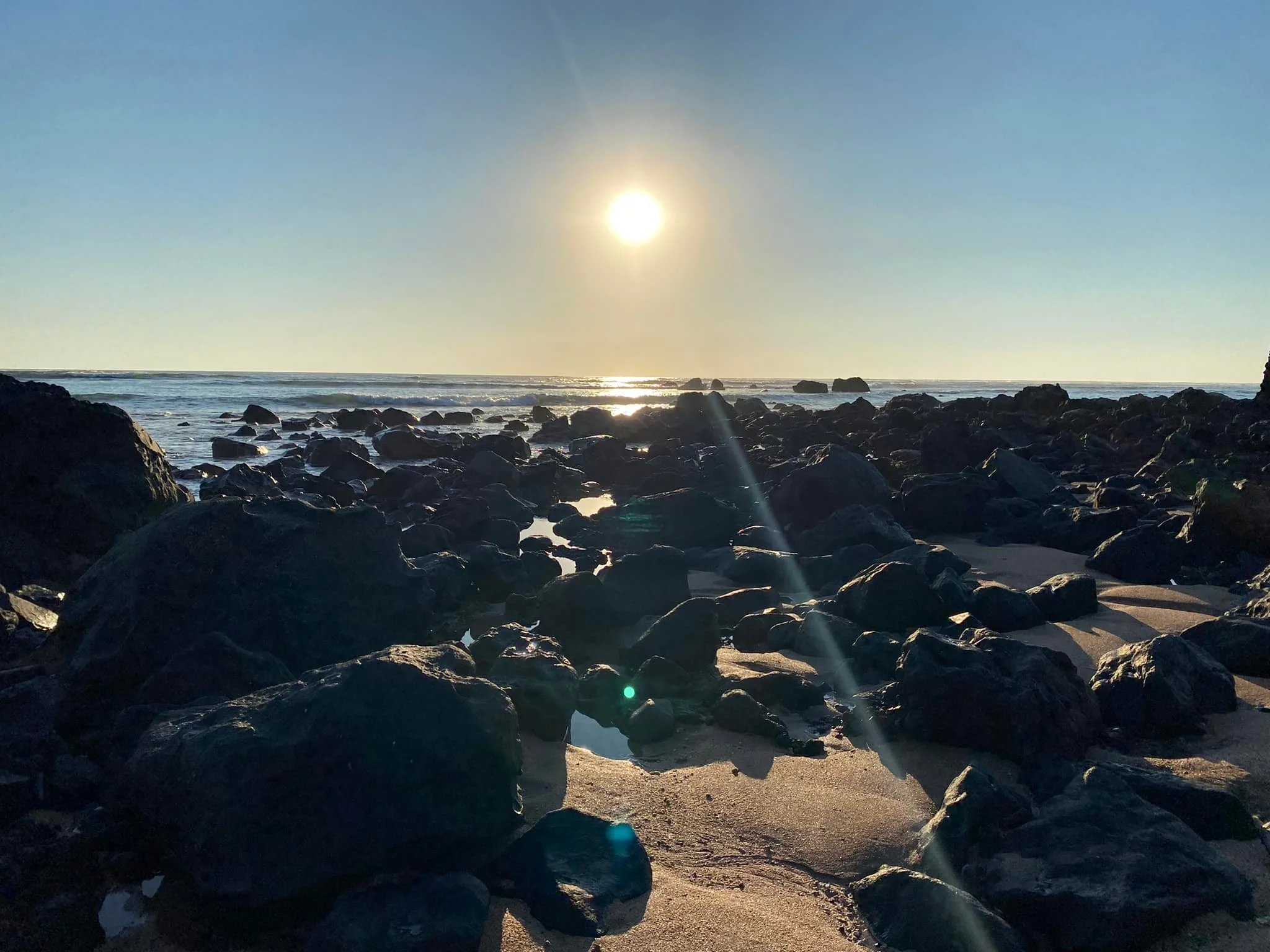
Los Cóbanos — where I learned that even beautiful places aren’t always the right fit.
What the Beach Week Taught Me
Beach week wasn’t what I expected.
It wasn’t all relaxation or postcard perfection. But it gave me something better: perspective. Some places you linger. Some you pass through. Some you love. Some you simply learn from.
By the time I packed my bag again, I was ready for something different — less coast, more colour, cooler air, and a change of scenery.
The next chapter of my El Salvador journey would take me inland, toward coffee towns, murals, and mountain air — along the Ruta de las Flores.

Not the beach week I expected — but exactly the one I needed.
