Lake Coatepeque, El Salvador: Where I Meant to Slow Down (Eventually)

A lake I came for peace and left with stories — unexpected people, long days on the water, late nights, and the kind of moments you don’t plan for but remember most.
Leaving Santa Ana felt easy.
I already knew where the bus station was, what time the bus was leaving, and how long the ride would take. There was no rushing, no speed-walking, and no quiet panic about missing the bus this time. I checked out of the hostel, hoisted my big backpack on, and made my way through busy streets of Santa Ana in the morning.
Things went smoothly — which, when you’re travelling, feels like a small victory.
The ride to Lake Coatepeque takes about two hours. I spent most of the ride the way I usually do when travelling: earbuds in, music playing, and staring out the window. As the road climbed, the scenery changed, and whenever the trees cleared, I caught flashes of blue below.
I was looking forward to this stop.
A pause.
A reset.
A chance to slow down after the pace of Santa Ana.
That plan didn’t last long.
When the bus finally stopped, it dropped me right at the front doors of Captain Morgan Hostel. No extra walking. No confusion. Just a straightforward arrival — which felt fitting after the calm morning I’d had.
At the time, I thought I knew exactly how this stop was going to go.
I was wrong.
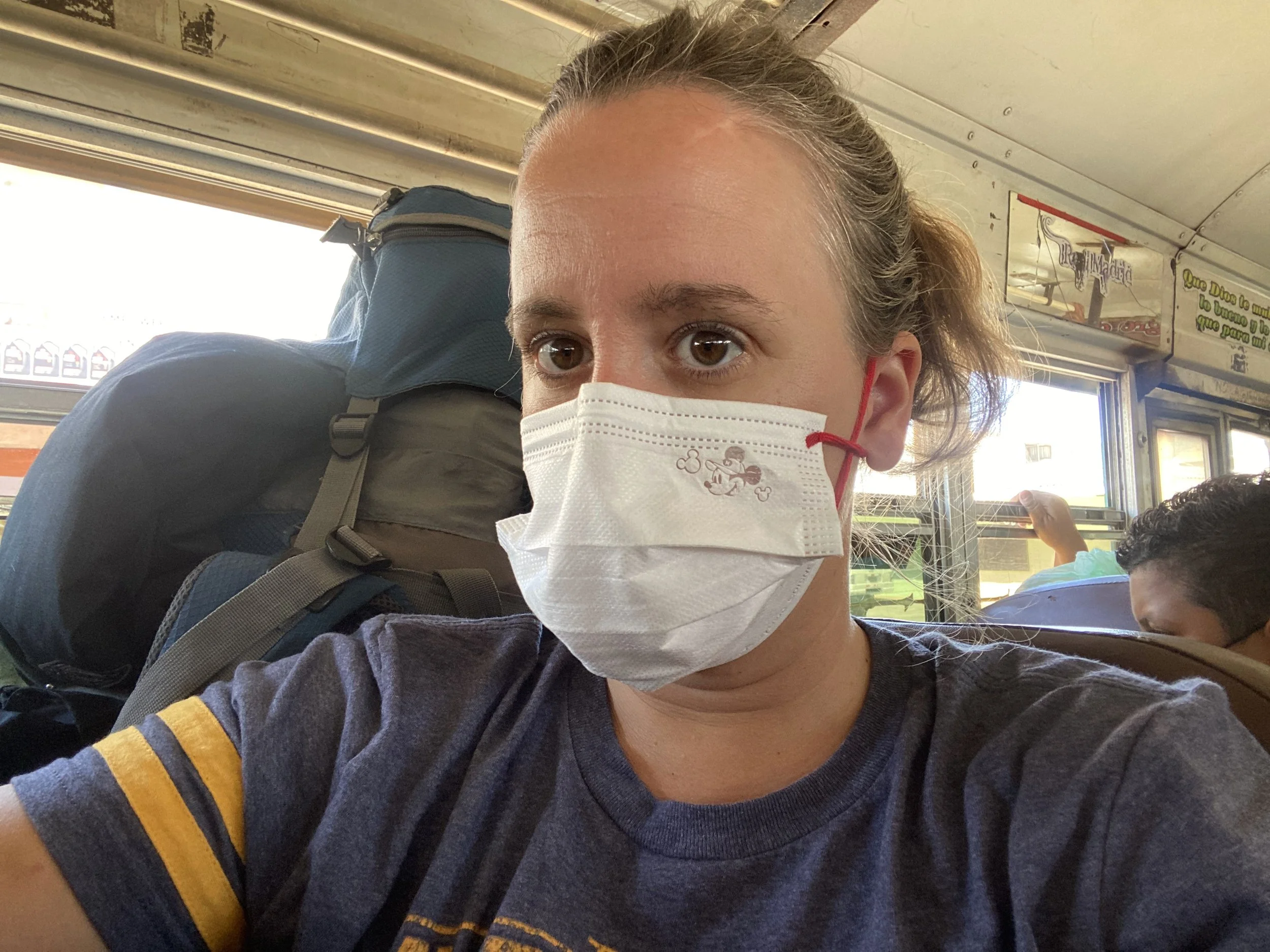
On the local bus to Lake Coatepeque — big backpack, no rush, and that familiar “here we go again” feeling.
Arrival at the Lake
When I arrived at the lake, I checked into Captain Morgan Hostel. I picked this hostel mostly because of the name. I do love the rum, and in my mind, there was no better place for me to stay than somewhere called Captain Morgan. Whether it was named after the pirate or the bottle, I didn’t really care — it felt right.
The hostel had great reviews and seemed like the backpacker place to be. Once I was in my room, I didn’t linger long. I dropped my bags in my room and went straight to the wooden platform overlooking the lake.
That’s when I locked eyes with someone and had one of those I know you, but from where? moments.
It was Jimmy.
We both stared for a second before it clicked — we’d met the day before on the volcano hike. We laughed at the coincidence and immediately started filling in the gaps. I asked if he’d managed to hike the volcano again and see the crater this time.
He had.
He told me it was incredible. I won’t lie — I was a little jealous. The day before, strong winds had stopped us at lookout point three out of four, and hearing about the crater made me wish the weather had cooperated just a bit more.
Then he asked a simple question.
Did I want to join him and his new friends on the boat?
I didn’t hesitate.
Immediately – YES!
I told him I just needed to change into a bathing suit and I’d be right back. I don’t think they believed me, but five minutes later, I was back — and just like that, my quiet lake day turned into something else entirely.
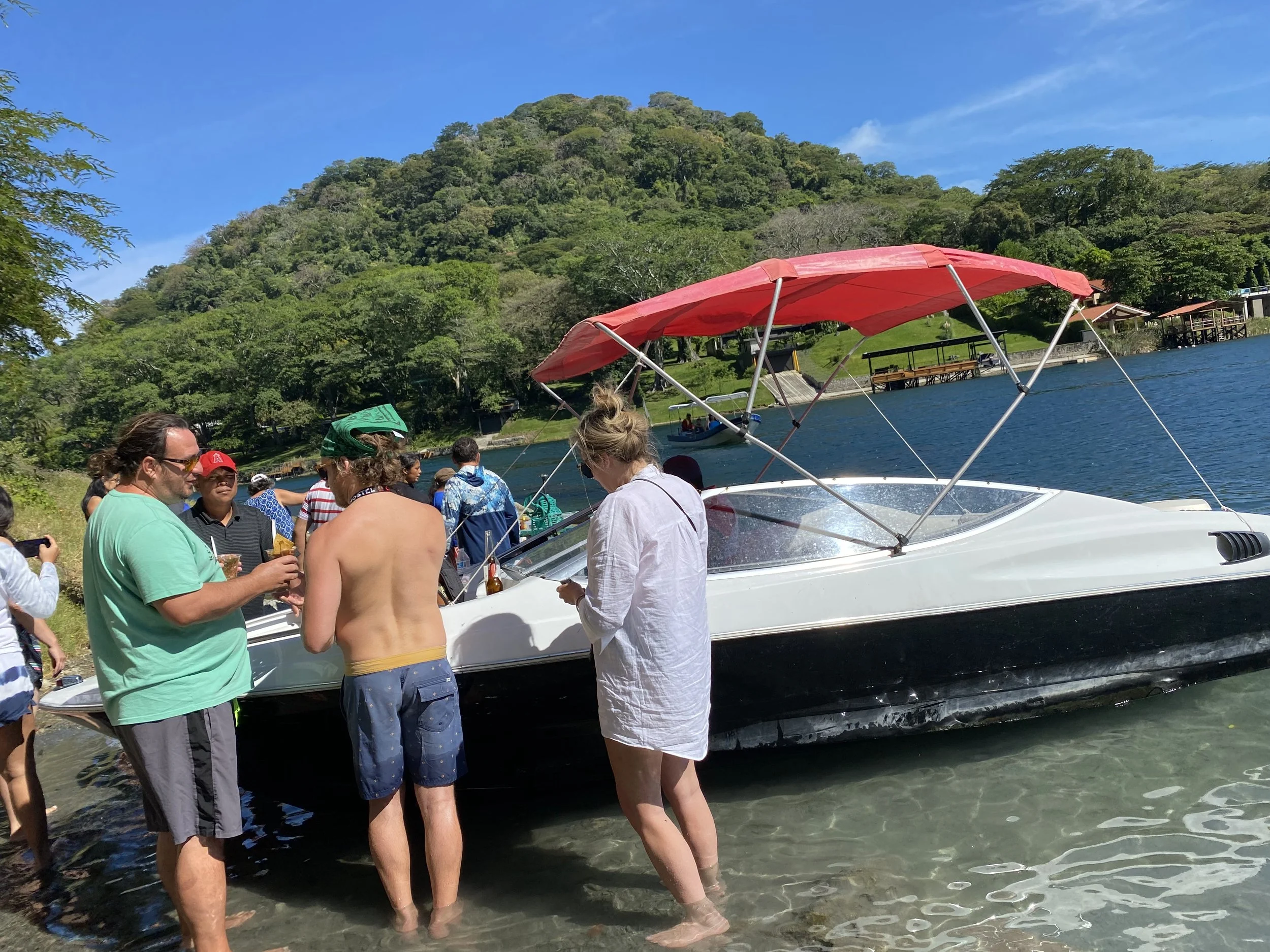
The first photo I took that day — already ankle-deep in the lake, beers in hand, and somehow part of a boat crew I’d just met.
Day One: The Lake I Didn’t Expect
Day one at Lake Coatepeque turned into something I hadn’t planned for at all.
What I thought would be a quiet afternoon by the water quickly became a full day out on the lake with Jimmy and two friends he’d met at the hostel — Andrew and Michelle. They were travelling together and had already organized a boat for the day, and before I really had time to think about it, I was climbing aboard with them.
The lake opened up almost immediately once we left the dock. From the shore, it felt calm and contained, but out on the water, it was expansive. The kind of place that feels bigger the farther you go, stretching out in every direction. Depending on the clouds and the angle of the sun, the water shifted between deep blue and lighter shades, catching the light in a way that made it hard to look away.
We had a cooler full of beer on board, and bottles were passed around easily as we cruised across the lake. There was no rush and no real plan beyond seeing where the day would take us. Conversations came and went, sometimes filling the space, sometimes giving way to quiet moments where everyone just watched the water slide past.
At one point, we stopped near a thermal vent. The lake itself felt cool when you dipped your toes in, but closer to the vent, the water was boiling. You couldn’t put your feet directly into the warm area — it was far too hot — but floating nearby and feeling the temperature change was surreal. It was one of those moments that felt strange and grounding at the same time.
After that, the locals driving the boat took us to one of the floating restaurants. I couldn’t tell you where we were exactly or what the place was called. I was just along for the ride, and that felt like enough. We ordered lunch, had another round or two of beer, and completely lost track of time.
The only moment that pulled us back to reality was paying.
Jimmy and Andrew wanted to use Bitcoin, and since it was still relatively new, no one really seemed sure how the process worked. Phones came out, questions were asked, and what should have been a quick transaction turned into a small event of its own. It was funny watching everyone try to figure it out, especially knowing that El Salvador had only recently made Bitcoin legal tender.
By the time we realized how long we’d been sitting there, we were suddenly aware of the clock. The boat had been booked for a limited time, and we hadn’t noticed how fast the hours had passed. Time really does fly when you’re having fun — especially with good company.
Back on the boat, I took a seat toward the back while everyone else gathered near the front. I didn’t want to impose, and honestly, I liked it there. The wind picked up as we moved, whipping my hair in every direction and guaranteeing a tangled mess later on. Still, sitting back there felt peaceful in its own way, watching the lake stretch out behind us as the sun shifted lower in the sky.
When we finally returned to land, the day didn’t end right away. We settled into the hostel bar, drinks in hand, talking as the sun went down. Eventually, someone pointed out that it was probably time for dinner, and we all changed and walked to a nearby restaurant just down the road.
After dinner, we somehow ended up back at the hostel bar again. Conversation flowed easily, the kind that only happens when no one is in a hurry to be anywhere else. Around 10 p.m., Jimmy and Michelle called it a night — they were heading out early the next morning. Andrew and I stayed up a bit longer, talking and drinking until around 1 a.m.
I had only planned to stay at the lake for one day.
By the time I finally went to bed, I already knew I’d be staying longer.
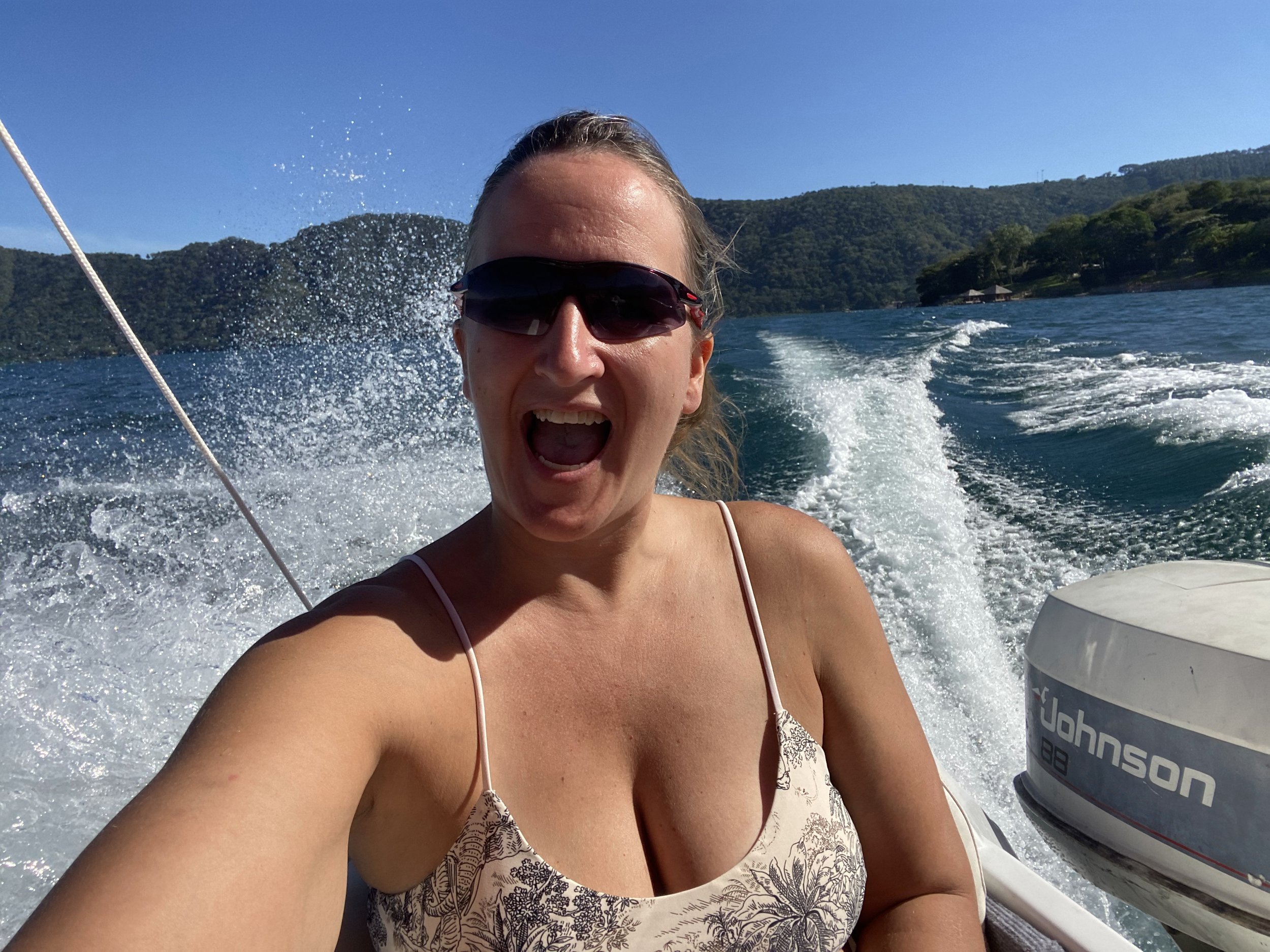
I sat at the back of the boat — partly not wanting to impose, partly just happy to watch the lake stretch out behind us.
Day Two: The Lake I Came For
By the time I woke up the next morning, the hostel was quiet again.
Jimmy, Andrew, and Michelle had already left early, heading off toward their next stop. The social buzz from the night before was gone, and Lake Coatepeque felt like it had exhaled. For the first time since arriving, I had the place almost entirely to myself.
This was the day I had originally planned for.
Day one had been spontaneous and fun, but it hadn’t been relaxing. I barely took any photos that first day, which is always a sign for me. When I’m really present — talking, laughing, moving — my phone stays tucked away. I don’t think about documenting anything. I just exist in it.
Day two was different.
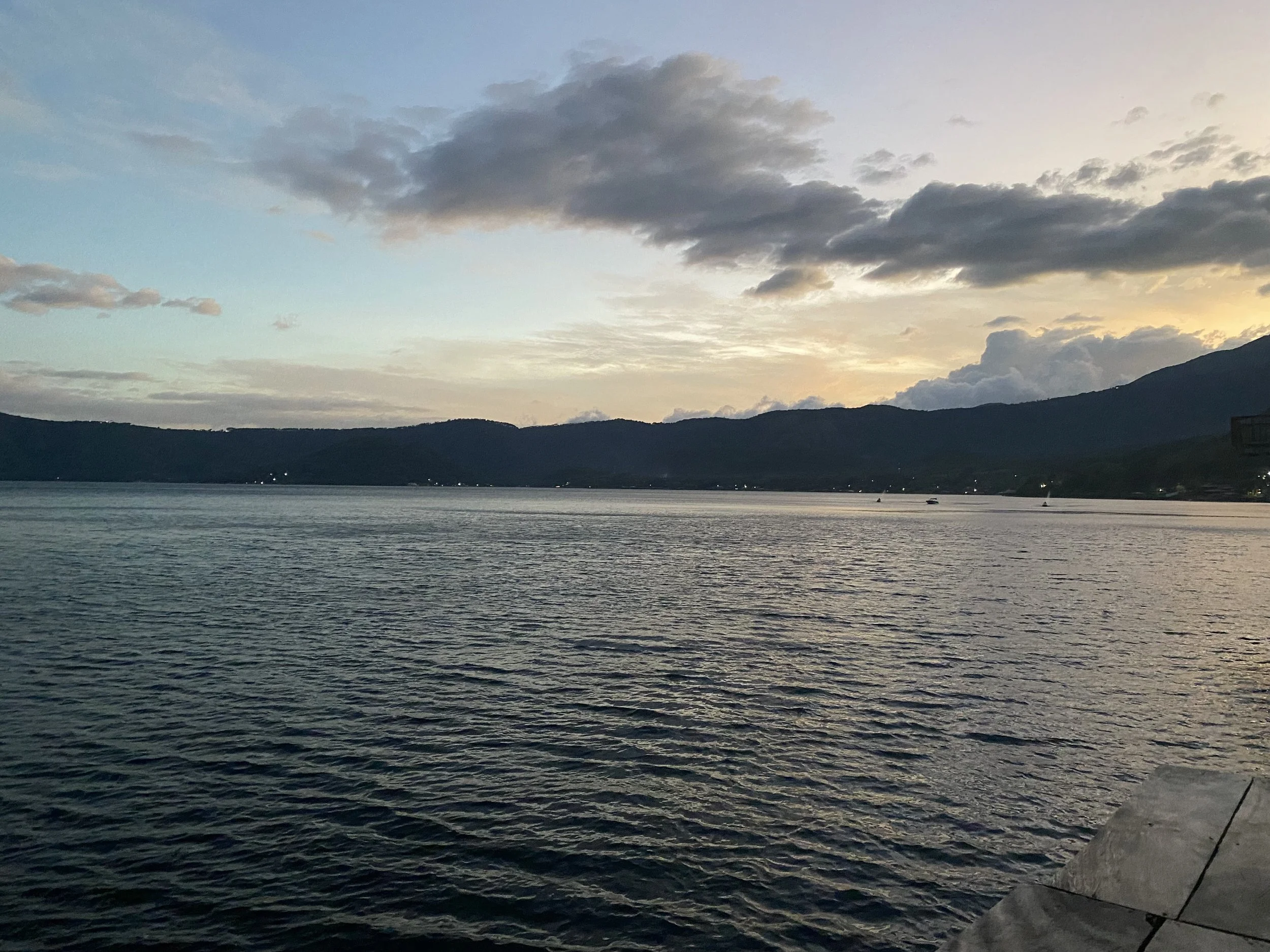
The wooden platform was empty when I walked out, the lake stretching out in front of me like it had all the time in the world. The water was calm, and depending on the light, it shifted between deep blue and softer, lighter shades. The sun glistened across the surface, and the stillness made everything feel quieter — even my own thoughts.
This was when I started taking photos.
I did my usual slow photo walk, moving back and forth along the platform, changing angles, waiting for the light to hit just right. There was no rush, no one waiting behind me, and no feeling like I needed to move along. It felt easy. Natural. The kind of quiet that makes you linger longer than you planned to.
When I wasn’t taking photos, I was doing absolutely nothing.
I spent hours on the sun loungers, drifting in and out of sleep, catching actual zzzs while sunbathing. The kind of rest that only happens when your body finally realizes it doesn’t need to be alert. I didn’t go swimming that day — not because the lake wasn’t inviting, but because I was perfectly content staying exactly where I was, letting the heat soak into my skin and watching the light dance across the water.
Around lunchtime, a few backpackers arrived to eat, bringing a brief wave of noise and conversation before disappearing again. By early afternoon, the hostel was quiet once more. Later in the evening, it filled up again — the bar busy, people coming and going — a sharp contrast to how still the day itself had been.
This was the pause I needed.
I’m so used to fast travel — moving every few days, changing places, figuring things out on the go — that I sometimes forget to stop. Lake Coatepeque gave me permission to do exactly that. It didn’t demand sightseeing or schedules. It didn’t ask for plans. It simply existed, and for a day, that was enough.
I used the quiet to think ahead. The idea was simple: spend the next seven days along the coast near El Tunco, moving slowly from beach to beach. No strict itinerary. Just water, rest, and a change of pace.
Sitting there, watching the lake shift colour as the sun moved across the sky, I realized how rare it is to give yourself that kind of time — time with no pressure to be productive, no need to be anywhere else.
Lake Coatepeque didn’t feel touristy. It felt calm, grounded, and lived-in. Exactly what I hadn’t realized I was looking for.
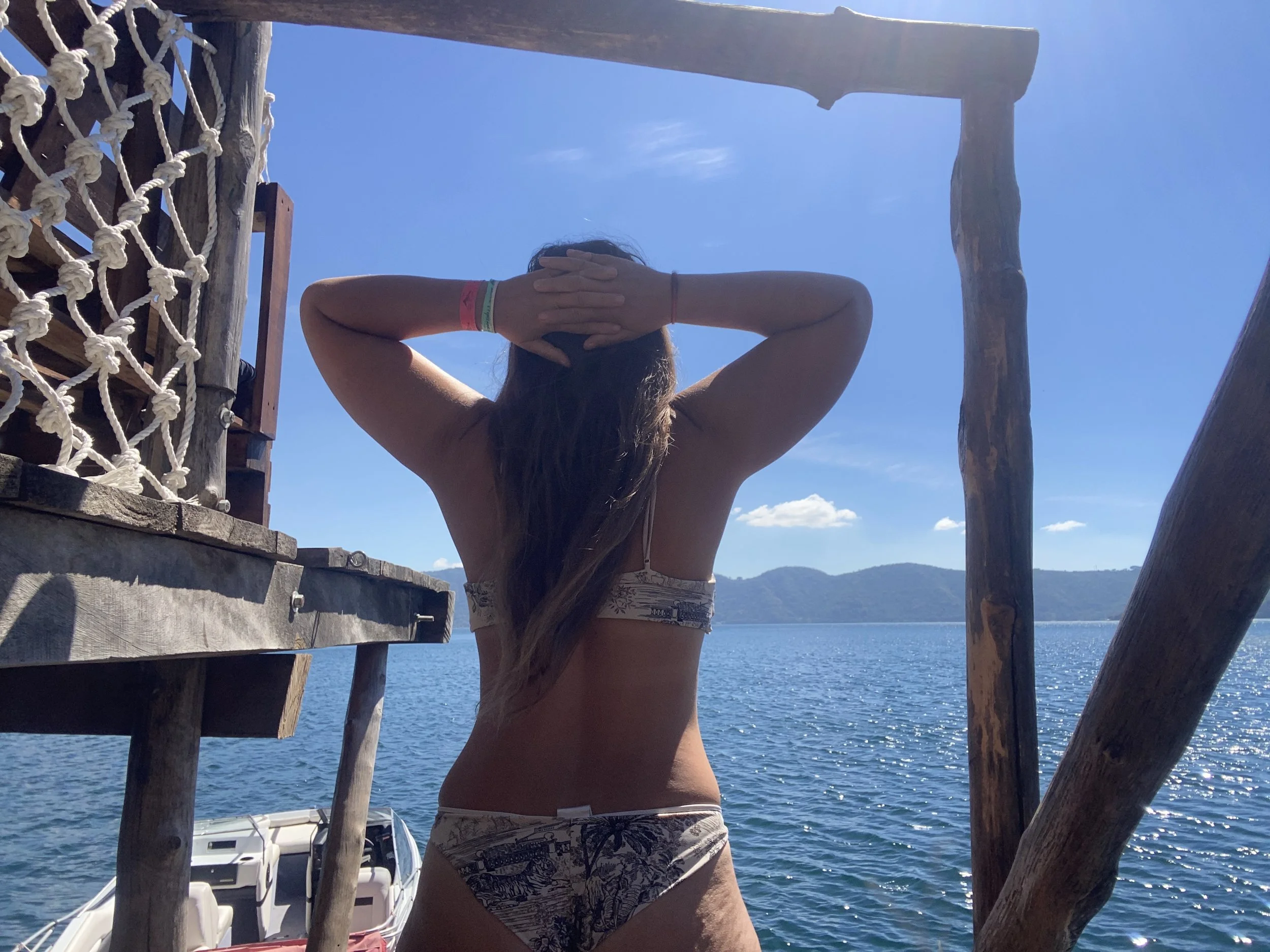
The quiet day. The one I actually came for.
Leaving the Lake
I couldn’t stay at Lake Coatepeque forever.
As tempting as it was to stretch the days out even longer, I knew it was time to move on. I had planned to be in El Salvador for two weeks, and by now, I’d already used up four of my fourteen days. The lake had given me exactly what I needed — space to slow down, time to breathe, and a better sense of the rhythm of the country before heading onward.
I used my final evening to double-check what little information I could find about getting to the coast. Details were vague, routes weren’t clearly explained, and most of what I found online felt more like suggestions than solid plans. I knew getting to the beach wouldn’t be straightforward, but after the last few days, that didn’t bother me.
If anything, I felt ready for it.
Lake Coatepeque had done its job. It had reminded me how important it is to pause — not just to rest, but to reset. Slowing down here made the next stretch of travel feel less overwhelming and more intentional, even if the plan was still loose.
The idea was simple: head toward the coast near El Tunco, take it one step at a time, and let the days unfold as they wanted to. Beach by beach. No rush. No pressure.
With my bag packed and the morning ahead of me, I was ready to leave the quiet behind and see what came next.
Some places don’t need a goodbye. You just carry them with you and move on.
