Santa Ana, El Salvador: The Starting Point I Didn’t Overthink

Not every journey needs a plan — some just need a starting point.
El Salvador is the smallest country in Central America, and it’s one that many travellers skip entirely. When I mentioned I was going, the reactions were usually some version of surprise — as if El Salvador wasn’t even an option on the map.
Before arriving, I already knew El Salvador was hosting a Bitcoin convention. It had been all over the internet — El Salvador was the first country in the world to adopt Bitcoin as legal tender, and that decision had put the country squarely in the global spotlight.
Once I arrived, it made sense. Santa Ana felt slightly busier than I’d expected, and the mix of travellers was different — not just backpackers, but investors, entrepreneurs, and people curious to see how Bitcoin actually worked on the ground.
I originally planned to stay for a month, but I decided on two weeks instead. I figured I could still see plenty of the country in that time without rushing, while slowing down enough to build in a proper beach week and give myself space to figure out my next move.
Santa Ana felt like the right place to start.
It was the closest major city after crossing from Guatemala, and I didn’t want to spend countless hours travelling just to say I’d been somewhere. I wanted to actually explore. Santa Ana also worked as a base — close to the volcano, and an easy stopping point before deciding whether Lake Coatepeque would be a quick visit or somewhere I’d stay longer.
I had no job, no timeline, and no pressure. This was still the early part of my South America journey — Belize and Guatemala already behind me — and I was travelling on a budget. Santa Ana gave me options.
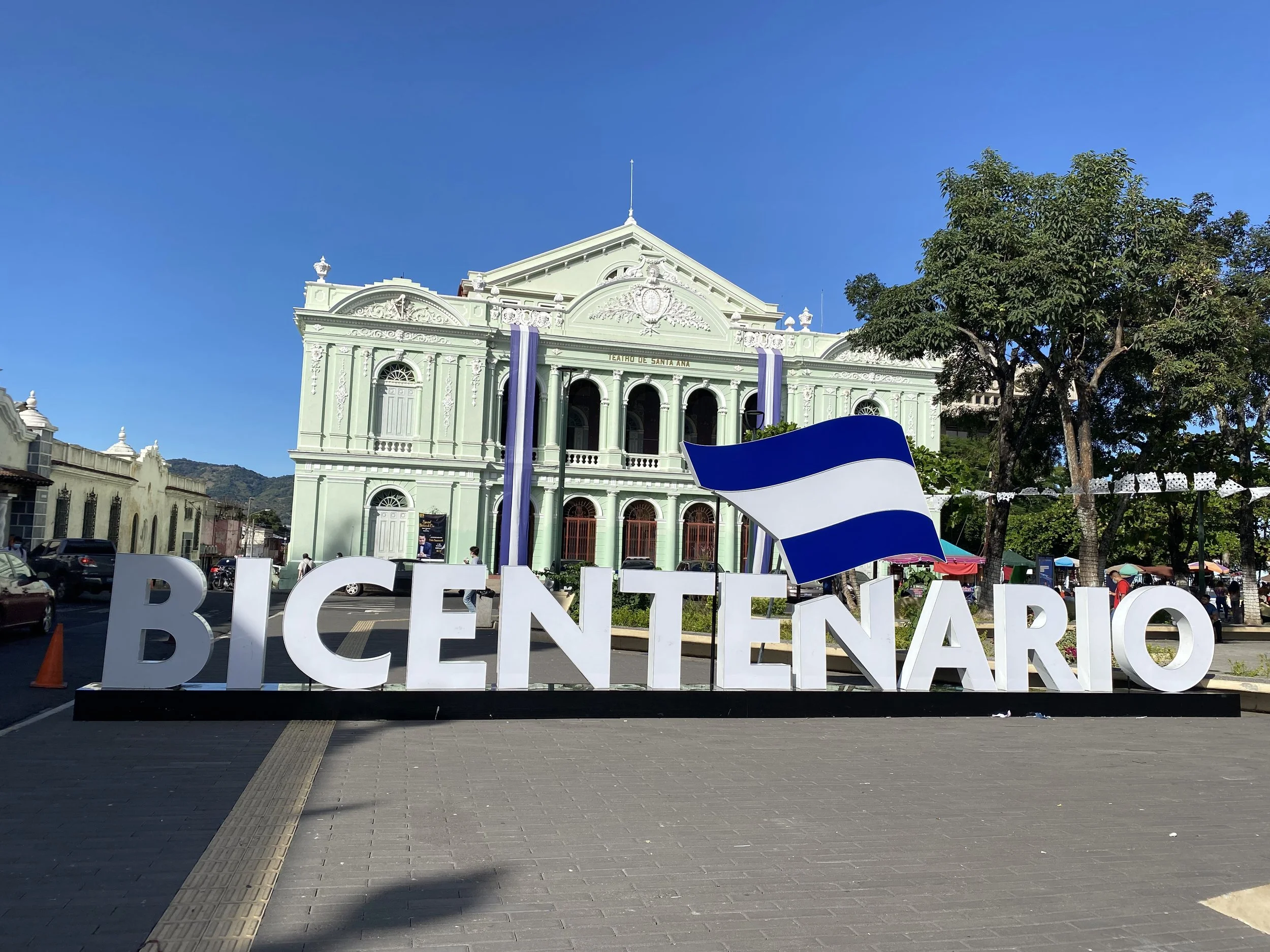
Not a place I overplanned, but one that opened up possibilities.
Crossing the Border & First Impressions
I arrived in El Salvador by shuttle from Antigua, Guatemala, early in the morning. The border crossing was surprisingly easy. I didn’t even have to get out of the vehicle — I handed my passport and COVID vaccine paper to the customs agent, and within minutes, I was cleared to enter the country.
The shuttle dropped me right at my hostel.
I spent two nights in Santa Ana, staying at Hostal Sole, which ended up being a great base for organizing day trips and getting a feel for the city. After checking in and dropping my bags, I headed out for a walk.
Santa Ana isn’t a big city, and it doesn’t try to be. It felt more like a working city than a tourist one — busy sidewalks, street vendors calling out prices, local buses weaving through traffic, and very few signs pointing you toward anything “must-see.” I walked around the city centre, took some photos, and let myself settle into the pace.
Later that evening, I went back out to find food. Near the main market, there were street vendors everywhere, and I ended up with a hamburger, fries, and a drink — all for $2.50 USD. It was one of those moments that makes you pause and think, Yeah… I can make this work.
Back at the hostel that night, I started talking with one of my roommates, Jannis, an older German traveller who was nearing the end of his trip. He was in his early 50s, married, with two biological sons and one adopted daughter.
Jannis was in El Salvador for a very specific reason — he was exploring the possibility of buying a solar-powered plane and wanted to see how feasible it might be in this part of the world. His timing happened to overlap with the Bitcoin convention, which had drawn in a completely different crowd than the typical backpackers.
He wanted to explore Santa Ana before heading home, and when I mentioned my plan to hike the volcano the next day, I told him he was welcome to join if he wanted.
By the end of the conversation, we had a plan.
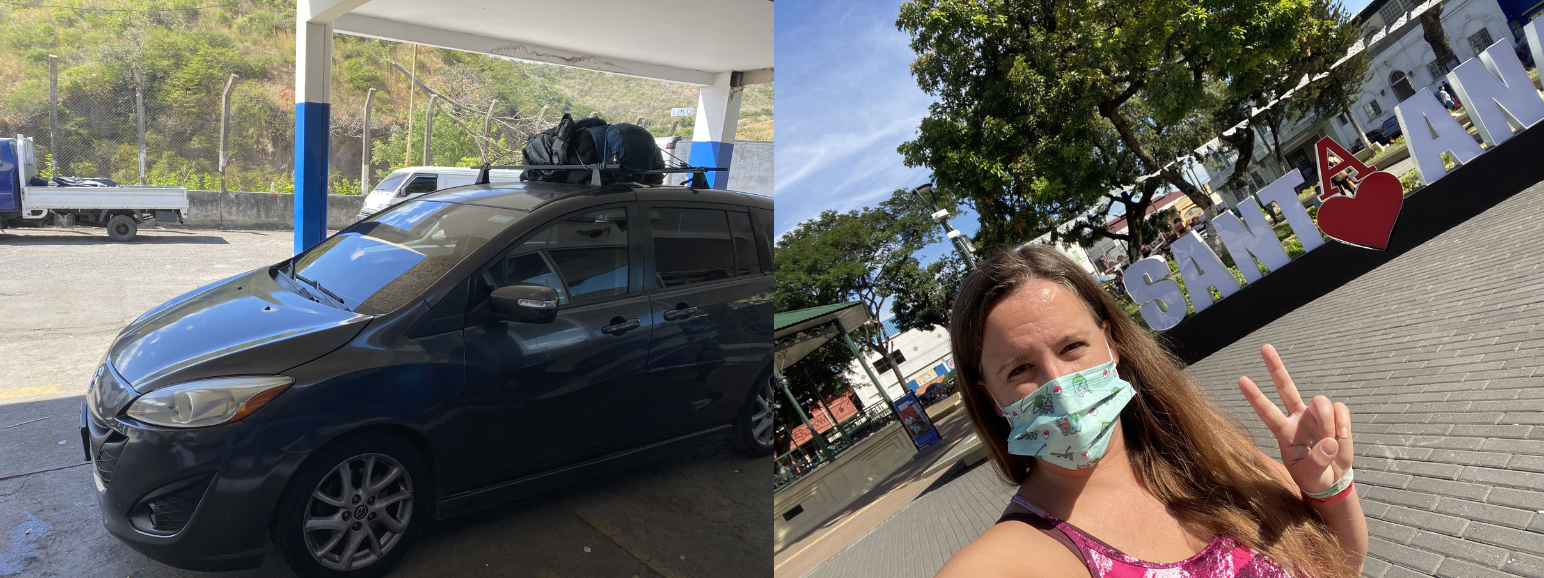
Border crossed, backpack strapped on top, and my first glimpse of Santa Ana.
Volcano Morning: Breakfast, Speed-Walking & a $0.85 Ticket
The hostel offered complimentary breakfast, so we met early — there was no way we were skipping free food before a long day. I had already checked the route to the bus station, but our timing was tight.
We walked quickly through the streets, fully convinced we were going to miss the bus. It took about 30 minutes on foot, and by the time we reached the station, it felt like one of those moments where you either make it or you don’t.
We made it.
I bought the tickets, and Jannis handed me $0.85 USD for his fare. I stared at the ticket for a second longer than necessary — a 2.5-hour bus ride for less than a dollar still didn’t feel real.
The bus itself was basic — more like a school bus than a colourful chicken bus — and filled with a mix of locals and a few travellers. Once we were seated, the rush faded, and the city slowly gave way to greenery.
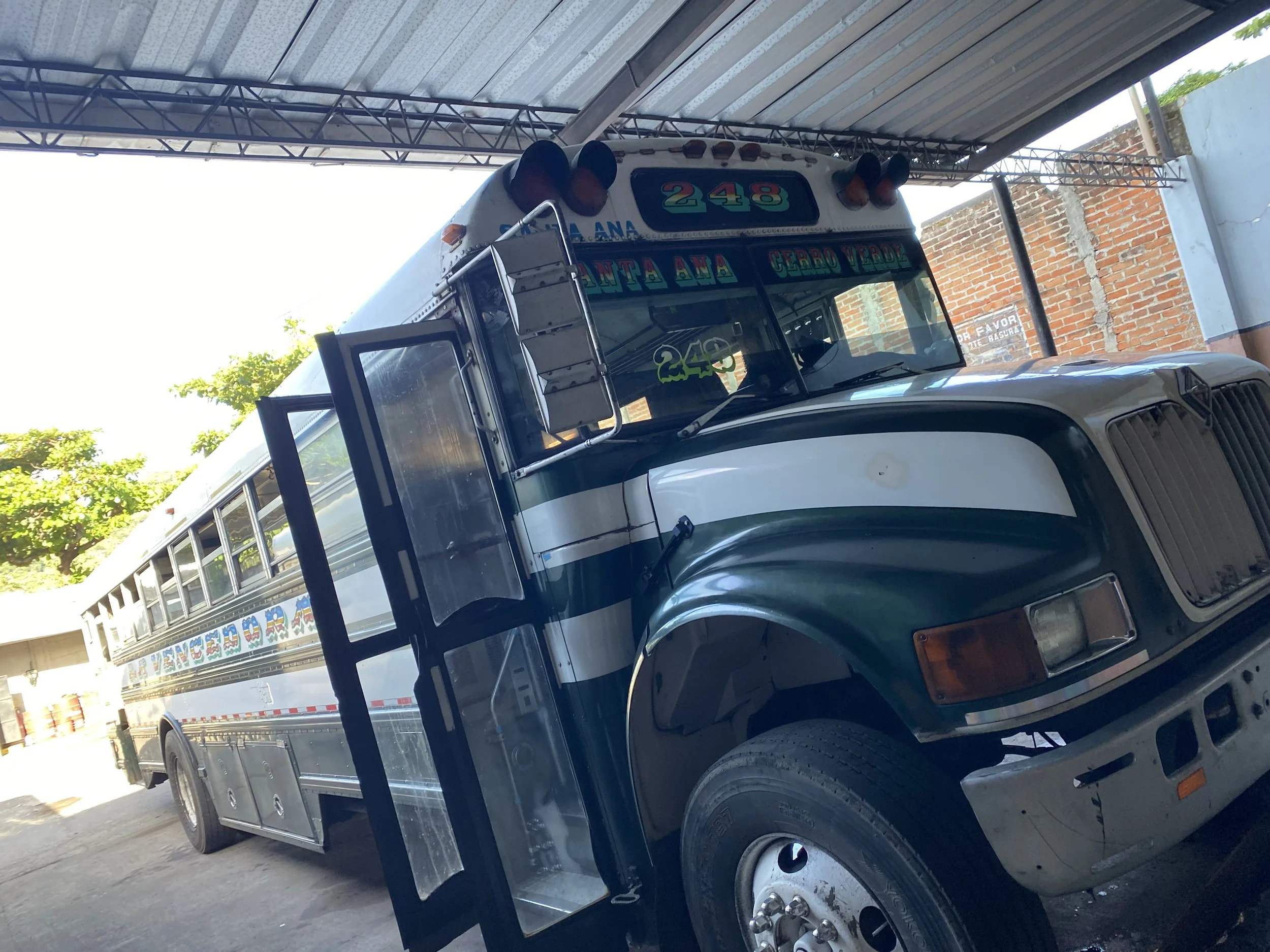
This bus ride was the start of our volcano day
Finding the Volcano
When we got dropped off, it honestly felt like the middle of nowhere. There were no houses, no people, no streets — just a road and a sign pointing in the direction we were supposed to go, letting us know the hike was still about one kilometre away.
The locals who got off the bus disappeared quickly, heading confidently in their own directions. Then it was just us — a small group of backpackers standing there with our packs, trying to figure out where to go and quietly hoping that wandering down a random road together was, in fact, the correct decision.
There’s always that brief moment while travelling where you think, Well… I hope this is right, and just commit to it.
There were signs, but not the kind that fully removed doubt. Jannis and I started walking along a path toward where we thought the entrance would be. Along the way, we ran into a few backpackers who were also trying to find the ticket counter.
That’s where I first spoke to Jimmy.
At the time, it was just a brief, practical conversation — the kind you have when everyone’s trying to get their bearings. If we hadn’t run into him again later, I probably wouldn’t have remembered his name at all.
Eventually, we found the ticket counter inside Los Volcanes National Park, home to Santa Ana Volcano (Ilamatepec), Izalco, and Cerro Verde. Guided hikes are mandatory here, and because of strong winds, we were told we could only hike up to the third lookout point, not all the way to the crater.
The hike cost around $6 USD, and since we’d already travelled 2.5 hours to get there — and neither of us planned to come back the next day — the decision was easy.
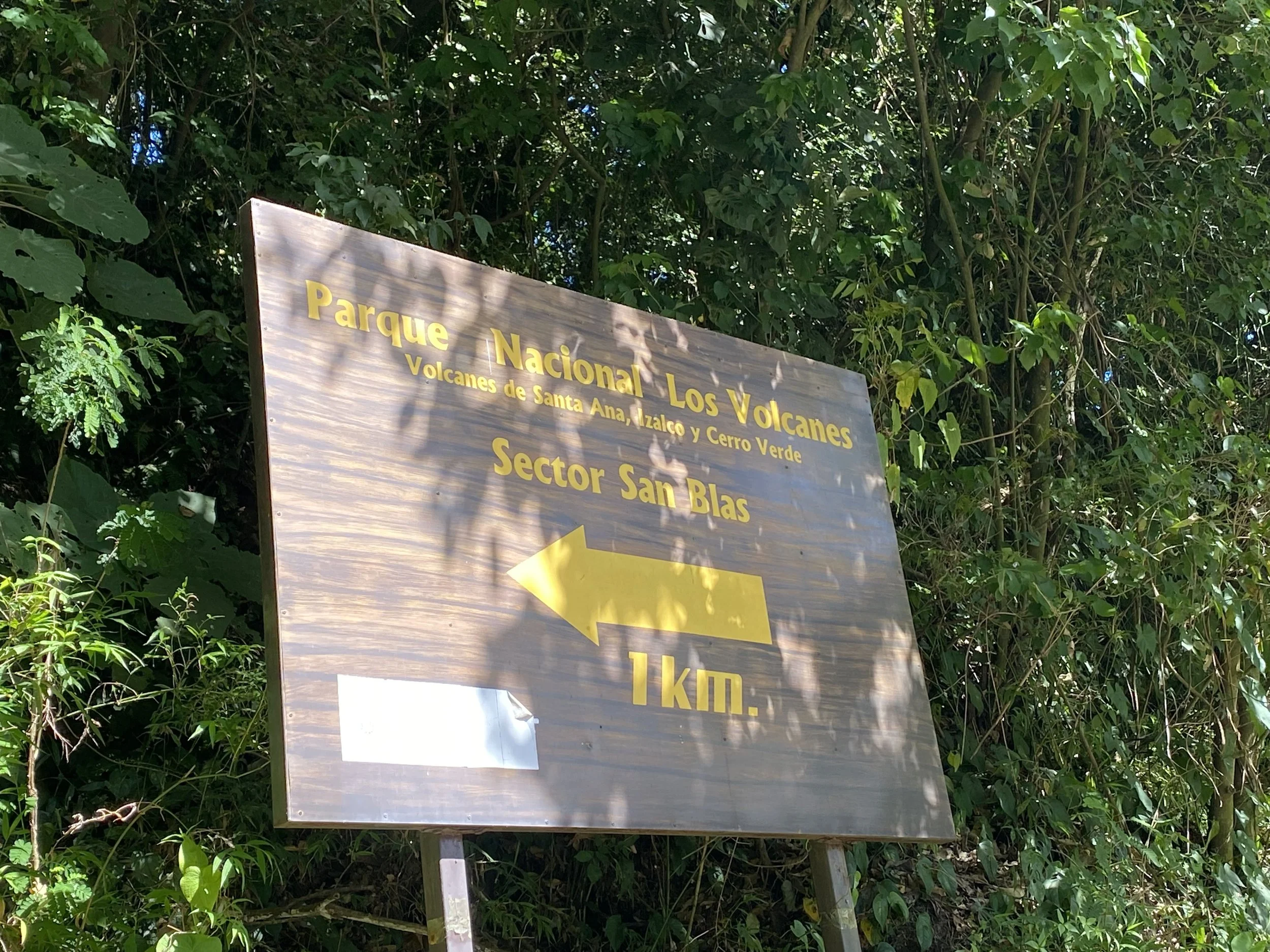
No houses, no people — just a sign and a direction
The Hike: Slow for the Right Reasons
The hike itself wasn’t overly difficult, but it was steady. Most of the group seemed focused on getting to the top as quickly as possible — likely because the volcano was closing early for safety reasons, though I don’t remember the exact details.
I wasn’t slow because I was tired — I was slow because I kept stopping.
The views behind us were incredible, with other volcanoes rising in the distance, and I wanted photos. Jannis walked ahead, then stopped and waited to make sure we didn’t get too far apart. I kept apologizing for slowing things down, but he told me he didn’t mind — probably because we were the only people stopping for scenic photos.
It was disappointing not to reach the very top of the volcano, and even more disappointing that the final lookout point didn’t offer much of a view. Between the wind and the clouds, it felt like we’d climbed all that way only to stop just short of the payoff. Still, the hike itself had been worth it.
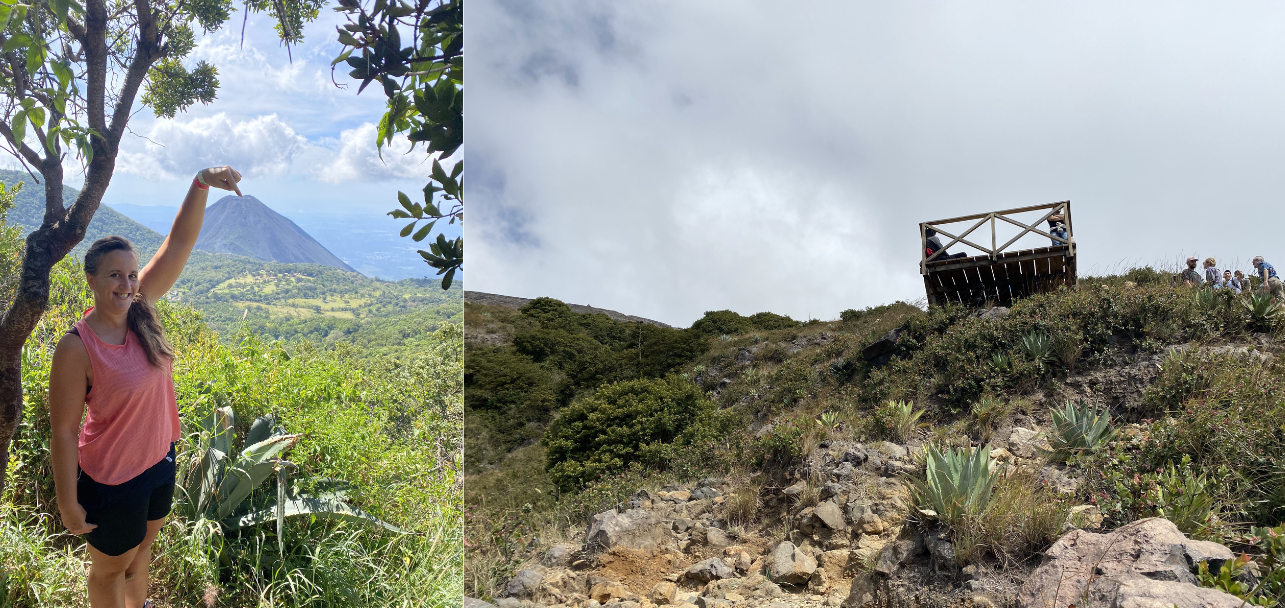
The reason I kept stopping for photos. And the final lookout that didn’t quite deliver
Heading Down & Where Everyone Went
On the way down, Jannis walked ahead, then stopped every so often to wait for me. I slowed down even more on the descent, stopping to take photos of flowers, plants, and farmland. I do this everywhere I travel. I send the pictures to my grandma — she’s a farmer, and she loves seeing what grows in different parts of the world. I also take photos of people farming whenever I can. It’s something that keeps me connected to her, even when I’m far away.
Once we were back near the ticket counter, the way to the road felt easy. We already knew the route, and it was far less confusing than the walk to the entrance that morning.
By the time we reached the paved road, everyone else had disappeared. There had been around twenty people on the hike, but suddenly it was just us.
I remember saying to Jannis something like, Where did everyone go? Am I really that slow of a walker?
That’s when we spotted Jimmy.
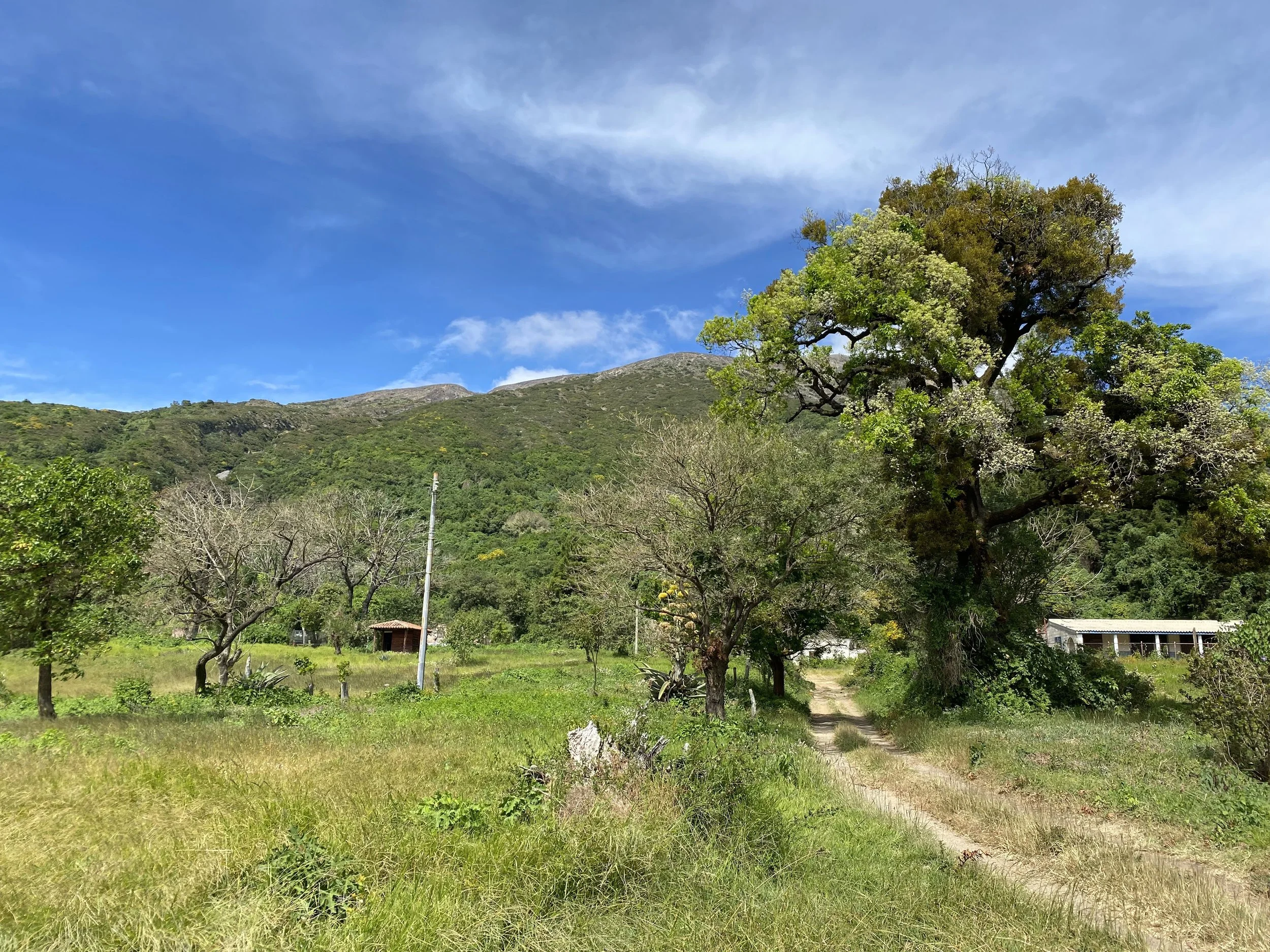
One of those paths that feels fine once you know where it leads
Jimmy on the Curb
Jimmy was sitting on the curb with his backpack, waiting for his bus back to Lake Coatepeque. He was the only other person around, which is probably why that moment stuck in my memory so clearly.
We talked briefly. Jannis and I invited him to join us for lunch at Complejo Los Volcanes, but he declined — he had already eaten at one of the roadside restaurants. He mentioned he was staying at the lake and planned to try hiking the volcano again the next day.
I told him I was heading to the lake the following day too — maybe we’d run into each other again, if we were lucky.
At the time, it felt like one of those throwaway travel comments.
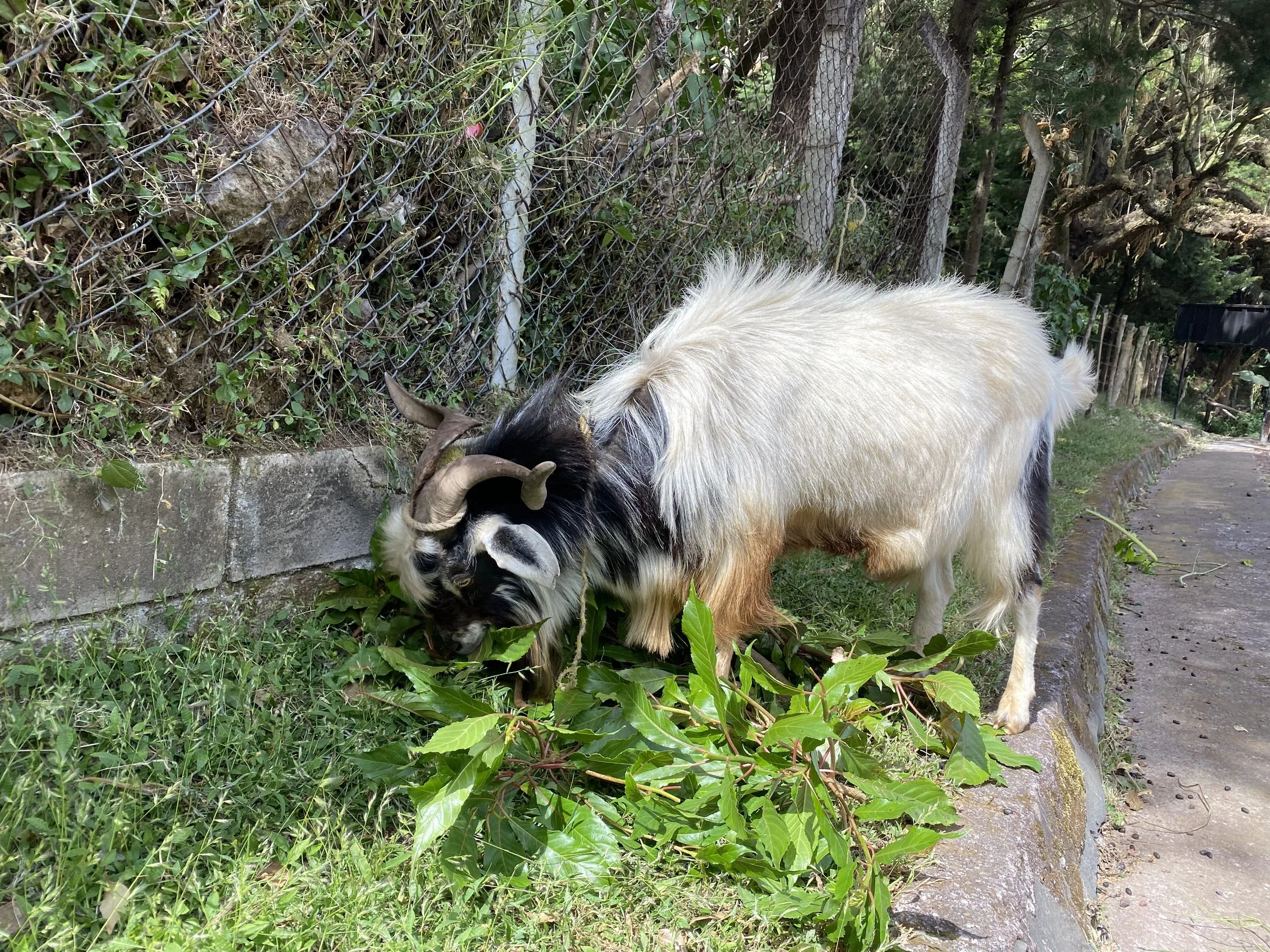
Not Jimmy — just a goat hanging out along the road
Waiting It Out at Complejo Los Volcanes
From there, we decided to walk up to the Complejo Los Volcanes area — a decision I questioned almost immediately. The road was steep, and after hiking a volcano, it somehow felt harder than the hike itself.
We took small breaks along the way to give my ankles a rest, half-joking that a car would have been helpful. At one point, we were genuinely hoping someone might offer us a ride — but the road was empty. Not a single car in sight.
Once we reached the top, we decided to eat first. I ordered lunch and a cocktail, while Jannis went with a coffee, assuming we’d catch a bus shortly after. I had even found a bus schedule online, which made everything feel organized — at least in theory.
In reality, the buses never showed up at the times listed.
Instead of stressing about it, we leaned into the waiting. The day had been long, but not exhausting — more the kind of tired that comes from being outside for hours, walking, and not rushing anywhere. We wandered around, took photos in the trees, looked at souvenir stalls, and passed the time slowly.
Jannis considered buying gifts for his kids but decided he’d just pick something up at the airport. I tried to convince him otherwise — airport souvenirs are always more expensive and far less personal than buying directly from a local — but he shrugged it off.
After hours of waiting, we finally caught the last bus of the day.
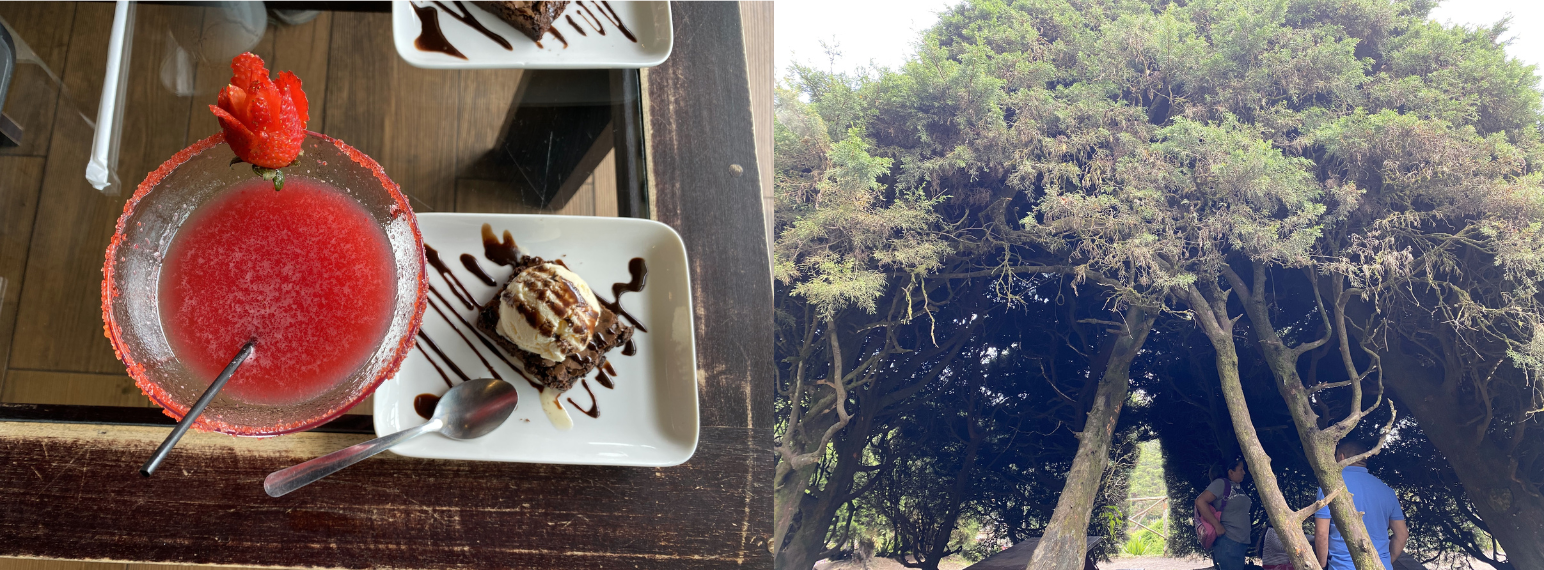
If you’re going to wait for hours, you might as well order dessert
Back to Santa Ana
We made it back to Santa Ana as the day wound down. Jannis was heading home the next day, while I was preparing to move on, and we exchanged contact information knowing our paths were about to split. After such a long, drawn-out day, there wasn’t much left to do but head back to the hostel, shower, pack, and rest.
Santa Ana did exactly what I needed it to do. It gave me a soft landing into El Salvador, a solid adventure, and the space to make decisions without pressure. I had arrived unsure whether Lake Coatepeque would be a quick stop or somewhere I’d stay longer. By the time I packed my bag the next morning, I knew I wanted to slow down.
The next chapter of my time in El Salvador would trade volcanoes and city streets for water and stillness. With my bag packed and no real plan beyond “head to the lake,” I boarded the bus toward Lake Coatepeque, not knowing yet that it would turn into one of the most unexpected parts of my trip.
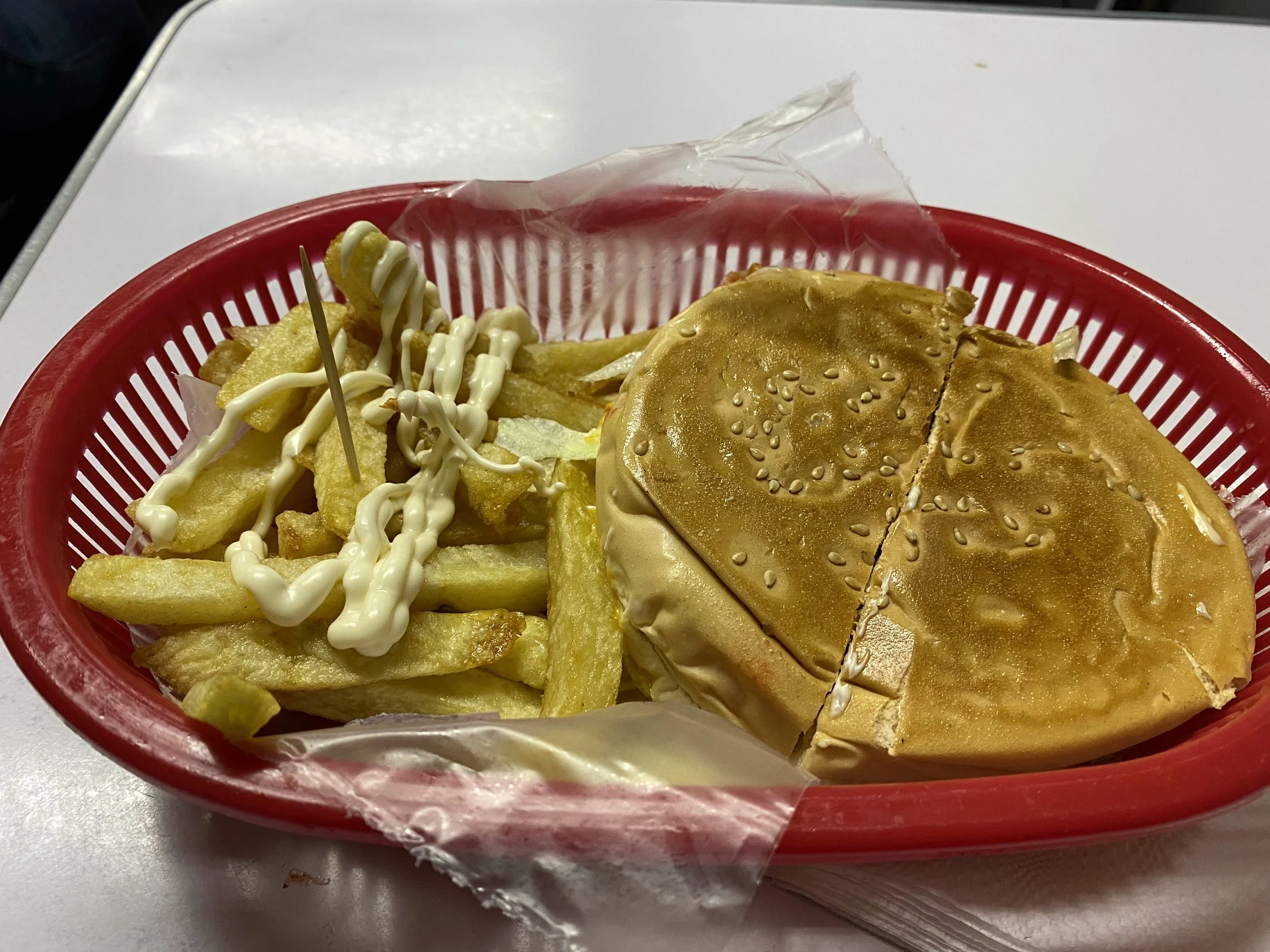
Not every journey needs a plan — especially when $2.50 gets you dinner
