Ruta de las Flores, El Salvador: Quiet Towns, Empty Lookouts & Letting the Trip Surprise Me

Ataco’s sign, endless stairs, a blue church, and a thermal pool — a quiet stretch along El Salvador’s Ruta de las Flores.
My beach week had come to an end, and while I wasn’t tired of the ocean, I was ready for a new kind of adventure — one that didn’t revolve around sunbathing, salty hair, and figuring out where to eat after sunset.
I kept seeing the Ruta de las Flores pop up online. There was plenty of praise and not much direction, but that almost made it more appealing. I didn’t overthink where to stay, I saw the name Ataco once and thought, yep, that’s it. Taco is in the name, and I love tacos.
I was also secretly hoping there’d be an “I ❤️ Ataco” sign somewhere.
I packed up one last time and left Los Cóbanos behind. After a week of sun, sunsets, quiet mornings, and loud surf towns, I wanted something different.
And mountains felt right.
Getting from the coast to the Ruta de las Flores wasn’t complicated, but it wasn’t exactly straightforward either. I took two buses, switching in Sonsonate, and the whole journey took about three hours, long enough to feel like a proper transition as the landscape shifted from coastal heat to greener hills and cooler air.
I didn’t mind the travel time. Those in-between moments are often when things settle for me - earbuds in, music on, watching life roll past the window. The farther inland we went, the more it felt like I was entering a quieter, slower version of El Salvador.
By the time I arrived in Ataco, I could already tell it was a completely different vibe.
I made my way to my guesthouse, Las Casitas Hostal–Ataco, and checked into my room. It was simple but cozy — a double bed, a small window, my own bathroom, and just enough space to feel comfortable without feeling cramped. The mountain air was noticeably cooler than the coast, especially at night, but the room held a perfect temperature for me. I remember standing there for a moment, backpack on the floor, thinking, yeah… this was a good choice.
Once I’d settled in and taken a breath, it was time to explore.
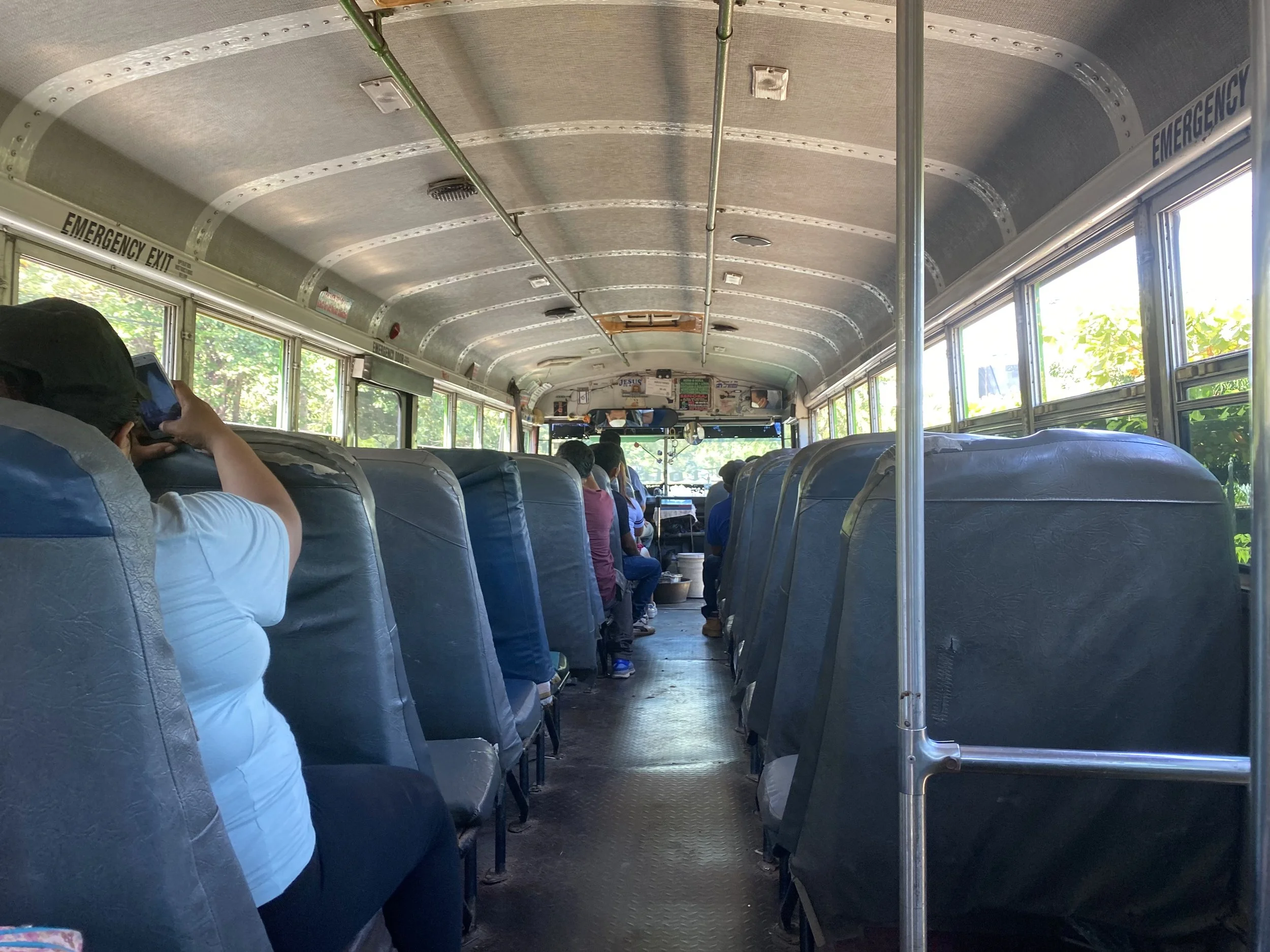
Three hours, two buses, and a slow shift into the Ruta de las Flores.
Mirador de la Cruz: Questioning My Life Choices, One Stair at a Time
Once I stepped back out onto the street, I had a rough plan — and by rough, I mean I had one thing on my mind: Mirador de la Cruz.
My guesthouse was conveniently (and suspiciously) close to the stairs that lead up to it. I say suspiciously because anytime something is described as “just up the stairs,” it usually means more stairs than you’re mentally prepared for.
At first, it felt manageable. A few steps here, a turn there. I told myself I was fine. Then the stairs kept going. And going. And going.
Somewhere along the way, I started quietly questioning my life choices — why do I voluntarily do this to myself all the time? I stopped a few times, partly to catch my breath and partly to pretend I was just appreciating the view.
The thing about stairs like this is that they don’t give you much context. You can’t see the end. You just keep climbing and hoping there’s actually something worth it waiting for you at the top.
Eventually — and very thankfully — the stairs ended. I felt an immediate sense of victory… which was quickly replaced by the realization that I still had to actually find the lookout.
I followed the path, slightly annoyed but committed at this point, until the view finally opened up.
And suddenly, it was quiet.
I had the lookout completely to myself. No crowds. No chatter. Just layers of green hills rolling out in front of me, the town tucked below, and that soft mountain stillness that makes you instinctively slow down without realizing it.
I took far too many photos — from every angle, with different light, just in case one turned out better than the others. Then I stopped, leaned against the railing, and let myself just stand there for a while.
It was one of those moments that felt earned. Calm. Expansive. The kind of view you don’t rush through.
Eventually, I remembered that I also had to go down all those stairs.
The descent was much kinder than the climb — easier on the lungs, harder on the knees, but worth it. By the time I reached the bottom again, I felt that familiar travel satisfaction: slightly tired, a little sweaty, and glad I’d gone up even though I’d complained the whole way.
From there, I let the rest of the day unfold naturally.
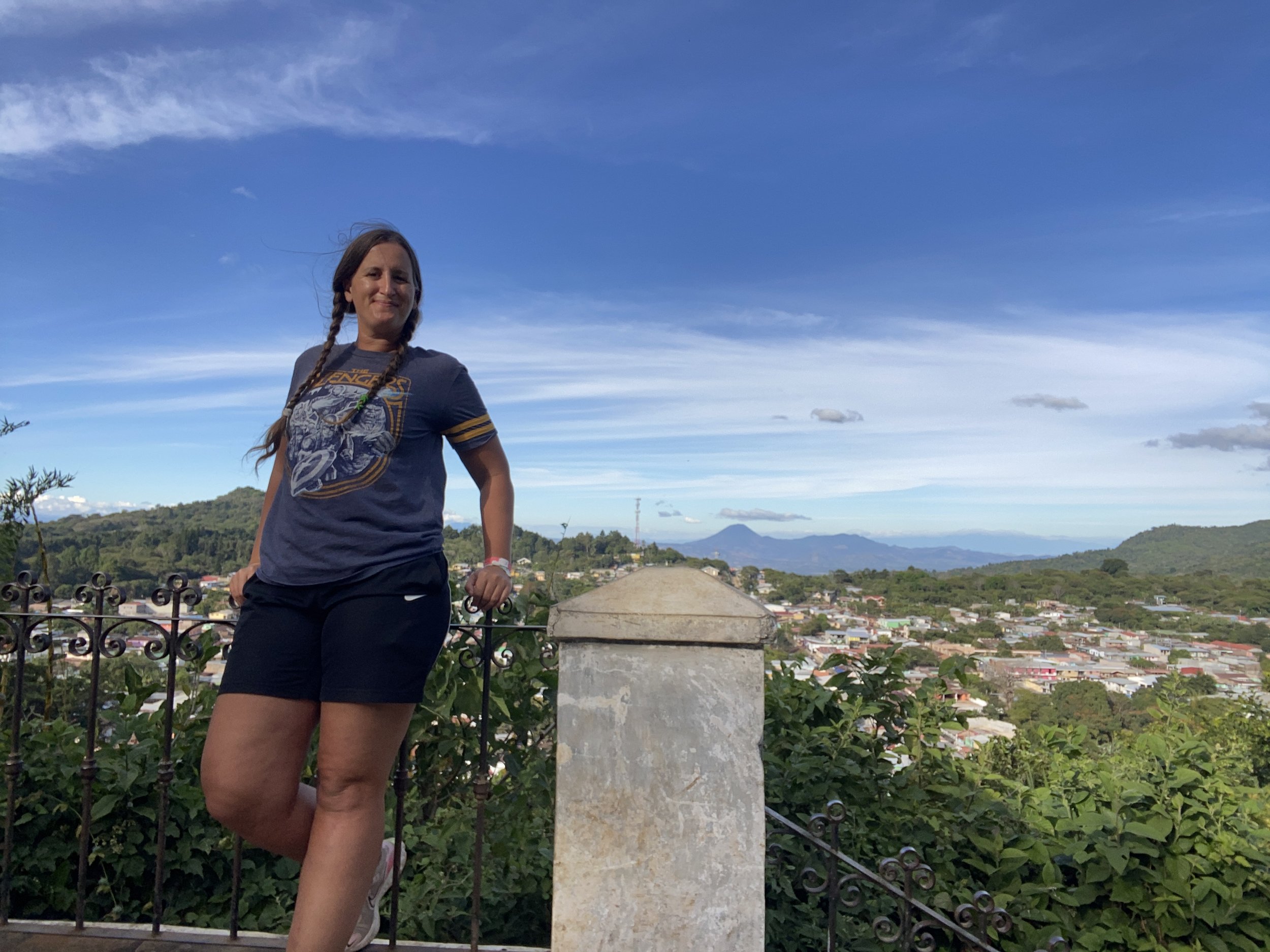
All those stairs, and this was waiting at the top.
Wandering Ataco Without a Plan: From Quiet Streets to Mirador La Jungla
Once I was back at street level, I didn’t really have anything specific I needed to do next — and that felt like the point.
So, I started walking.
Ataco is small enough that you don’t worry about getting lost, which made it easy to wander without checking a map. The streets were quiet, with locals moving about their day and a few street vendors set up along the way. Nothing felt rushed or loud. It was the kind of place where you naturally slow your pace without trying.
I kept walking, letting curiosity lead, until I reached Fray Rafael Fernández Park. Locals sat on benches, chatting or watching the world go by, while vendors nearby sold snacks and small items. Just everyday life unfolding.
And then I spotted it.
The Ataco sign.
I’d been secretly looking for it since I arrived, half hoping there really was something that said Ataco in big letters. Of course I needed a photo with it. I lingered there longer than planned, taking pictures, adjusting angles, and doing what every traveller does when they find the sign they were hoping existed.
From there, I kept wandering — side streets, murals painted across walls, small details that made the town feel quietly creative without trying to impress anyone.
After wandering through town, I kept walking uphill — because that seemed to be the general direction Ataco wanted me to go.
Once I left the “busy” streets behind, the town grew even quieter. Shops thinned out, and before long I found myself heading toward Mirador La Jungla.
Mirador La Jungla isn’t just one lookout you walk up to, take a photo, and leave. It’s more like a small, winding space meant to be explored slowly. Paths led in different directions, signs pointed toward viewpoints and photo spots, and everything felt calm and unhurried.
And empty.
I didn’t see anyone else wandering around — no couples, no tour groups, no one asking if I wanted my photo taken. Just me, moving at my own pace, stopping when something caught my eye and continuing when it didn’t.
At one point, I wandered into a hedge maze. Alone. I took my time weaving through it, turning corners without any real urgency, eventually making my way out and climbing up to a small bridge to look down at it from above.
Seeing the maze from that bird’s-eye view made the whole thing feel more intentional — less “why am I doing this?” and more “okay, this was actually worth walking through.”
The entire place had that quiet, tucked-away feeling — greenery all around, soft light filtering through, and absolutely no pressure to be anywhere else.
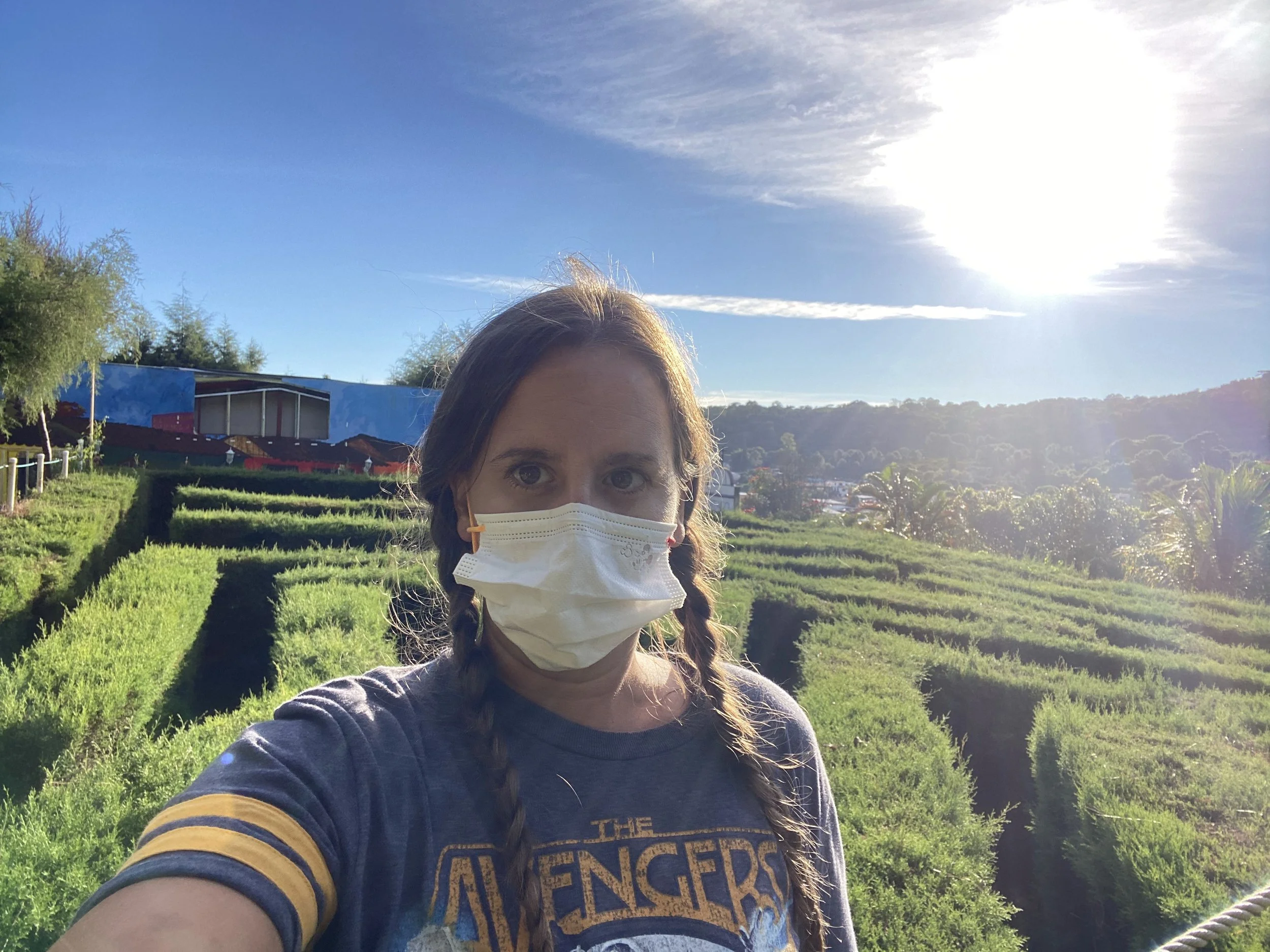
Wandering the hedge maze, with nowhere to be and no rush to leave.
Ending the Day at Casa 1800
By the time I finished wandering around Mirador La Jungla, I felt that late-afternoon calm settle in. I was ready to sit down and let the day land.
So, I headed to Casa 1800 Ataco.
It was close, and it felt like the right place to end the day — a bit fancier than everywhere else I’d been. I ordered a glass of white wine, found a seat with a view, and watched the sun slowly drop behind the mountains.
The light changed. The air cooled. The hills softened into silhouettes.
Nothing big happened — which is exactly what made it nice.
Once the sun disappeared, I walked back toward my guesthouse, passing through town again. When I reached Fray Rafael Fernández Park, I noticed something I hadn’t earlier — the Ataco sign had lit up. The white letters I’d photographed earlier were now glowing, shifting colours as the night settled in.
It caught me off guard in the best way.
I didn’t stop this time. I’d already had my moment with it earlier. Instead, I kept walking, letting it stay exactly as it was.
Back at Las Casitas Hostal–Ataco, I showered, pulled out warmer clothes, and settled in for the night. The mountain air had cooled everything down, and after a day of stairs, wandering, and being completely on my own, it felt good to be still.
That night, with Ataco quiet outside my window, I started thinking about what I wanted to do next.
And that’s when I found the thermal spa.
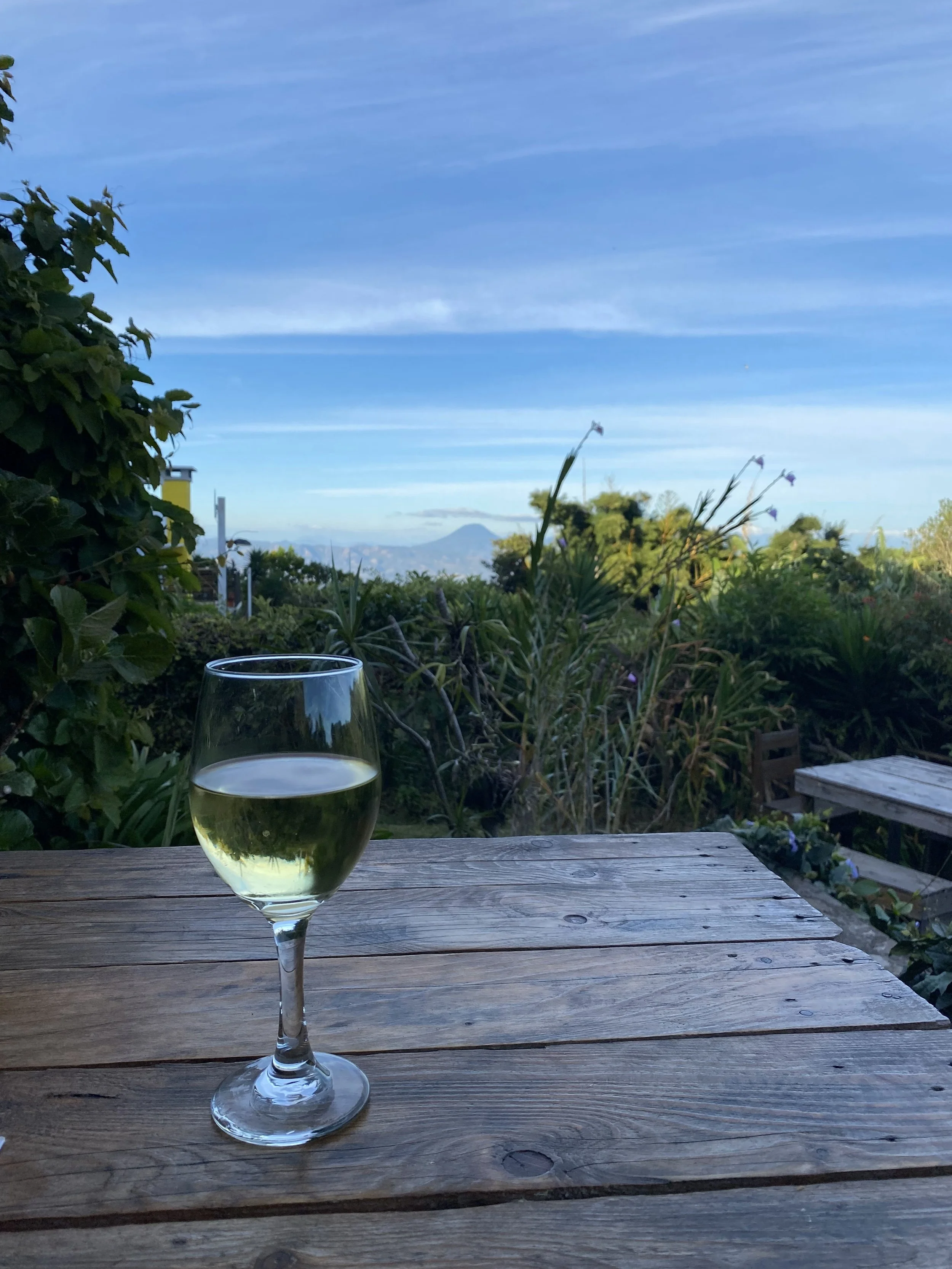
This photo doesn’t do it justice — I promise.
A Morning at Termales Santa Teresa
By the time I went to bed that night, my mind was made up — I was going to Termales Santa Teresa.
The next morning, I checked out of Las Casitas Hostal–Ataco, left my two larger bags behind at the hostal, and packed a small waterproof bag with the basics: my water bottle, towel, power bank, and a thin sweater. There was no chance I was dragging a full backpack along for this.
Getting there took a bit of effort. I caught a local bus out of Ataco, which took about 30–45 minutes, and then walked the rest of the way — another 45 minutes along a quiet road that felt far removed from town. It wasn’t difficult, just long enough to know I was committing to the experience.
Termales Santa Teresa was simple and very much not polished. This wasn’t a luxury spa. It was earthy, rough around the edges, and surrounded by nature — insects included.
Once you pay, you can change and use a small cubbyhole to store your things. You don’t want to bring your phone along for the first part. You start by covering yourself in thick, dark mud and standing there while it dries, fully accepting that being clean is no longer the goal. After that, you wash the mud off in one of the pools.
Once the mud was gone, the rest of the pools were open to explore. This is when I grabbed my phone and took a few photos of myself in the thermal water. Some pools were warm, some cooler, and others far more relaxing once I’d already embraced the fact that this wasn’t going to be a pristine experience.
After a few hours — around three, give or take — it felt like the right time to leave. I changed back into my clothes, packed everything up, and headed toward the exit, ready to start the walk back to the bus stop.
That’s when I ran into the ducks.
They were right by the exit, climbing out of one of the pools like they owned the place. As soon as I got close, they started squawking at me — loudly and with purpose. I stopped, which did absolutely nothing to help.
I was very clearly not allowed near them.
Every attempt to pass ended with them chasing me down, flapping and squawking like they were personally offended by my presence. For a brief moment, I genuinely didn’t think I was going to be able to leave.
Eventually, after a wide detour and some careful timing, I made my escape and started the walk back toward the bus station — muddy adventure complete, dignity questionable, and thoroughly amused by how the whole thing ended.
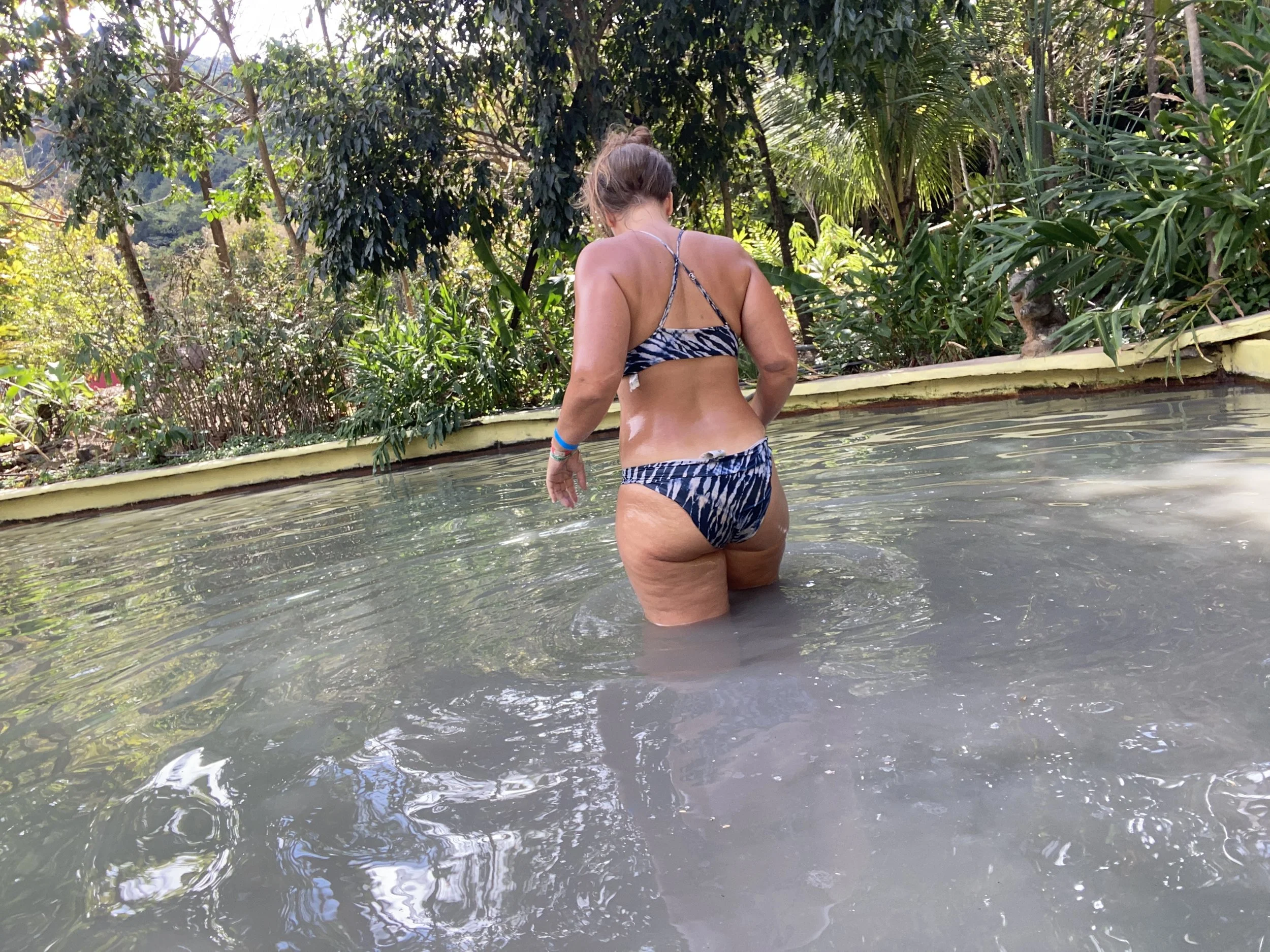
Slow steps through the thermal pool.
Back Along the Ruta de las Flores and Onward to San Salvador
Leaving the thermal pools meant retracing my steps, walking back to the road, and catching the bus again, this time heading back along the Ruta de las Flores.
As the bus wound its way south, it stopped often — small villages, roadside corners, places without signs or names I recognized. Locals hopped on and off like this was just another ordinary day. Sitting there, watching it all unfold, I kept thinking: this must be the route. This slow, everyday rhythm felt like the heart of the area.
Part of me wished I had one more day — just to ride the bus up and down the Ruta de las Flores, hopping off wherever felt right, wandering for a while, and getting back on again. No plan. Just curiosity and time.
Eventually, the bus carried me back toward Ataco. I picked up my bags from Las Casitas Hostal–Ataco, repacked, and took one last look around town before moving on.
With my bags back on my shoulders, I headed towards San Salvador — my final stop in El Salvador.
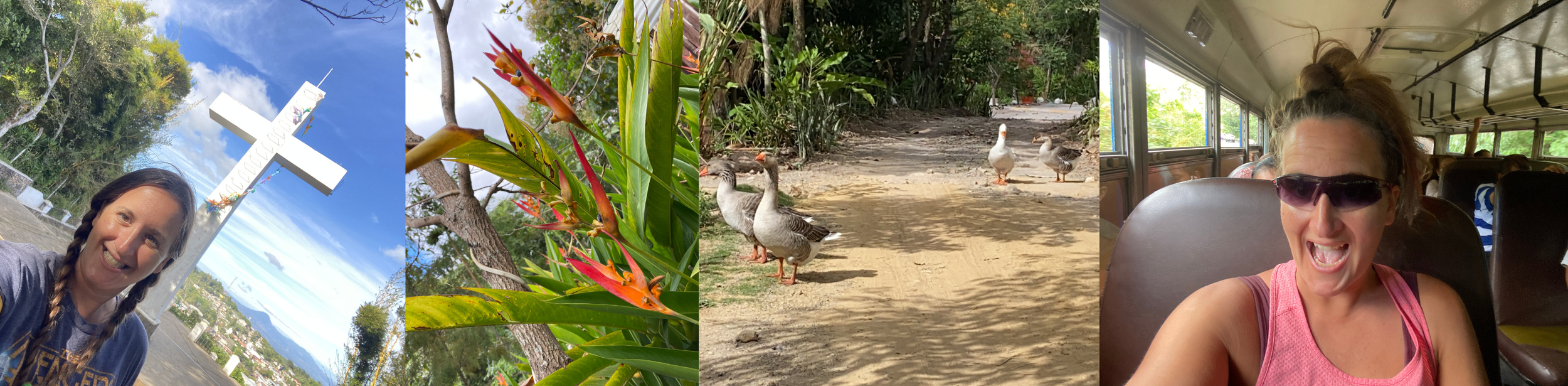
Quiet viewpoints, roadside flowers, unexpected moments, and a bus ride to Ataco.
