The Solo Explorer’s Guide to Paris
Originally published July 2025. Updated September 2026 with current entry requirements, transportation fares, attraction prices, costs and practical travel information.
Intro
Paris had existed in my imagination long before I ever arrived. Movies, books and television in North America give us this almost unreal version of the city: the Eiffel Tower sparkling at night, cafés lining the streets, fresh baguettes, beautiful buildings and people who somehow look stylish without trying.
I also knew Paris had a reputation for disappointing people. Travellers complain that it’s dirty, crowded, expensive or nothing like the romantic city they expected. I understood that the version in my head might not be real—but when I finally visited in June, Paris somehow lived up to it. I loved every minute I spent there and had more than a few moments when I had to remind myself that I was actually in Paris.
My introduction to the city wasn’t particularly glamorous. I was visiting a Parisian friend, and one of our first experiences was joining a community protest outside a local women’s hospital. The government was planning to close its maternity ward, and local residents were fighting to save it. The ward eventually closed, but taking part showed me something real about Paris before I reached the famous landmarks.
On my birthday, I had only one goal: visit the Eiffel Tower. We waited a very long time just to buy tickets, toured the tower and eventually stopped for lunch inside when we became hungry. You can now purchase timed tickets online, but at the time, waiting was simply part of the day.
During lunch, the staff began singing “Happy Birthday” to one of their male co-workers. I knew the song wasn’t for me, but since it actually was my birthday too, I quietly pretended they were singing to both of us. Sitting inside the Eiffel Tower while someone sang “Happy Birthday” felt almost too perfectly timed.
I spent three days visiting places I had seen in photographs for years, riding a carousel near the Eiffel Tower, wandering through Montmartre, exploring the Louvre and eating bread, cheese and wine without worrying whether it counted as a proper meal. Having a local friend with me gave me a different view of the city, but Paris was also somewhere I would have felt comfortable exploring independently.
This guide combines what I experienced during those three days with updated information for planning your own trip. It covers where to stay, what to eat, how to use public transportation, realistic costs, safety, cultural etiquette and how to make the most of Paris without trying to race through every famous attraction.

Pinch me — I’m really in Paris.
Why Paris Is Great for Solo Female Travellers
It’s easy to explore without a car: The Metro, RER, buses and walkable neighbourhoods connect most of the places visitors want to see.
There is always something to do alone: Museums, gardens, markets, churches, river walks and neighbourhood streets don’t require a travel companion.
Eating alone feels natural: Bakeries, cafés, wine bars and outdoor terraces make it easy to enjoy a meal without feeling out of place.
Each neighbourhood feels different: You can move from the historic Latin Quarter to artistic Montmartre or fashionable Le Marais without leaving the city.
You can travel at your own pace: Spend hours in one part of the Louvre, sit beside the Seine or change your plans because you found an interesting street.
There are plenty of social options: Walking tours, hostels, cooking classes and day trips provide opportunities to meet people when you want company.
Many memorable experiences are free: Seeing the Eiffel Tower, walking along the Seine, exploring Montmartre and visiting public gardens don’t require an expensive ticket.
Paris can still feel romantic when you’re alone: You don’t need a partner to enjoy the lights, architecture, music, food or atmosphere.
I had a Parisian friend showing me around, which made the trip easier, but I would have felt comfortable returning to many of the same places by myself. Paris still requires normal big-city precautions, particularly around crowded attractions and public transportation.

Jumping outside the Louvre—Paris was even better with a friend, but I would happily explore it alone.
Entry Requirements for France
Current as of September 2026 for travellers with a regular Canadian passport. Requirements vary by nationality, so other travellers should check the official France-Visas website and advice from their own government.
Passport validity: Your passport must be valid for at least three months beyond the date you plan to leave the Schengen Area. It must also have been issued within the previous ten years.
Visa-free travel: Canadians can currently visit France and the rest of the Schengen Area for up to 90 days within any 180-day period without a visa.
The 90-day limit is shared: Time spent in other Schengen countries counts toward the same allowance. Travelling from France to another Schengen country does not restart the 90 days.
Entry/Exit System: The EU’s Entry/Exit System, known as EES, is now operating. Border officials may collect your facial image and fingerprints when you enter the Schengen Area. You do not need to complete an EES application before travelling.
ETIAS: ETIAS is expected to begin in the final quarter of 2026, but an exact launch date has not been announced. It is not currently operating, and applications are not being accepted.
Supporting documents: Border officials may ask for proof of accommodation, an onward or return ticket and enough money to support your trip.
Important: Only use the official European Union ETIAS website when applications eventually open. Websites claiming that you can apply now are not official.
Entry requirements can change. Before travelling, check the Government of Canada’s France travel advice and the rules that apply to your nationality.

Check your passport and entry requirements before travelling—not while standing at the airport.
Best Time to Visit Paris
Paris can be visited throughout the year, but the best time depends on whether you prefer comfortable walking weather, long summer evenings, fewer tourists or lower accommodation prices.
Spring (March–May): Temperatures gradually become milder, parks and gardens begin to bloom and the city is generally comfortable to explore on foot. March can still feel cold and rainy, while visitor numbers and accommodation prices usually begin increasing in April and May.
Summer (June–August): Expect long daylight hours, outdoor events and busy terraces along with larger crowds and higher accommodation prices. July and August can become hot, and many older buildings do not have air conditioning. Some independent restaurants and shops close for holidays in August, although the major attractions and plenty of tourist businesses remain open.
Autumn (September–October): Temperatures are generally comfortable for walking, and the city’s museums, exhibitions and cultural calendar become busy again after summer. September remains popular, so it should not be treated as a crowd-free month. By October, expect cooler temperatures, shorter days and a greater chance of rain.
Winter (November–February): This is usually the quietest and coldest period outside Christmas and New Year. Accommodation may cost less, queues can be shorter and museums provide an easy escape from the weather. However, daylight hours are limited, outdoor gardens are less colourful and some attractions operate shorter seasonal hours.
Rain in Paris: Rain is possible during every season, so pack a compact umbrella or waterproof jacket even when the forecast looks promising. Weather can change throughout the day, and comfortable shoes are essential because Paris involves far more walking than many visitors expect.
Public holidays and special events: Accommodation prices and visitor numbers can rise around Easter, Bastille Day on July 14, Christmas, New Year, Fashion Week and major sporting or cultural events. Some museums, shops and attractions may close or change their hours on public holidays, particularly May 1. Check the opening times for anything you would be disappointed to miss.
My experience: I visited Paris in June around my birthday and loved the longer daylight hours. The city was busy, but the weather made it easy to spend most of the day walking and exploring. I still loved every minute of the trip.
Best overall time: For comfortable sightseeing weather without the hottest part of summer, consider visiting from April to early June or from September to October. If lower prices and fewer visitors matter more than warm weather, January through March can be a better choice.

Clear June skies over Paris made walking through the city even better.
Money and Currency: How to Pay in Paris
Currency: France uses the euro (€).
Approximate exchange rate: As of August 2026, €1 is approximately $1.16 USD or $1.61 CAD. Exchange rates change, so check the current rate before travelling.
Credit and debit cards: Cards are widely accepted at hotels, restaurants, shops, supermarkets and major attractions. Visa and Mastercard are generally the easiest to use.
Contactless payments: Tap payments are common, but keep your physical card and PIN available in case contactless payment fails.
Cash: Carry a small amount for markets, public washrooms, smaller businesses and card-machine problems. Some businesses may require a minimum purchase before accepting a card.
ATMs: ATMs are called distributeurs automatiques de billets. Use one attached to a recognised bank when possible and check the fees before completing your withdrawal.
Currency conversion: If an ATM or payment terminal asks whether you want to pay in your home currency or euros, choose euros. Allowing the machine to perform the conversion usually results in a worse exchange rate.
Tipping: Restaurant and café prices generally include taxes and service. Tipping is optional, although you can round up the bill or leave a few euros when the service is particularly good.
Keep at least two payment methods in separate places. Pickpocketing can occur around crowded attractions, train stations and on the Métro, so avoid carrying all of your cash and cards in the same wallet.
My experience: I believe I used cash for most, if not all, of my purchases in Paris. I was living in the UK at the time, so exchanging British pounds for euros before the trip was easy. Today, I would carry a small amount of cash but use a card for most purchases.
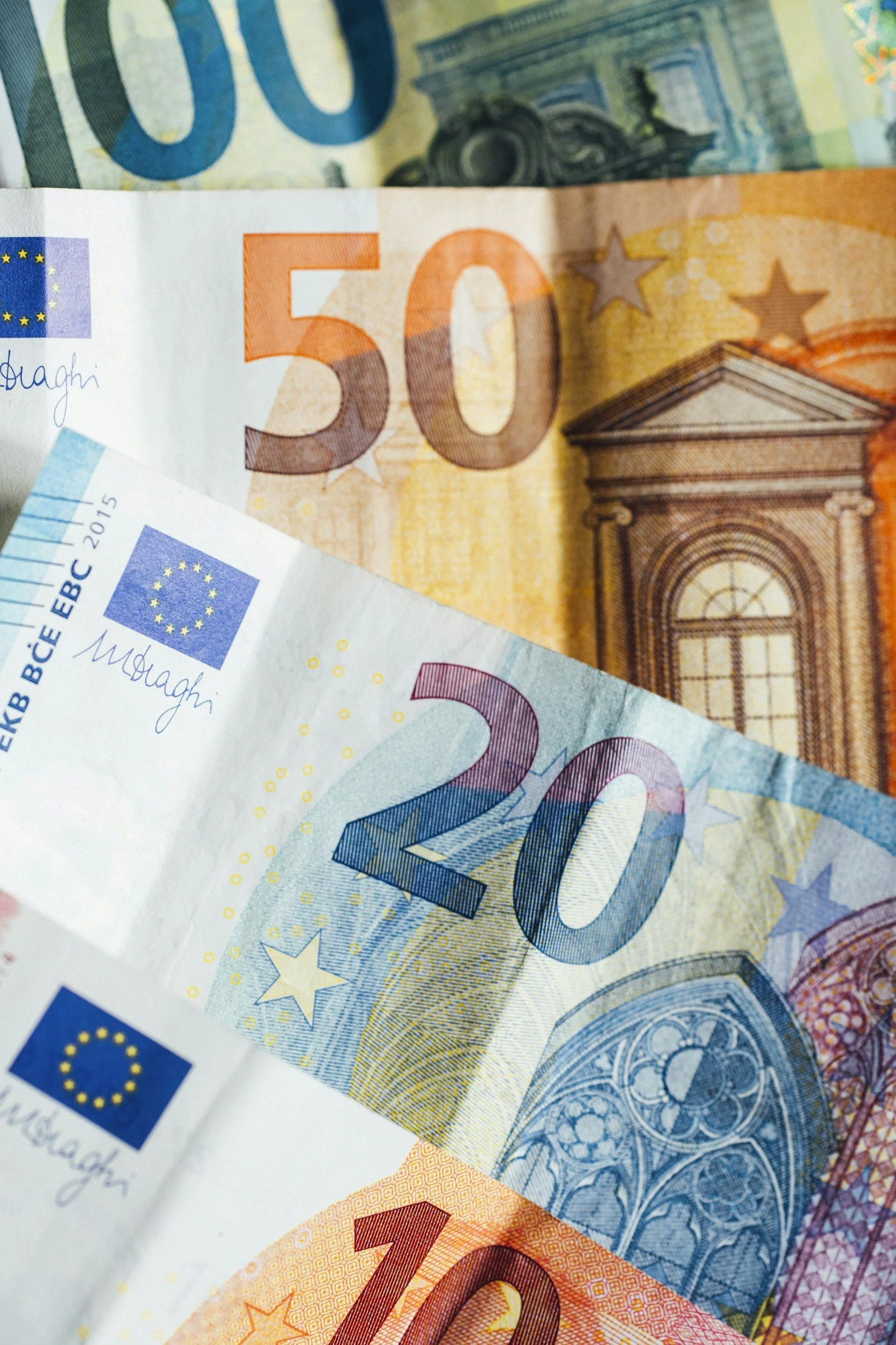
Cards are widely accepted, but carrying a small amount of euros is still useful.
Where to Stay in Paris
Paris is divided into 20 arrondissements that spiral outward from the centre. Staying in a lower-numbered arrondissement usually places you closer to the major attractions, but central accommodation is often more expensive.
Paris Centre (1st–4th arrondissements): A convenient but expensive base near the Louvre, the Seine, Notre-Dame and the Marais. It works well for a first visit if you want to walk to many of the major sights.
Latin Quarter (5th arrondissement): A lively area with restaurants, historic streets and easy access to Notre-Dame, the Panthéon and Luxembourg Gardens. Its student population gives it a less formal atmosphere than some central neighbourhoods.
Saint-Germain-des-Prés (6th arrondissement): Central, attractive and convenient for walking along the Seine. Accommodation and restaurants can be expensive, but the location is excellent for sightseeing.
Near the Eiffel Tower (7th arrondissement): A quieter and more residential area within walking distance of the Eiffel Tower, Musée d’Orsay and Les Invalides. It is beautiful, but accommodation can be expensive and the neighbourhood is less lively at night.
Opéra and the Grands Boulevards (9th arrondissement): A practical central base with shopping, theatres, restaurants and useful Métro connections. It provides easier access to many attractions without requiring you to stay directly beside them.
Canal Saint-Martin (10th arrondissement): A livelier area with bars, restaurants and generally less expensive accommodation than the centre. Parts of the arrondissement near Gare du Nord and Gare de l’Est can feel busy and chaotic, so check the exact street and recent reviews before booking.
Bastille and the 11th arrondissement: A good choice for restaurants, bars and nightlife. It feels more residential than the area around the Louvre while remaining well connected by public transportation.
Montmartre (18th arrondissement): Known for Sacré-Cœur, steep streets and views across Paris. Accommodation can cost less than in the centre, but the hills, stairs and distance from some attractions may become tiring. Check the exact location because the atmosphere can change considerably from one street to another.
Outer arrondissements: Areas such as the 12th, 14th and 15th can provide quieter surroundings and better-value accommodation. You will spend more time travelling, so check which Métro line serves the property rather than judging it only by distance.
Before booking, check whether the property has air conditioning, an elevator and 24-hour reception. Many Parisian hotels occupy older buildings with narrow staircases, small elevators or no elevator at all. Air conditioning is especially important during July and August.
For a solo traveller, I would also check the walking route from the nearest Métro station, especially if I expected to return after dark. A hotel may describe itself as being “near” a famous attraction while still requiring several transfers or a longer walk than expected.
Tourist tax: Paris charges a tourist tax per adult, per night. The amount depends on the accommodation category and may not be included in the advertised room price. In 2026, it ranges from €0.65 for basic campsites to €15.60 for palace hotels. Confirm the amount before booking so it does not become an unexpected expense at check-in.
Booking advice: Reserve accommodation two to three months ahead when possible, particularly for travel between May and September or during major events. Paris is large, but a property near a useful Métro station can be more convenient than a slightly more central hotel with poor transportation connections.

Paris spreads far beyond its famous centre, so choose a neighbourhood with useful Métro connections.
What to Eat in Paris
Paris has everything from inexpensive bakeries and neighbourhood markets to famous restaurants that require reservations months ahead. You do not need to eat somewhere expensive to enjoy French food, and some of the easiest meals for a solo traveller are also the most affordable.
Croissants and pain au chocolat: Classic French pastries that are easy to pick up from a bakery for breakfast or a snack. Look for a boulangerie, where bread and pastries are made on-site.
Baguette sandwiches: An inexpensive and convenient lunch when you want to continue sightseeing. Common fillings include ham and cheese, chicken, tuna and vegetables.
Croque-monsieur: A toasted ham-and-cheese sandwich, sometimes topped with béchamel sauce. A croque-madame includes a fried egg.
Crêpes: Thin pancakes served with sweet or savoury fillings. Sweet options commonly include sugar, chocolate or fruit, while savoury versions may contain cheese, ham or egg.
French onion soup: A rich soup made with caramelized onions and commonly topped with bread and melted cheese.
Steak-frites: Steak served with French fries and found in many cafés, brasseries and bistros.
Duck confit: Duck slowly cooked in its own fat until tender, often served with potatoes.
Escargots: Snails commonly served with garlic, parsley and butter. They may not appeal to everyone, but Paris is an easy place to try them if you are curious.
Cheese: France produces an enormous range of cheeses, including Brie, Camembert, Comté and Roquefort. Visit a fromagerie or order a cheese plate if you want to try several varieties.
Macarons: Small almond-meringue biscuits filled with ganache, buttercream or jam. They are sold throughout Paris, although prices vary considerably between bakeries and famous speciality shops.
Crème brûlée: A vanilla custard topped with a thin layer of caramelized sugar.
Wine and beer: Wine is the obvious French choice, but Paris also has plenty of pubs, breweries and craft-beer bars if—like me—you would rather have a beer than a coffee.
Café and restaurant etiquette: You can usually choose between sitting inside, on the terrace or occasionally standing at the counter. Prices may vary depending on where you sit. You do not need to rush through your meal, and dining alone is common enough that you should not feel uncomfortable asking for a table for one.
Meal times: Lunch is commonly served from around noon until 2:00 p.m., while many restaurants begin dinner service around 7:00 or 7:30 p.m. A restaurant displaying service continu serves food throughout the day. Cafés and brasseries are useful when you become hungry outside standard meal times.
Saving money: Look for a formule or fixed-price menu that includes two or three courses. Bakeries, markets and supermarkets are also useful for inexpensive meals. A baguette, cheese and something to drink can become a simple picnic beside the Seine or in one of Paris’s parks.
Free tap water: Ask for une carafe d’eau, s’il vous plaît when eating at a restaurant. Tap water is free for customers dining on-site, while bottled water will be added to your bill.
My experience: I don’t drink coffee, so the famous Parisian café culture was never going to be about espresso for me. I was much happier finding somewhere for a meal or a beer. On my birthday, we ate lunch inside the Eiffel Tower after spending a long time waiting for tickets and exploring. It wasn’t something we had planned in advance—we simply became hungry—but eating inside the Eiffel Tower made the day even more memorable.

Lunch inside the Eiffel Tower: an unplanned birthday meal I’ll never forget.
Suggested Paris Itineraries: 3 Days to 1 Week
Paris has enough museums, neighbourhoods and landmarks to fill several weeks. These itineraries group nearby attractions together so you spend more time exploring and less time crossing the city.
Three Days: The Paris Highlights
Day 1 – Notre-Dame and the historic centre: Visit Notre-Dame Cathedral, explore Île de la Cité and walk through the Latin Quarter. Continue to the Panthéon or Luxembourg Gardens before ending the day beside the Seine. Entry to Notre-Dame is free, and an optional free reservation can reduce your waiting time.
Day 2 – The Louvre and central Paris: Give the Louvre several hours rather than trying to see everything. Afterwards, walk through the Tuileries Garden toward Place de la Concorde, the Champs-Élysées and the Arc de Triomphe.
Day 3 – The Eiffel Tower: Make the Eiffel Tower the main event instead of squeezing it between several other attractions. Visit the tower, walk through the Champ de Mars and see the view from Trocadéro. Add a Seine cruise or Les Invalides if you still have time and energy.
Three days will give you the famous Paris experience, but it will still feel busy. Reserve the Eiffel Tower and Louvre in advance so long ticket lines do not take over your limited time.
Five Days: Major Sights and Neighbourhoods
Day 1 – Notre-Dame and the Latin Quarter: Explore Île de la Cité, Notre-Dame, Sainte-Chapelle, the Latin Quarter and Luxembourg Gardens.
Day 2 – Louvre and the historic axis: Visit the Louvre, Tuileries Garden, Place de la Concorde, Champs-Élysées and Arc de Triomphe.
Day 3 – Eiffel Tower and the Seine: Tour the Eiffel Tower, walk through the surrounding area and take a Seine cruise. Add Les Invalides or the Musée Rodin if you want another attraction.
Day 4 – Montmartre: Visit Sacré-Cœur, explore the surrounding streets and see Place du Tertre. Allow extra time for the hills and stairs rather than treating Montmartre as a quick photo stop.
Day 5 – Le Marais and eastern Paris: Walk through the Marais, visit Place des Vosges and continue toward Bastille or Canal Saint-Martin. This gives you time to experience Paris beyond its most famous monuments.
Five days provides a better balance between major attractions and simply walking through the city. It also leaves room for a slower lunch, an unexpected museum or an evening spent beside the Seine.
One Week: Paris and Versailles
Day 1 – Notre-Dame, Île de la Cité and the Latin Quarter
Day 2 – The Louvre, Tuileries Garden and Arc de Triomphe
Day 3 – The Eiffel Tower, Trocadéro and a Seine cruise
Day 4 – Montmartre and Pigalle
Day 5 – Le Marais, Place des Vosges and Canal Saint-Martin
Day 6 – Musée d’Orsay and Saint-Germain-des-Prés: Visit the museum, walk through the neighbourhood and spend time in Luxembourg Gardens if you did not reach them earlier.
Day 7 – Versailles: Allow most of the day for the palace, gardens, Trianon Estate and travel from central Paris. The palace is closed on Mondays, so arrange the rest of your itinerary around its opening days.
If Versailles does not interest you, use the final day for another Paris neighbourhood, the Catacombs, Père Lachaise Cemetery or a second major museum.
Important Planning Details
The Louvre: Closed on Tuesdays. It stays open later on Wednesdays and Fridays, making those useful options for a longer visit.
Versailles: The palace and Trianon Estate are closed on Mondays.
Notre-Dame: Entry to the cathedral is free. Reservations are optional and should only be made through the official Notre-Dame website.
The Eiffel Tower: Elevator tickets are normally released online up to 60 days ahead, while stair tickets are released up to 30 days ahead. Book early for June through September.
Museum fatigue: Avoid scheduling the Louvre, Musée d’Orsay and Versailles on consecutive days unless museums are the main reason for your trip.
Travel time: Paris may look compact on a map, but Métro transfers, security checks and attraction queues can take longer than expected.
My Route
I spent three days in Paris and did not follow the kind of carefully organized itinerary I would create today. One of my first experiences was joining a community protest outside a local women’s hospital. On my birthday, the Eiffel Tower was the only major goal, so we allowed the visit—and our unplanned lunch inside—to take as long as it took.
The rest of the trip included the Louvre, Montmartre, the carousel near the Eiffel Tower, outdoor cafés and plenty of time spent walking through the city. Having a local friend meant the trip unfolded naturally rather than feeling like a checklist of famous attractions.

The view from Sacré-Cœur was worth making time for during my three days in Paris.
Getting Around Paris
Paris has an extensive public transportation system, but it is also a very walkable city. The Métro is usually the quickest way to cover longer distances, while walking allows you to see the neighbourhoods and smaller details you would otherwise miss.
Métro: The Paris Métro connects most major attractions and neighbourhoods. Trains run frequently, although stations can involve long corridors, stairs and confusing transfers.
RER and regional trains: RER trains travel through central Paris and continue into the surrounding region. They are useful for reaching places such as Versailles, Disneyland Paris and Charles de Gaulle Airport.
Buses: Buses allow you to see more of the city while travelling, but traffic can make journeys slower than the Métro. They may be easier than navigating station stairs if you have luggage or mobility concerns.
Trams: Trams mainly operate around the outer edges of Paris and are less useful for most first-time sightseeing routes.
Walking: Many major attractions can be grouped together on foot. Comfortable shoes are essential because cobblestones, stairs and long museum days can quickly add up.
Cycling: Vélib’ Métropole provides short-term bicycle rentals throughout Paris. Use marked cycling lanes, watch for turning vehicles and avoid cycling in heavy traffic unless you feel confident.
Taxis: Official Paris taxis have an illuminated roof sign and use regulated fares. Use an official taxi rank or booking service rather than accepting an unsolicited ride.
Ride-hailing apps: Services such as Uber and Bolt operate in Paris. Prices vary according to demand, and pickup locations may be restricted around airports, stations and major attractions.
Seine boats: Sightseeing cruises are an attraction rather than regular public transportation. Batobus operates a hop-on, hop-off boat service with stops near several major landmarks, but it is usually slower and more expensive than the Métro.
Public Transportation Tickets in 2026
Paris simplified its ticket system, so older information about t+ ticket booklets and different RER destination fares may no longer be accurate.
Métro–Train–RER ticket: €2.55 for one journey on the Métro, train or RER within the Île-de-France region, excluding airport stations.
Bus–Tram ticket: €2.05 for one journey on the bus or tram network.
Airport ticket: €14 for travel between Paris and Charles de Gaulle or Orly Airport using eligible rail routes.
Navigo Easy pass: A reloadable €2 card that can hold individual tickets and certain transportation passes. It is useful if you do not want to use your phone as your ticket.
Mobile tickets: Compatible phones and watches can store and validate tickets purchased through the Île-de-France Mobilités or Bonjour RATP apps.
Navigo Day pass: €12.30 for unlimited travel across zones 1–5 for one day, but airport journeys are not included.
Navigo Weekly pass: €32.40 for unlimited travel across all zones. It runs from Monday to Sunday rather than for seven days from the date of purchase, so it is not always good value for visitors arriving later in the week.
Paris Visite pass: Available for one, two, three or five consecutive days. It includes unlimited travel across the region and airport transportation, but compare the price with individual tickets before buying it.
You cannot simply tap a credit card at every Métro gate. Load your ticket onto a Navigo Easy pass, compatible phone or watch before travelling. Contactless bank-card payment is available on many Paris buses, but it is intended as a backup option and does not include transfers.
Always validate your ticket when entering the network and keep it available until you have completely left the station. Ticket inspectors operate throughout Paris, and not understanding the system will not normally prevent you from receiving a fine.
Getting To and From the Airports
Charles de Gaulle Airport: RER B provides direct service to several stations in central Paris. Taxis have regulated flat fares between the airport and destinations on the Right or Left Bank.
Orly Airport: Métro Line 14 connects the airport with central Paris. The Orlyval shuttle also connects the airport with Antony station and the RER B, but it uses a separate fare.
Beauvais Airport: Located much farther from Paris and commonly used by budget airlines. Include the cost and travel time of the airport shuttle when comparing flight prices.
My Experience
I walked whenever the distance felt reasonable and used public transportation when attractions were farther apart. Paris is one of those cities where walking is part of the experience—you may set out for a famous landmark but remember the streets, bridges and buildings you passed along the way just as much.
My advice: Group nearby attractions together instead of repeatedly crossing Paris. Use the Métro when it genuinely saves time, but do not spend your entire visit underground.

JD navigating the Paris Metro — because half the journey is just figuring out where you’re going.
Budget Breakdown Per Day (USD)
These are approximate per-person costs for 2026. International flights, travel insurance, airport transportation and tourist taxes are not included.
Accommodation
Low: $45–90 — Hostel dorms and basic accommodation outside the centre
Mid: $140–250 — Private rooms, smaller hotels and comfortable guesthouses
High: $350+ — Luxury hotels, central apartments and high-end accommodation
Food and Drink
Low: $30–50 — Bakeries, baguette sandwiches, crêpes, groceries and takeaway meals
Mid: $60–100 — A mixture of bakeries, cafés, casual restaurants, wine and beer
High: $150+ — Upscale restaurants, cocktails, wine and multi-course meals
Local Transportation
Low: $5–15 — Mostly walking with one or two public transportation journeys
Mid: $15–35 — Regular Métro, RER and bus use
High: $70+ — Frequent taxis, ride-hailing services and private transfers
Attractions and Activities
Low: $0–25 — Free landmarks, parks, neighbourhoods and occasional admission
Mid: $35–75 — Major museums, the Eiffel Tower and a Seine cruise
High: $120+ — Guided tours, premium experiences and several paid attractions
Souvenirs and Extras
Low: $5–15 — Postcards, magnets and bakery treats
Mid: $20–50 — Macarons, wine, speciality foods and small gifts
High: $75+ — Perfume, designer products, artwork and luxury shopping
Estimated Total Per Day
Low: $85–195
Mid: $270–510
High: $765+
You can mix the levels depending on what matters most to you. You might stay in a hostel and eat inexpensive bakery meals but spend more on the Eiffel Tower, Louvre or a guided tour. Paris has many free sights, but admission costs add up quickly when you visit several major attractions in the same day.
The Louvre now charges non-European Economic Area visitors €32, while adult Eiffel Tower tickets range from €14.80 for stairs access to the second floor to €36.70 for elevator access to the summit. Travellers who are neither citizens nor residents of the European Economic Area should select the non-EEA ticket when booking the Louvre.
Paris also charges a tourist tax per adult, per night. It may be collected separately from the advertised accommodation price, so include it when comparing your options.
My experience: My friend bought my Eiffel Tower ticket as a birthday gift, which covered one of the major expenses I would otherwise have paid myself. We also had lunch inside the tower when we became hungry. It was more expensive than grabbing something from a bakery, but it was part of my birthday experience—not how I ate for the entire trip. Walking and using cash for most purchases helped me stay aware of what I was spending.

My Eiffel Tower ticket was a birthday gift from my friend—and the view was priceless.
Souvenirs to Buy in Paris
Paris has no shortage of souvenir shops, but you do not need to buy something simply because it has an Eiffel Tower printed on it. Look for an item that reminds you of your own trip rather than what every visitor is expected to bring home.
Miniature Eiffel Tower: One of the most obvious Paris souvenirs and available throughout the city. Compare prices before buying because the same item may cost considerably more beside a major attraction.
Art prints: Montmartre, museum shops, independent bookstores and the stalls beside the Seine sell prints featuring Parisian streets, landmarks and famous artwork. A flat print is also easy to pack.
Macarons: Ladurée and Pierre Hermé are two famous options, but independent pâtisseries also sell them. Macarons are fragile and do not stay fresh forever, so buy them near the end of your trip.
French wine: A bottle from a wine shop can be a meaningful souvenir if you can transport it safely. Check your airline’s baggage rules and your home country’s alcohol allowance before buying.
French food products: Chocolate, tea, mustard, jam, biscuits and packaged sweets are generally easier to transport than fresh cheese or meat. Check your home country’s import restrictions and declare food products when required.
Perfume and beauty products: Paris has everything from famous perfume houses to French pharmacy skincare. Check airport security restrictions if you are travelling with carry-on luggage only.
Books and postcards: Independent bookstores, museum shops and the bouquinistes beside the Seine sell books, vintage postcards and prints. These can be inexpensive, easy to pack and more personal than a generic souvenir.
Vintage and flea-market finds: The Saint-Ouen and Porte de Vanves flea markets sell antiques, artwork, jewellery, books, clothing and unusual second-hand objects. Confirm the condition and price before purchasing.
French fashion or accessories: A scarf, handbag, piece of jewellery or clothing item may be more useful than a decorative souvenir. Look for the Fabriqué à Paris label if you want something made by a Parisian designer or craftsperson.
A beret: Yes, it is a stereotype—but if you genuinely want one and will wear it, buy one. Your souvenir does not need to impress anyone else.
Avoid buying from unlicensed street sellers around major attractions. Products may be poor quality, and stopping to look can sometimes lead to persistent sales tactics.
Before travelling home, check your destination country’s customs allowances and restrictions. Alcohol, food, plants, antiques and products made from animal materials may require declaration or additional documentation.
My experience: I don’t remember one particular shop or shopping area from my trip. I mostly wandered through Paris and explored whatever I came across. For me, the experience of being in the city mattered more than finding the perfect souvenir.

I didn’t plan my souvenir shopping; I simply found things while wandering through Paris.
JD’s Personal Tips for Paris
Book the Eiffel Tower in advance: When I visited, we waited a very long time just to buy tickets. Tickets can now be booked online, and I would absolutely do that if I returned.
Let one attraction be enough: The Eiffel Tower was my only real goal on my birthday. We toured it, stopped for lunch when we became hungry and allowed the experience to take as long as it took. You do not need to fit five famous sights into every day.
Do not try to see the entire Louvre: The museum is enormous. Choose one or two sections that genuinely interest you instead of exhausting yourself while trying to see everything.
Look up while you walk: Parisian architecture is part of the attraction. Pay attention to the balconies, rooftops, signs and details above street level rather than only moving between landmarks.
Create your own picnic: Buy bread, cheese, fruit and wine from a bakery, market or neighbourhood shop, then have a picnic in a park or beside the Seine. Check the local rules before drinking alcohol in public.
Take the carousel ride: The carousel near the Eiffel Tower may look like it is meant for children, but travel is allowed to be fun. If you want to ride it, ride it.
Make time for outdoor cafés and live music: Some of my favourite Paris moments came from the atmosphere around me rather than a scheduled attraction.
Walk without a destination sometimes: Leave enough room to wander through a neighbourhood, follow an interesting street or stop somewhere simply because it catches your attention.
Do not expect every moment to be perfect: Paris can be crowded, expensive and occasionally frustrating. A long queue or disappointing meal does not need to ruin the city for you.
Give yourself time to take it in: Seeing the Eiffel Tower created one of those genuine “pinch-me” travel moments for me. If a place feels special, stop and enjoy it instead of immediately reaching for the next item on your itinerary.
My biggest tip: Paris rewards the unhurried. The best part of visiting was not how many places I checked off—it was having enough time to soak in the city I had imagined for so long.

Watching artists at work was part of Montmartre’s atmosphere.
Solo Travel and Cultural Notes
Solo Travel and Safety
Paris is generally manageable for solo female travellers, but pickpocketing, bag theft and phone snatching occur frequently in crowded areas. Most visitors will not experience serious trouble, but you should remain aware around major attractions and on public transportation.
Watch your belongings in crowded places: Pickpockets often operate around the Eiffel Tower, Louvre, Notre-Dame, Sacré-Cœur, train stations and busy Métro and RER services.
Keep your bag in front of you: Use a securely closed bag and avoid placing your phone or wallet in an open pocket. Do not hang your bag from the back of a restaurant chair.
Protect your phone: Avoid standing near an open train door with your phone loosely in your hand. Phone snatching can also occur on restaurant terraces and busy pavements.
Be alert to distraction tactics: Someone may spill something, ask for directions, offer unwanted help or begin a long conversation while another person reaches for your belongings.
Ignore fake petitions: Someone may ask you to sign a petition before demanding money or using the interaction to distract you.
Avoid street gambling: Games involving cards, cups or shells are scams. People appearing to win may be working with the operator.
Do not accept bracelets or “free” gifts: Someone may place an item in your hand or try to tie a bracelet around your wrist before demanding payment. Keep walking and do not engage.
Use official transportation: Buy tickets from official machines, ticket offices or transportation apps. Use licensed taxis or recognised ride-hailing services rather than accepting unsolicited rides.
Plan your journey after dark: Central areas can remain busy late into the evening, but avoid poorly lit streets, isolated parks and empty train carriages. Move toward a busier area if somewhere feels uncomfortable.
Keep backup payment methods separate: Do not carry all of your cash, cards and identification in the same bag. Keep digital copies of important documents somewhere you can access without your phone.
Trust your instincts: You do not owe a stranger your time or politeness. Walk away, enter a business or ask staff for help if someone makes you uncomfortable.
Check for strikes and demonstrations: Transportation strikes can disrupt trains, flights and public transportation. Demonstrations are not automatically dangerous, but avoid crowds that appear tense or heavily policed.
Review current travel advice: Safety conditions can change. Check official guidance from your own government before travelling.
If your passport is lost or stolen, report it to the police and contact your country’s embassy or consulate. Keep your accommodation address, insurance information and important telephone numbers saved somewhere other than your main phone.
Emergency Numbers
112: European emergency number; assistance is available in French or English
17: Police
15: Medical emergencies
18: Firefighters
114: Emergency text and accessible communication service for people who are deaf, hard of hearing or unable to speak safely

A warning near a major tourist site: keep your belongings close and your bag securely zipped.
Cultural Etiquette
Begin with a greeting: Say bonjour during the day or bonsoir in the evening before asking a question, ordering food or entering a small shop. Beginning immediately with a request can sound abrupt.
Make an effort with French: You do not need to speak fluently, but basic greetings and polite words are appreciated. Ask whether someone speaks English rather than assuming they do.
Greet shop staff: Say hello when entering a smaller shop and goodbye when leaving, even if you do not purchase anything.
Keep your voice down: Conversations on public transportation and in restaurants may be quieter than you are accustomed to. Speaking loudly can make you stand out.
Wait to be seated: At restaurants and cafés, wait for a staff member unless a sign indicates that you can choose your own table.
Expect slower restaurant service: Staff may give you more privacy and check on you less frequently than in other countries. This is not necessarily poor service—you may need to ask when you are ready for the bill.
Tipping is optional: Restaurant prices generally include tax and service. You can round up or leave a small amount for good service, but large percentage-based tips are not expected.
Respect religious sites: Notre-Dame and other churches remain active places of worship. Dress appropriately, keep your voice down and avoid interrupting services.
Ask before photographing people: This is especially important during religious services, performances, demonstrations and inside smaller shops.
Do not block busy spaces: Move away from Métro entrances, escalators and narrow pavements before stopping to check directions or take a photograph.
Do not take directness personally: Communication may feel less enthusiastic or involve less small talk than you expect. Direct service does not automatically mean someone is being rude.
Remember that Paris is a working city: People live, commute and work around the famous attractions. Treat neighbourhoods as communities rather than outdoor tourist displays.
My experience: Travelling with a local friend allowed me to see more than the tourist version of Paris. Joining a community protest outside a women’s hospital on my first day reminded me that Paris was not simply cafés, museums and famous landmarks—it was also home to people fighting for the things that mattered to them.

Find the magic in the small moments.
Speak a Little French
French pronunciation can be difficult for beginners, and the examples below are only approximations. You do not need to speak fluently, but beginning with a greeting and using a few polite words can make everyday interactions easier.
Oui — Yes — wee
Non — No — nohn
Bonjour — Hello or good day — bohn-ZHOOR
Bonsoir — Good evening — bohn-SWAHR
Au revoir — Goodbye — oh ruh-VWAHR
Salut — Hello or goodbye informally — sah-LOO
Merci — Thank you — mehr-SEE
De rien — You’re welcome — duh ree-EHN
S’il vous plaît — Please — seel voo PLEH
Excusez-moi — Excuse me — ex-kew-zay MWAH
Pardon — Sorry or excuse me — par-DOHN
Parlez-vous anglais? — Do you speak English? — par-lay voo ahn-GLAY
Je ne parle pas français — I don’t speak French — zhuh nuh parl pah frahn-SEH
Je ne comprends pas — I don’t understand — zhuh nuh kohm-PRAHN pah
Combien ça coûte? — How much does it cost? — kohm-BYEHN sah KOOT
Où sont les toilettes? — Where are the washrooms? — oo sohn lay twah-LET
L’addition, s’il vous plaît — The bill, please — lah-dee-SYOHN seel voo PLEH
Une carafe d’eau, s’il vous plaît — A jug of tap water, please — ewn kah-RAHF doh seel voo PLEH
Une table pour une personne, s’il vous plaît — A table for one, please — ewn TAH-bluh poor ewn pair-SON seel voo PLEH
Je voudrais… — I would like… — zhuh voo-DREH
Un billet, s’il vous plaît — One ticket, please — uhn bee-YEH seel voo PLEH
Où est le Métro? — Where is the Métro? — oo eh luh may-TROH
Santé! — Cheers! — sahn-TAY
Aidez-moi! — Help me! — ay-day MWAH
My experience: Having a local friend in Paris made communication much easier, but travellers should still learn a few basic words. Even if the rest of the conversation happens in English, beginning with bonjour and ending with merci shows that you are making an effort.

Outside the Musée du Louvre—one of many places where a few polite French words can help.
