5 Towns Along the Ruta de las Flores, El Salvador
The Ruta de las Flores is located in El Salvador’s western highlands, stretching between the areas around Sonsonate and Ahuachapán. The route winds through cooler mountain terrain and connects a handful of small towns rather than major cities — which is exactly why it can feel confusing to research.
I used Ataco as my base and explored mostly the surrounding area. While I didn’t make it to every town along the route, understanding how the towns are laid out makes planning much easier — especially if you’re short on time.
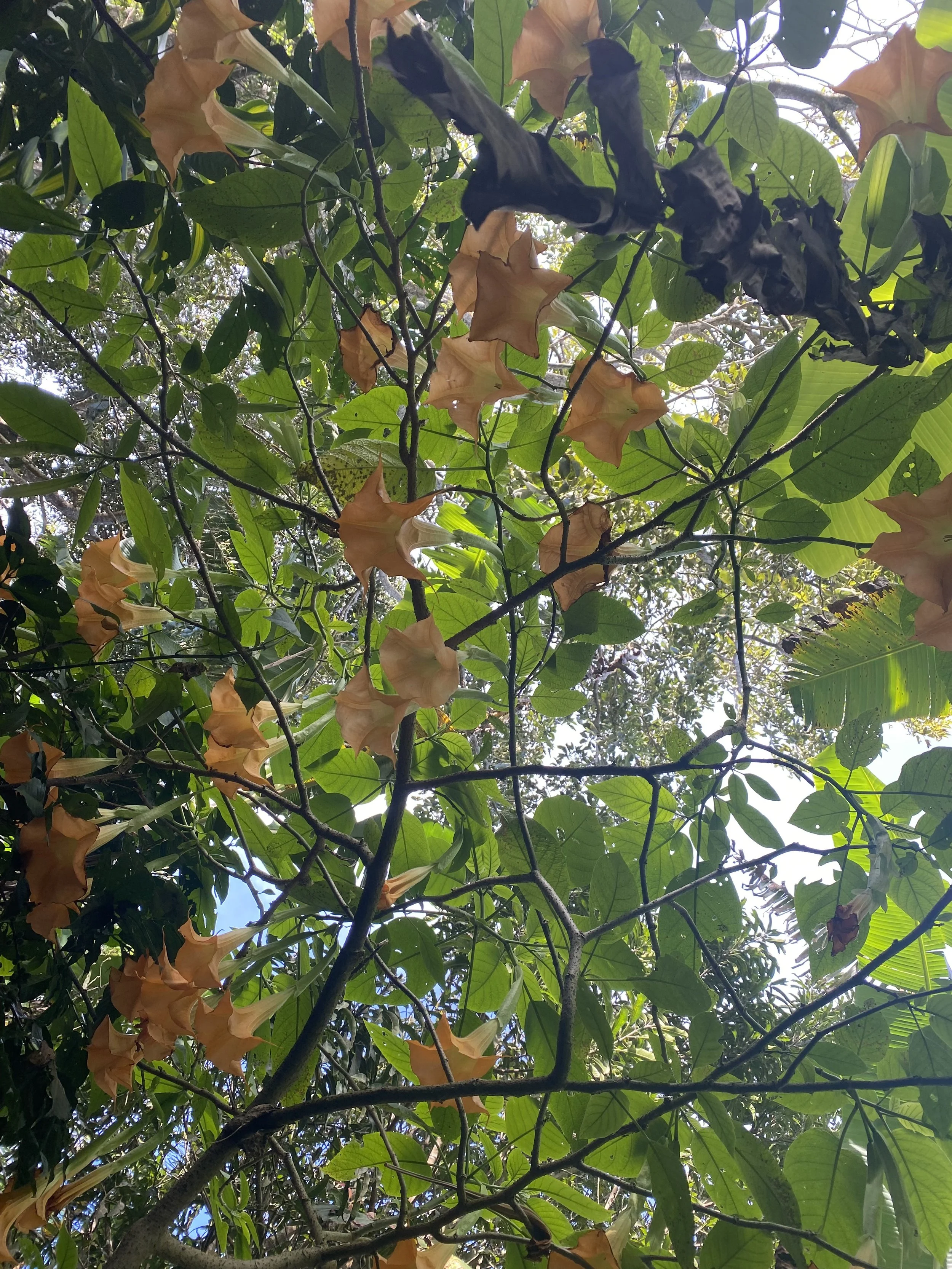
Along the Ruta de las Flores — where the drive itself is part of the experience.
1. Nahuizalco
Nahuizalco is often considered the starting point of the Ruta de las Flores when coming from Sonsonate. It’s known for its strong Indigenous roots and more traditional, local feel compared to the other towns along the route.
This isn’t a town packed with attractions, but rather one that offers cultural context and a glimpse into everyday life in western El Salvador. Many travelers pass through quickly, which is perfectly fine — it works best as a short stop rather than a long visit.
2. Salcoatitán
Salcoatitán is one of the smaller and quieter towns along the route. It’s often overlooked, but it plays an important role in connecting the Ruta geographically.
There isn’t much sightseeing here, which can be confusing if you’re expecting a “must-see” destination. Instead, Salcoatitán is better thought of as a quick stop — often for food or a short walk — rather than a place to build an itinerary around.
3. Juayúa
Juayúa is one of the more well-known towns on the Ruta de las Flores and often serves as a hub for nearby waterfalls and weekend activities. On Saturdays and Sundays, it becomes much livelier thanks to its popular food festival.
During the week, Juayúa is noticeably quieter, which can surprise travelers who arrive expecting crowds. It’s a good example of how timing matters on this route — the experience can change completely depending on the day you visit.
4. Apaneca
Apaneca sits higher in elevation and is known for its cooler climate, mountain views, and coffee-growing surroundings. Many travelers stop here briefly for a coffee or viewpoint rather than staying overnight.
Apaneca doesn’t have a dense town center like Ataco, which can make it feel underwhelming if you don’t know what to expect. It works best as a short stop along the drive rather than a main base.
5. Ataco (My Base)
Ataco is one of the most popular towns along the Ruta de las Flores and where I chose to stay. With its colorful murals, cobblestone streets, artisan shops, and walkable center, it’s one of the easiest towns to explore without a car.
Using Ataco as a base made sense for me, especially with limited time. Even without visiting every town along the route, staying here gave me a great introduction to the region — and it’s a place I’d happily return to while exploring the rest of the Ruta more deeply.
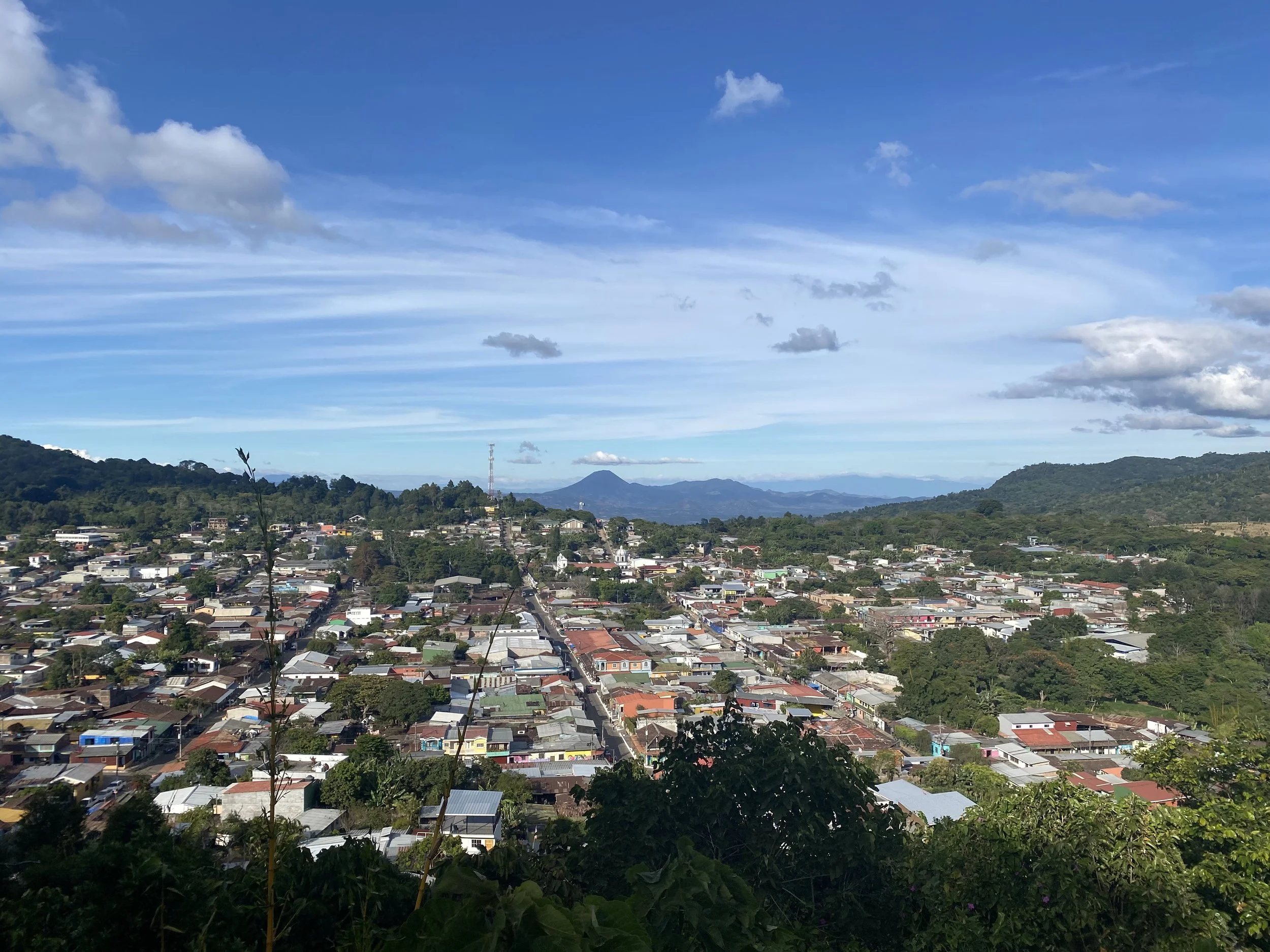
Looking out over Ataco — the town I used as my base while exploring the Ruta de las Flores.
Final Thoughts
One of the biggest misconceptions about the Ruta de las Flores is that it’s packed with attractions in every town. In reality, the route is about short stops, small towns, and what lies between them. Knowing which towns are best for basing yourself — and which are better for quick visits — makes planning far less stressful.
