Solo, Female & Apparently Still Fine
The honest truth about solo female travel.
Note: I briefly mention harassment and uncomfortable situations in this post. Nothing graphic — just honest. And very on-brand for being a woman in the world.
I’ve been incredibly lucky in my travels.
And I mean that.
I’ve met people along the way who have landed in hospitals. I’ve met travelers who’ve had passports stolen, bags slashed, cameras taken, phones gone. I’ve heard stories that made me sit a little straighter and rethink my own decisions.
Compared to some of that?
I’ve been very fortunate.
That doesn’t mean nothing has ever happened. It just means nothing has ever escalated into a full-blown disaster movie starring me.
There have been moments.
In different countries, I’ve dealt with inappropriate touching. I’ve had men expose themselves. Someone once tried to steal my phone at knifepoint in Honduras. I’ve had verbal harassment in places like Egypt and Barcelona. I’ve had moments where I froze for a second because I couldn’t quite believe what was happening.
But here’s the part people don’t expect:
Those moments aren’t what define my travels.
What I remember more clearly is what happened after.
After the knife incident in Honduras, I didn’t feel great about wandering around alone at night. The guys in my hostel just knew. They kept me close. They checked in. They made space for me to feel safe without making it dramatic.
When my motorbike broke down in the middle of nowhere in Sapa, Vietnam — because of course it did — I ended up at a family’s longhouse. They barely spoke English. I barely spoke Vietnamese. But somehow that translated into dinner, rice wine, heated buckets of water for a “shower,” and a bed for the night.
And when I woke up, there was a fixed motorbike waiting to get me back to Sapa.
I have never felt more looked after in a foreign country.
No running water.
No luxury.
Just human kindness.
I was stranded.
They fed me.
That’s the story I tell.
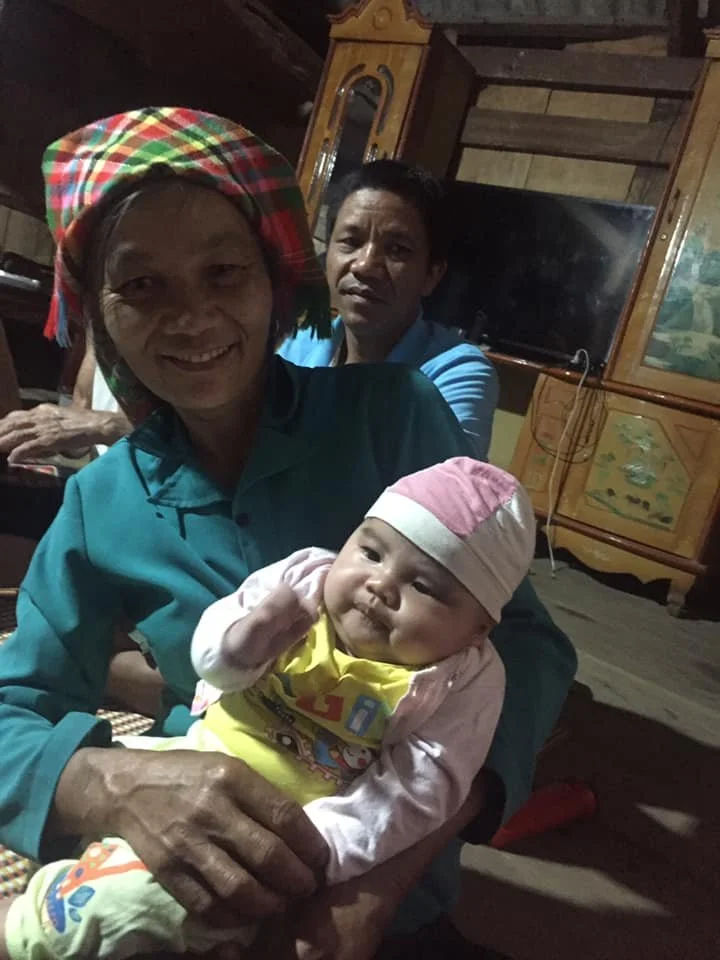
The grandmother and her grandbaby in the longhouse that took me in when my motorbike broke down in Sapa.
In Tahiti, when the bus system basically shrugged at the concept of a schedule, a woman pulled over, drove me to the ferry, and refused payment.
In Japan and Korea, strangers have physically walked me to the correct train platform because I looked mildly confused (which, let’s be honest, I probably was).
Bus drivers have made sure I didn’t miss my stop.
Backpackers share safety tips like they’re passing around snacks. Which hostel is good. Which area to avoid. Which ATM eats cards. It’s this invisible web of protection that doesn’t make headlines but absolutely exists.
And sometimes?
I’m the one doing the protecting.
In Laos, someone fell down a set of stairs and split their head open. There was blood. A lot of it. Everyone froze for a second.
I didn’t.
I immediately put pressure on the wound and told staff what was happening. Once I had pressure on it, that was my job. I stayed there until we loaded him into a tuk-tuk to get to the hospital.
Not glamorous. Not heroic. Just necessary.
In China, I’ve found heavily intoxicated women alone at night and made sure they got into taxis safely. I’ve hunted down their friends. I’ve stayed until I knew someone else had eyes on them.
Because this goes both ways.
We look out for each other.
There was a night during the Hong Kong protests when I promised my mom I wouldn’t go out after dark. I meant it. I really did.
I just wanted to watch the Rugby World Cup.
The first bar was full. Fine. So I had to find another one. After the game, I knew it was time to head home. I checked the apps — MTR was still running. Great.
I stepped outside.
Boom. Protesters everywhere.
I thought, “Okay, I’ll just walk to the next MTR station.”
What I did not know was that the police station was directly in between.
So there I am, walking confidently like I belong there (I did not), and suddenly I’m at an intersection with a police line in front of me and protesters behind me.
And my Canadian self is directly in the middle.
Of course.
I pulled out my phone to record because if something happened, I at least wanted it on camera.
I turned right toward the station. Directly down the street? Police beating someone.
Perfect.
In the end, I got home safely. But let’s just say my trust in authority there shifted permanently.
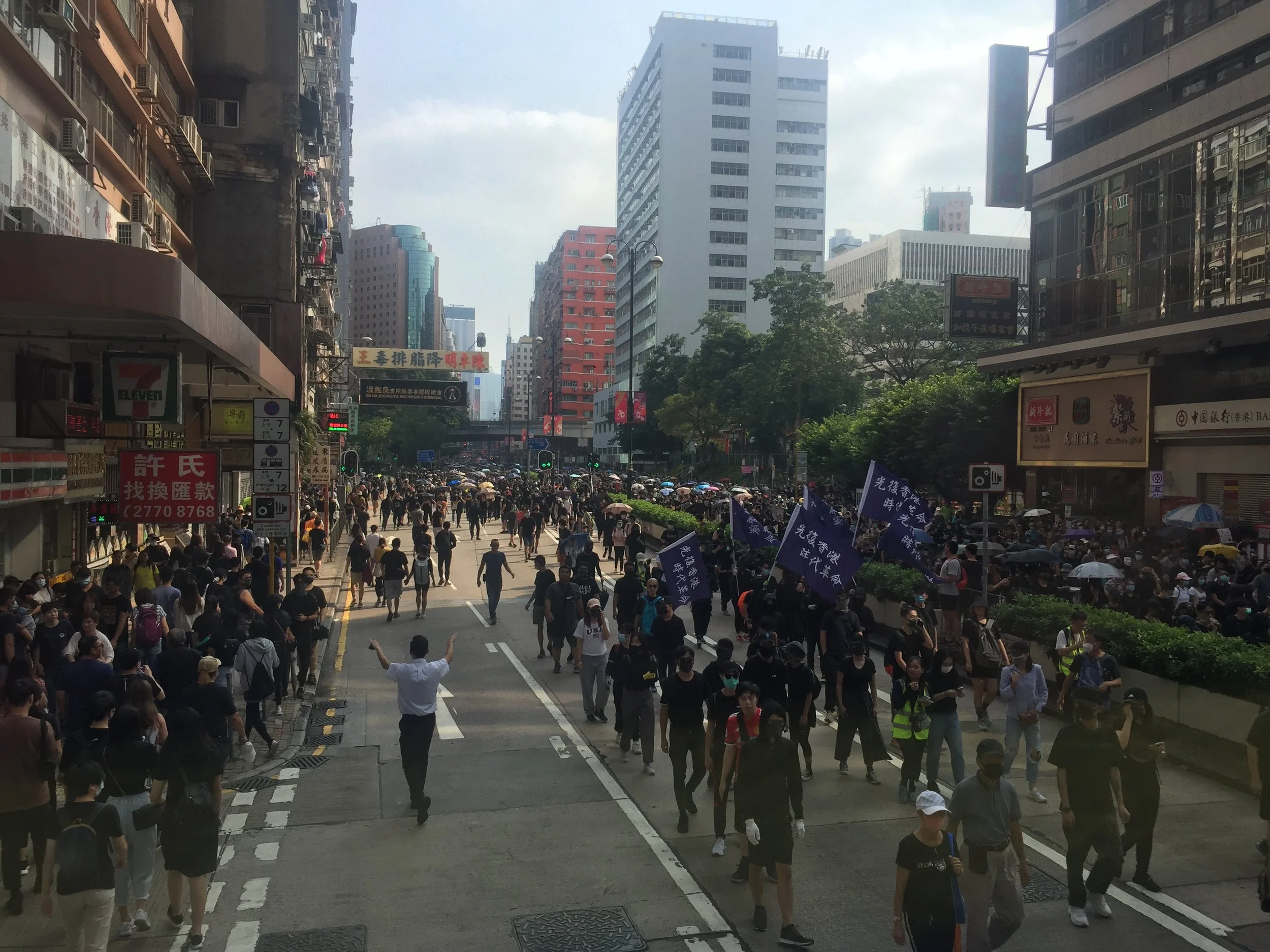
A protest day in Hong Kong.
And then there are the smaller moments that are almost comical.
Women in bathrooms telling me I’m pretty.
Getting kicked out of a Korean spa for wearing a bathing suit because you must be nude.
Then getting kicked out of a swimming pool for wearing a bikini.
I was both too dressed and not dressed enough in the span of a month.
Travel is humbling.
I genuinely try not to put myself in stupid situations. I plan. I research. I check transit apps. I promise my mother things.
But with my personality — curious, “slightly” stubborn, always wandering — situations sometimes arrive anyway.
What I’ve learned isn’t how to avoid the world.
It’s how to move through it.
I’ve learned to trust my instincts without becoming paranoid.
I’ve learned that confidence is protective. I swear I have a “fuck off” sign stamped on my forehead.
I’ve learned that walking like you know where you’re going works surprisingly well — even when you absolutely do not.
What I’ve also learned is that safety isn’t just about men on streets.
It’s about water.
It’s about equipment.
It’s about paying attention in moments that don’t feel dramatic.
My friend Kerri — who I met in Egypt — can’t swim.
Does that stop her from tubing, boat trips, jumping into questionable bodies of water with me?
Absolutely not.
It just means I strap her into a life jacket and tow her around like a very enthusiastic buoy.
We adapt.
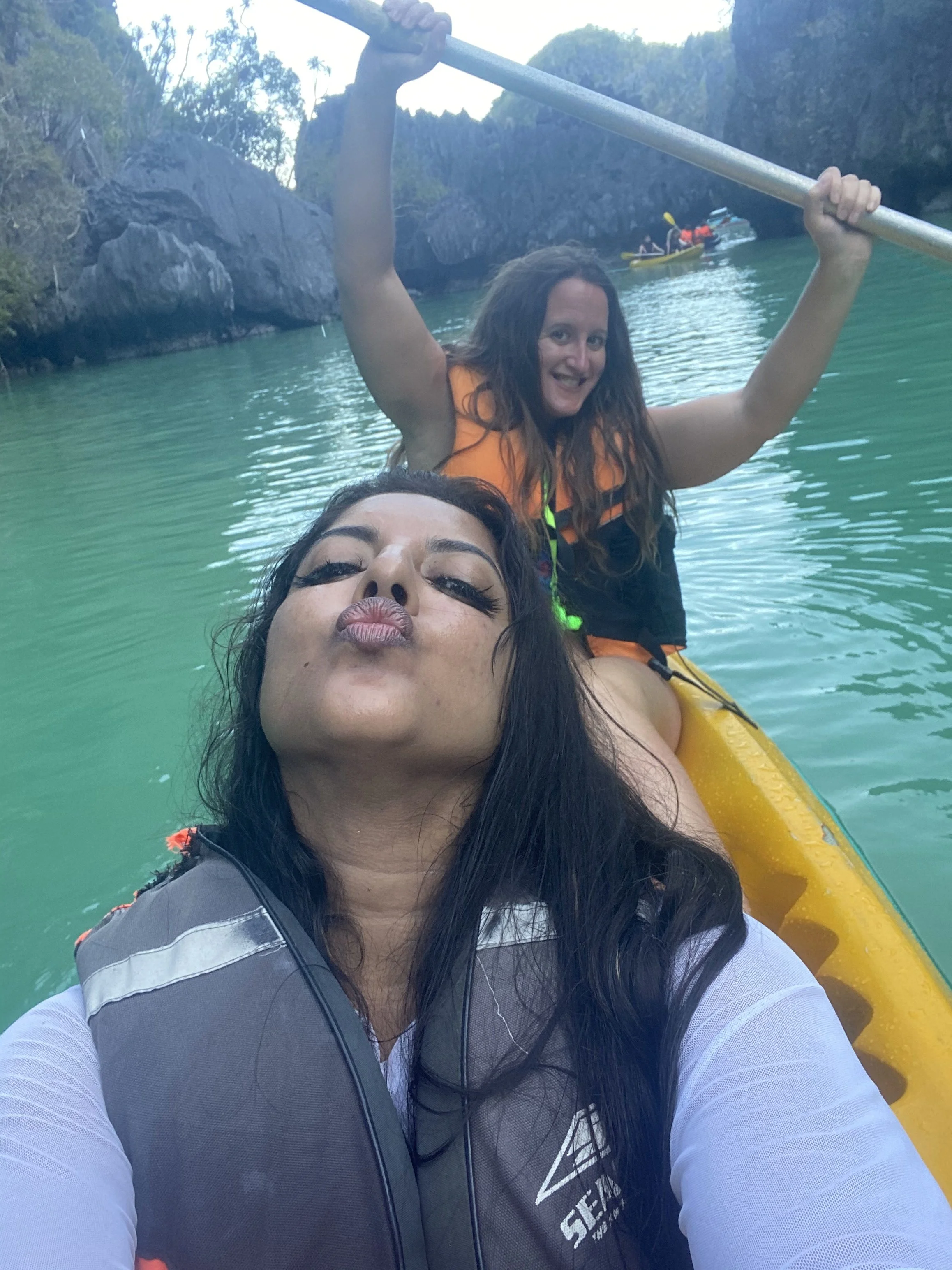
Life jackets on. Chaos pending.
Ziplining taught me something too.
The first time I did it in Inner Mongolia, there was… minimal instruction. You clipped in, flew across, and at the end you hit a mattress.
That was the braking system.
Later, when I ziplined in Canada, they went over everything. Three points of contact. Backup lines. Gloves so you could slow yourself down safely.
Night and day.
Same activity.
Very different standards.
In parts of Asia, I’ve watched men climb rooftops and fix windows with zero harnesses like gravity was optional.
In Australia? They take the sun so seriously they have an entire slogan about it. UV-protected clothing everywhere. Shade structures. SPF culture.
Safety looks different depending on where you are.
And part of solo travel is adjusting to that reality without pretending it doesn’t exist.
When I traveled to Amsterdam with my oldest nephew, he noticed the way men looked at me. He didn’t like it. In Hong Kong, a male friend noticed it too. It bothered them more than it bothered me.
Which made me realize how much I had normalized it.

He noticed what I had stopped noticing.
Women adapt.
We learn to scan rooms.
We learn to hold keys between our fingers.
We learn to ignore things we shouldn’t have to ignore.
We learn to move confidently even when we’re unsure.
We shouldn’t have to.
But we do.
And still — my overwhelming memory of travel is joy.
Sunsets.
Shared meals.
Laughing with strangers in hostels.
Random invitations to family dinners.
Strangers stepping in when something feels off.
Friends waiting outside bathrooms.
For every uncomfortable moment, there have been dozens of protective ones.
Everything just seems to work out.
Not magically.
Not recklessly.
But because I pay attention.
Because I prepare.
Because I step in when needed.
Because I accept help when it’s offered.
Because I genuinely believe there are more good people in this world than bad.
So far?
The world keeps proving me right.
And I’m not done exploring it yet.
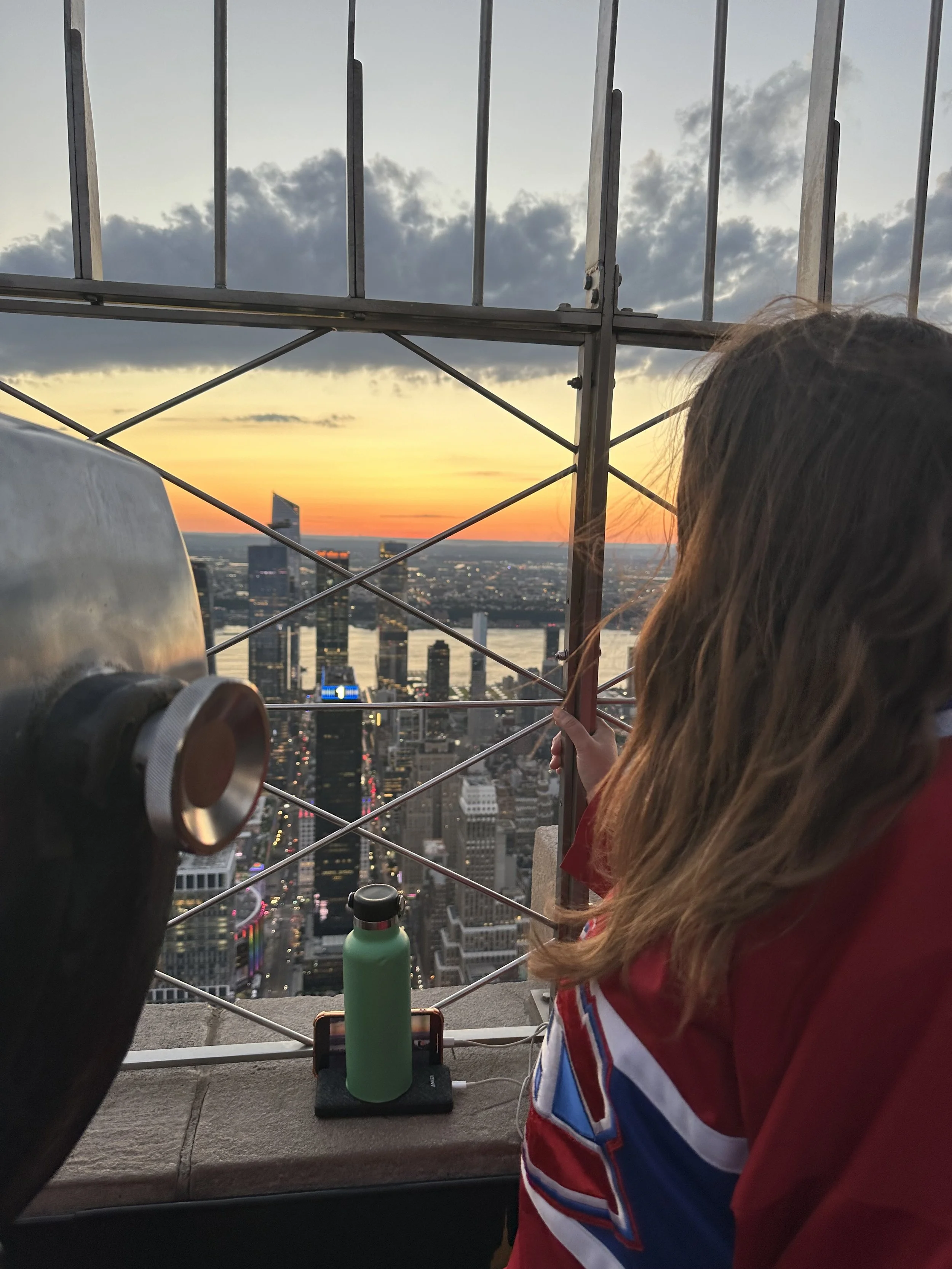
The world is big. So am I.
