From El Salvador to Tegucigalpa: My First 48 Hours in Honduras
(And yes — I absolutely can’t spell it. Neither can most people. It’s pronounced Tay-goo-see-GAL-pa. You’re welcome. 😂)

First impressions of Tegucigalpa.
Leaving El Salvador & Adjusting the Plan
After El Salvador, I stayed on that well-worn backpacker trail through Central America. Honduras was next.
Originally, I planned to spend a month there. That was the idea when I first mapped everything out. But once I started researching, I adjusted it to two weeks instead.
There wasn’t a long bucket list for Honduras in my head. I knew I wanted to see Copán for the Mayan ruins. I wanted to dive in Utila — especially because I had read it was one of the cheapest places in the world to scuba dive. And yes, I had to at least step foot in Roatán because it’s the major tourist hub.
But, I also knew something about myself.
I don’t love hanging around heavy tourist zones for too long. When the crowds grow, the prices follow. And after weeks on the road, I was watching my budget carefully. If I was going to spend money, it was going to be on something meaningful.
So, I made a decision: I would spend my Honduras budget underwater.
Whale sharks in Utila? Yes, please.
Cheap diving? Absolutely.
Beach resorts and cruise ship crowds? Not my vibe.
With the plan set, I booked my bus ticket the day before leaving El Salvador. I wasn’t risking showing up and being told it was full. Central American buses are not something you “wing” at 6am.
Next stop: Tegucigalpa — the capital city that I still can’t spell or pronounce properly.
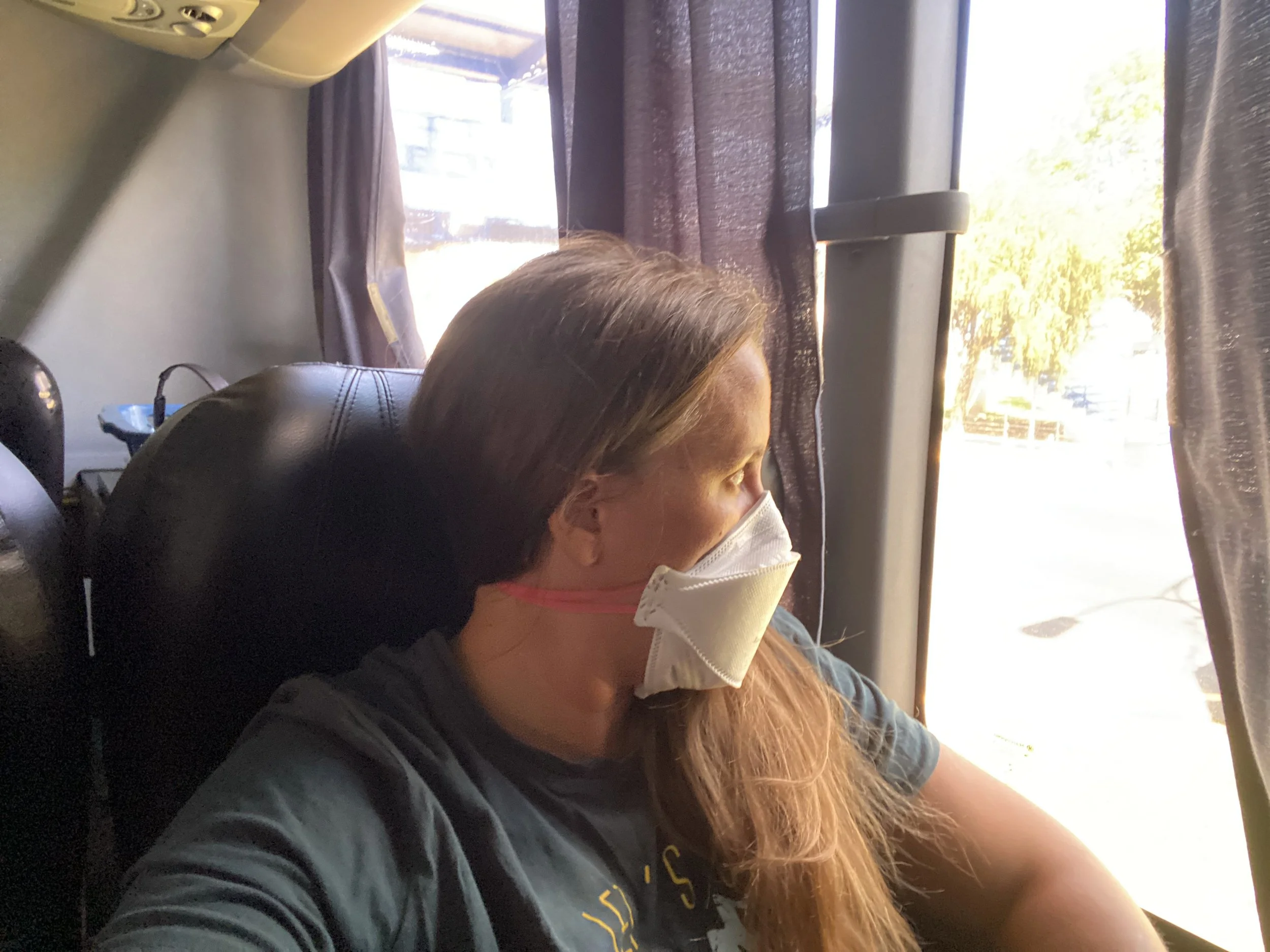
Just me, my backpack, and another questionable border crossing ahead.
The Border Crossing (And Being the Only Tourist)
I left San Salvador early and headed to the Sheraton Presidente Hotel — because, casually, that’s where the international bus station was located. Central America is wild like that.
The bus ride was smooth. The border crossing? Slightly more chaotic.
This one was different.
The bus dropped us off on the El Salvador side first. Everyone unloaded, and I followed the crowd inside to get my passport stamped out. Easy enough.
Then we had to walk down the street — literally walk — to the Honduras immigration office.
And this is where it got more “fun.”
I was the only obvious tourist. The only backpack. The only non-Spanish speaker. Everyone else moved with quiet confidence, knowing exactly where to stand and what to hand over.
I stood in line, trying to read facial expressions and mimic what the person in front of me was doing.
Passport.
Stamp.
Small fee.
Done.
It wasn’t dramatic. It wasn’t scary. It was just… mildly confusing. And that’s honestly what solo travel often is — controlled confusion.
The whole bus was probably held at the border for about an hour. People reloaded luggage. Vendors wandered around. Border dogs sniffed through bags.
Eventually, we were back on the road.
New country. New stamp. New energy.
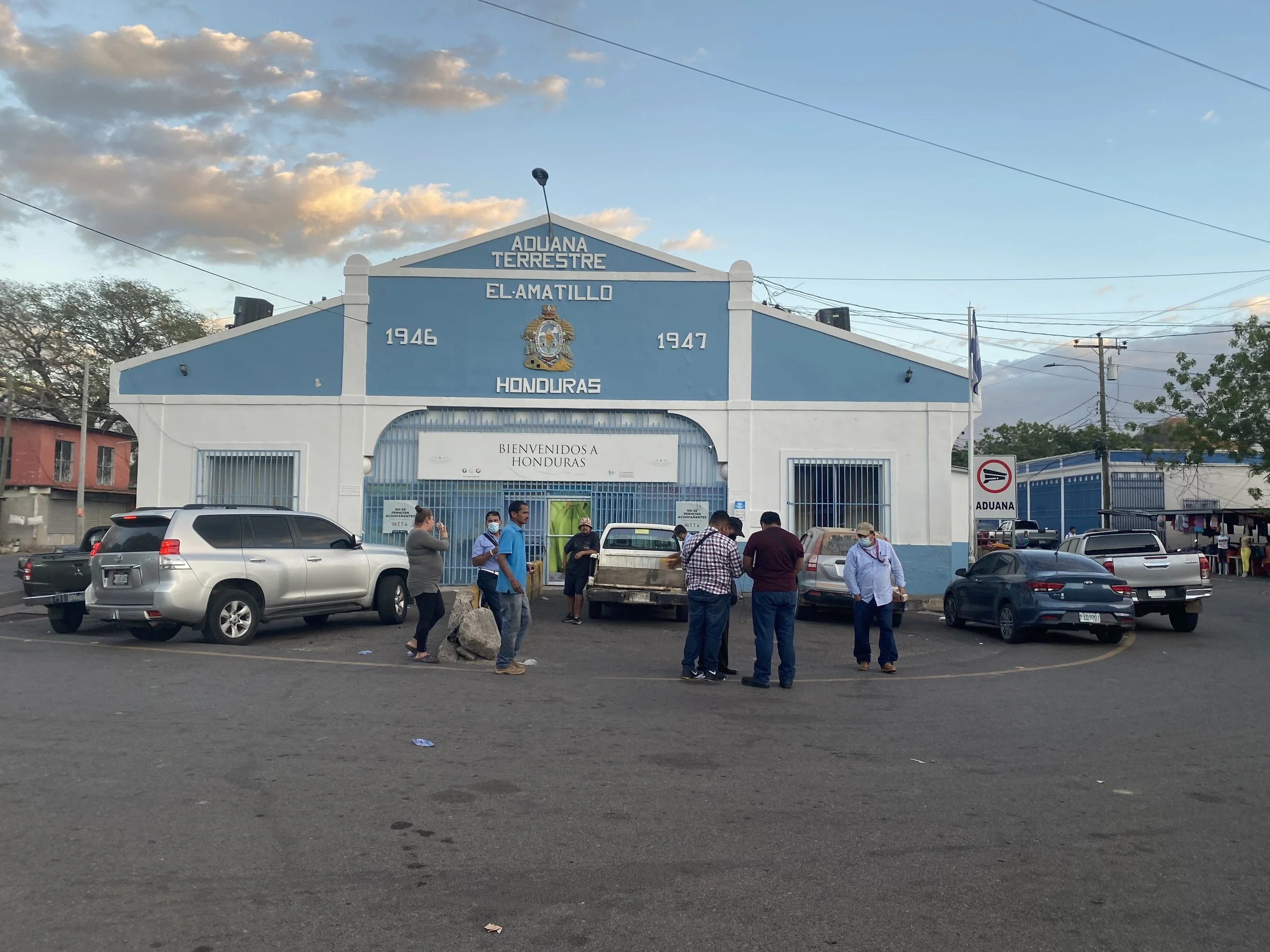
Exit stamp secured… now walk here and figure out what the heck to do next.
Arriving in Tegucigalpa at Night
We arrived in Tegucigalpa after dark.
Already not ideal.
I had intentionally booked Palmira Hostel because it was “close-ish” to the bus station — about a 15–20 minute walk. Normally that wouldn’t bother me. But walking alone at night in a new capital city? That required awareness.
I kept my head up. Walked confidently. Didn’t look lost. Didn’t pull out my phone.
When I arrived at the hostel, I immediately noticed something different.
Locked gates.
Security doors.
A guard on duty 24/7.
That was the moment I realized Honduras was going to require a slightly different version of me.
Not scared. Not paranoid. Just… disciplined.
The hostel staff were kind, but security was clearly a priority. And that told me everything I needed to know.
The sun sets between 6–7pm in this part of the world. That meant if I wanted to explore, I had to wake up early and maximize daylight.
Back inside before dark. No wandering at night. No “just one more street.”
I had only booked two nights in the capital. That felt like enough.
Tegucigalpa wasn’t on my dream list. It was a stop — but I was still going to see it properly.
City tour? Or follow the blue dot and question my life choices?
My One Full Day in Tegucigalpa
I woke up early.
Capital cities are best explored in the morning — before traffic builds, before the heat intensifies, before you start second-guessing your route.
Palmira Hostel was in a good location, close to the historic center, so I headed straight toward the main sights. I wandered through Plaza Morazán, visited the cathedral, admired the colonial facades, and passed government buildings that felt heavy with history. Tegucigalpa doesn’t scream for attention — it reveals itself slowly.
Of course, I made my way to the football stadium too — Estadio Nacional. Now, I normally don’t care about stadiums. They’re not usually on my “must-see” list. But this one? I was curious. I wanted to see how it compared to stadiums in other parts of the world. What does a national stadium in Honduras look like? How does it feel? Is it massive and modern? Worn and historic?
I walked around the outside, observing the structure, the paint, the surrounding streets. It wasn’t flashy — but that’s kind of what made it interesting. It felt local. Functional. A place where the entire city would gather when it mattered.
Then I made my way toward the park — Parque Naciones Unidas — home to the massive Cristo del Picacho statue overlooking the city.
And of course… I walked the whole way.
Because my strategy is simple: screenshot Google Maps, follow the blue dot.
Up.
And up.
And up.
And somewhere around the third steep stretch, I always start questioning my life decisions.
Why didn’t I just take an Uber?
Why do I insist on “walking for the experience”?
Why is the blue dot taking me straight uphill?
But that’s kind of the rhythm of backpacking. You suffer a little. You sweat a little. You doubt yourself a little. And then you reach the top and forget you were ever complaining.
By the time I made it into Parque Naciones Unidas, I felt like I had earned the view.
The park was decorated for Christmas, which felt surreal. Tropical trees, cloudy skies, and Christmas lights. I was wearing the Santa hat I bought in El Salvador — fully committing to backpacker holiday mode.
I paid to get close to the giant Jesus statue and walked around the viewpoint. The city stretched out below me — hills, houses, layered neighborhoods.
I grabbed lunch up there — and yes, I bought a hot chocolate too.
Hot chocolate. In Honduras. On top of a mountain. In a Santa hat.
It felt oddly perfect.
Families were walking around, kids running between decorations, music playing softly somewhere in the background. It didn’t feel tense or dangerous up there. It felt local. Festive. Normal.
Then I learned something important.
There was a bus down.
I happily took it.
It started raining as we descended — perfect timing. My day felt complete. Rain in a capital city has a way of signaling it’s time to head home.
And I did.
Back to the hostel before dark.
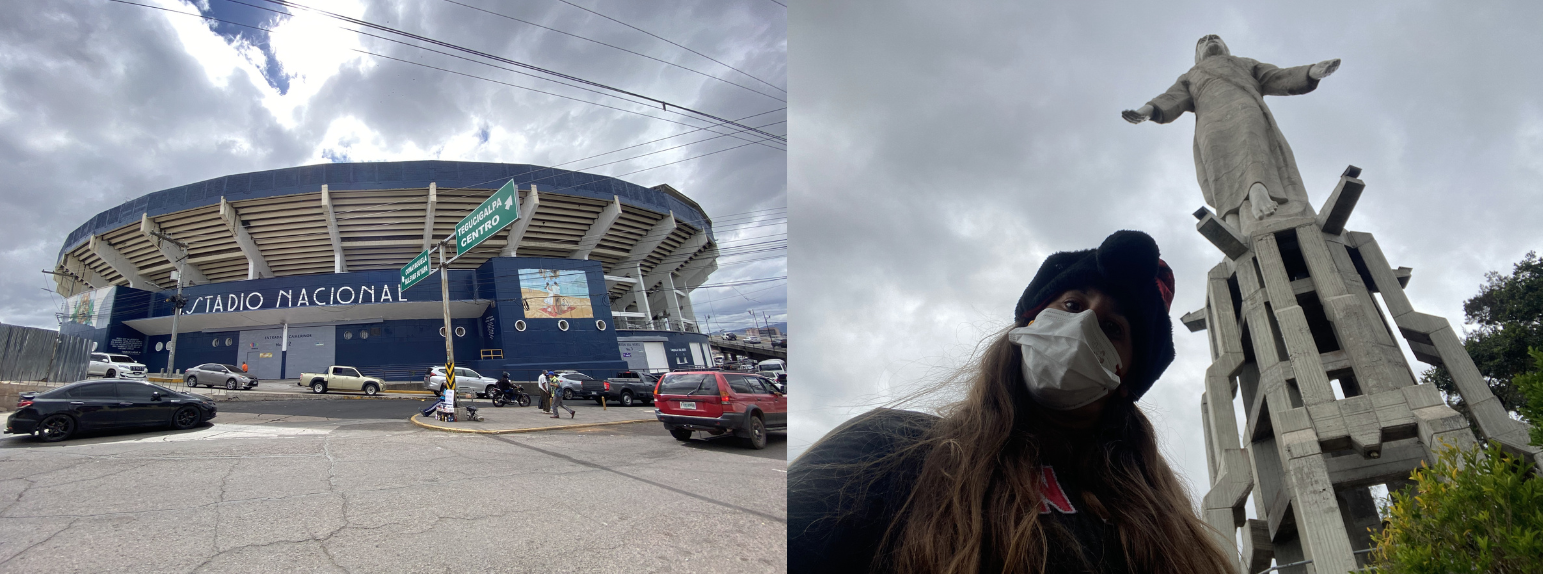
Estadio Nacional and Cristo del Picacho — two very different views of Tegucigalpa.
Observing the City (And Adjusting My Energy)
Tegucigalpa isn’t polished. It isn’t curated for tourists.
It feels real.
You see heavy security on buildings. You notice guards outside businesses. You feel a subtle edge — not panic, just awareness.
And as a solo female traveler, you learn to read cities quickly.
Was I unsafe? No.
Was I careless? Absolutely not.
I stayed aware. I kept valuables hidden. I didn’t linger in empty streets. I avoided being out at night.
That’s not fear. That’s strategy.
I think Honduras sometimes gets reduced to headlines and warnings. But what I experienced in those first 48 hours was more nuanced. It was a working capital city — layered, busy, slightly chaotic, but functioning.
I crossed bridges. I watched local buses load and unload. I saw families heading home from work. I noticed Christmas decorations tucked into unexpected corners.
It wasn’t a place I felt called to stay longer — but I’m glad I saw it.
Sometimes capitals aren’t about falling in love.
They’re about understanding context.
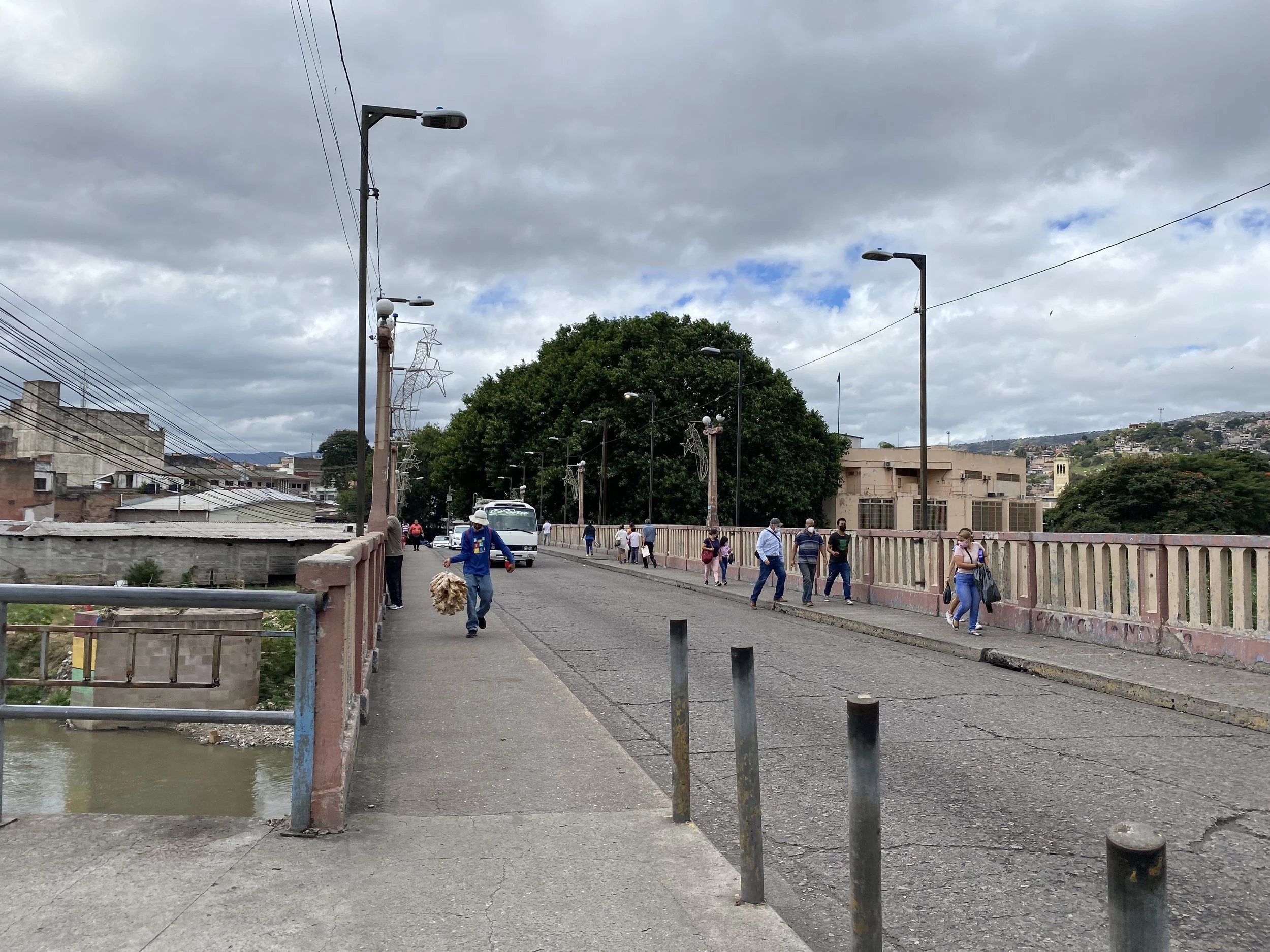
Crossing bridges in the capital and watching daily life unfold.
Leaving for Copán (And What Was Coming Next)
My second morning in Tegucigalpa started early again.
This time, I wasn’t exploring.
I was leaving.
I had an early local bus to Copán — home of the Mayan ruins I’d been waiting to see.
I packed up quietly. Checked out. Walked back to the bus station in daylight.
Tegucigalpa was just a stepping stone. But it taught me something important right away:
Honduras required intention.
Not avoidance. Not fear.
Intention.
From here, the trip would shift. Copán would bring ancient history. Utila would bring diving and whale shark dreams. Roatán would test my tolerance for tourist zones.
But those first two nights in the capital set the tone.
Wake early.
Be aware.
Move smart.
Trust your instincts.
Next stop: Copán.

Tegucigalpa in a day — churches, street food, Christmas lights, and a rainy ride home.
