Copán Ruinas, Honduras: Macaws, Mayan Kings & a Full-Circle Moment
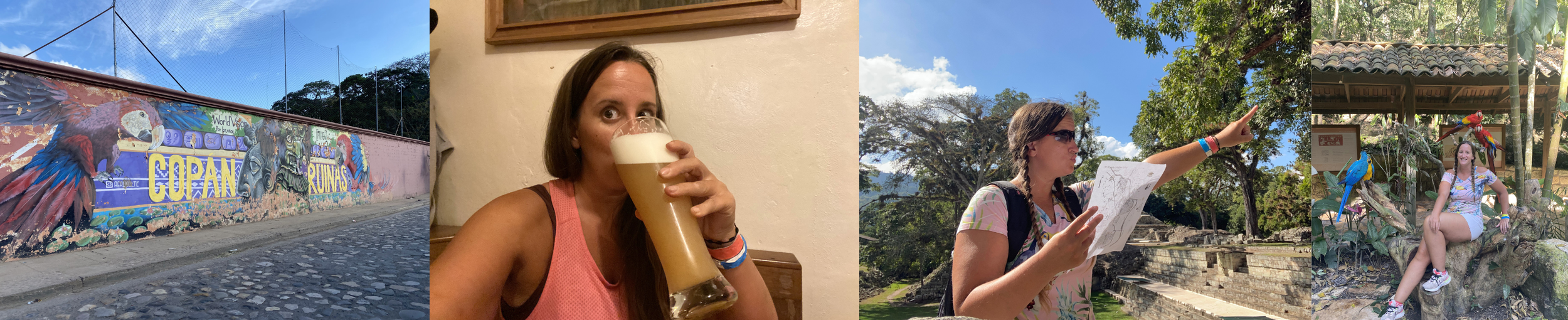
Mayan ruins, jungle birds, and a cold beer at the end of the day. Copán was worth it.
The Shuttle to Copán — This Is What I Came For
The next morning, I caught a shuttle to Copán Ruinas.
Now this — this is what I had been waiting for.
Tegucigalpa was interesting in its own way. Observational. Intentional. But Copán? Copán felt iconic. When people talk about Honduras in a historical context, this is what they’re talking about.
Copán was once one of the most important Mayan cities in the region. It’s known for its incredibly detailed stelae — carved stone monuments that depict rulers and tell stories through hieroglyphs. Some scholars say they are the best preserved in all of Mesoamerica. It’s also home to the famous Hieroglyphic Stairway and strong symbolic ties to the red macaw — a bird sacred to this region.
While researching Copán, I also found something else: Macaw Mountain Bird Park, a sanctuary that rescues and rehabilitates macaws and other birds from the illegal pet trade. I wasn’t sure if I’d have time, but I pinned it in Google Maps as a backup plan. I like supporting local conservation efforts when I can.
December was still lingering in Honduras. The towns were decorated for Christmas. The ruins, I assumed, would remain timeless.
By late afternoon, I arrived in Copán Ruinas — and immediately felt the difference. Smaller. Slower. Walkable. Less defensive energy.
You don’t brace yourself here.
You just explore.
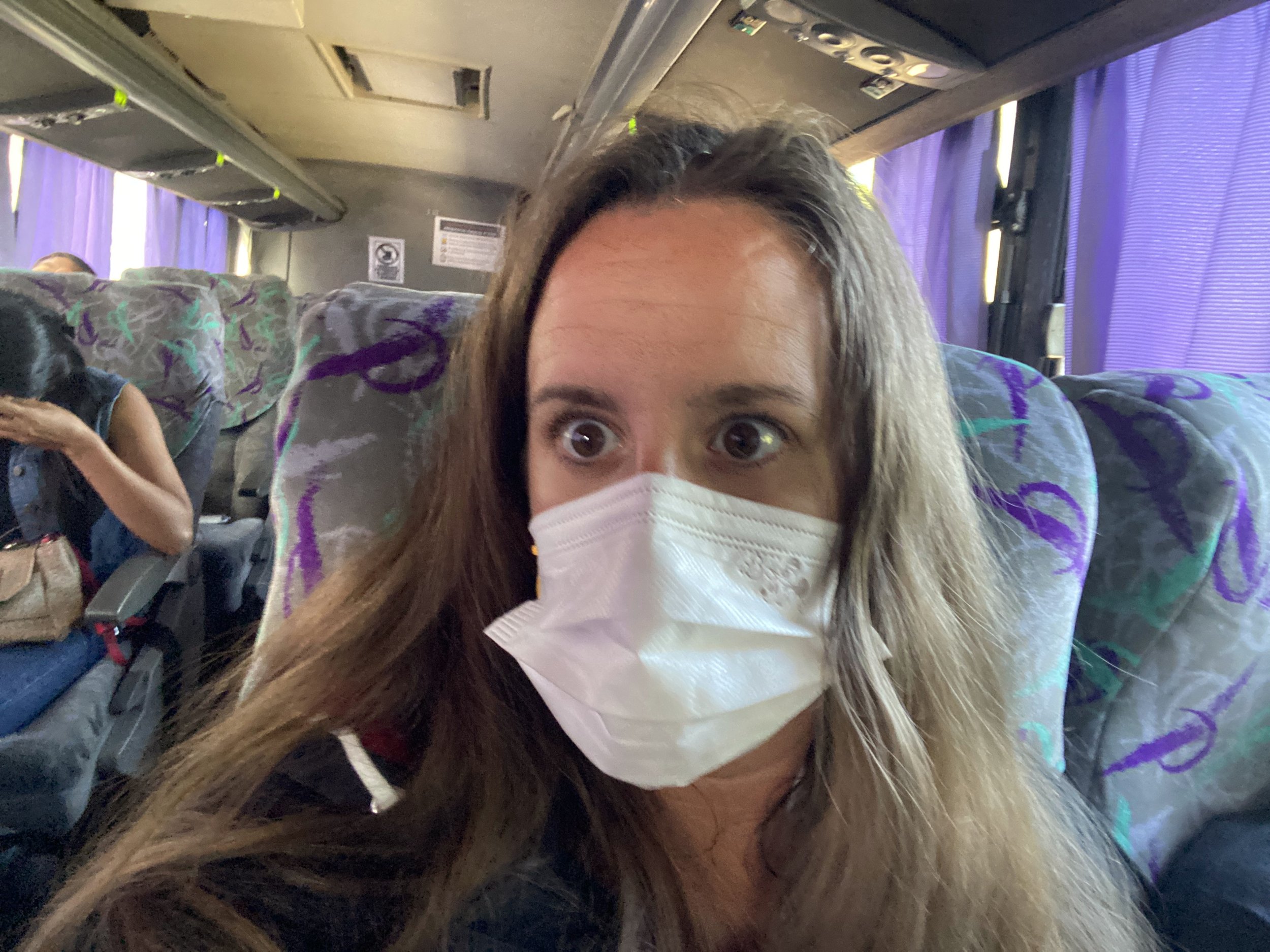
Early morning shuttle to Copán. Eyes wide open. Brain still buffering.
Tea, Chocolate & a Brownie I Deserved
I walked from the shuttle drop-off to my hostel — Hostel Yaxkin. It was bigger than I expected, with multiple stories, wide common areas, and surprisingly quiet. I checked in, dropped my bags, and immediately headed back out.
I always do this.
I like to see a place before I sleep in it.
The village felt calm. Cobblestone streets. Low buildings. Soft hills in the distance. Christmas decorations hung around town — subtle but present. It felt festive, but not chaotic.
I specifically went to The Tea & Chocolate Place. It’s known locally for its chocolate and tea, and since I had learned about chocolate production while in Guatemala, I was curious about Honduras’ side of the story.
I ordered a hot chocolate and found the perfect sunset spot overlooking the hills. The cup it came in was rustic and earthy — the kind of cup that makes the drink taste better. I liked it immediately.
And yes, I ordered a brownie.
I deserved a treat.
As the sun dipped behind the hills, I sat there slowly drinking my hot chocolate, thinking about how different this felt from Tegucigalpa. No rush. No tension. Just quiet village energy.
After finishing my brownie and hot chocolate, I reminded myself that this could not count as dinner.
So I wandered again — randomly, as I do — until I found a restaurant that felt right. No reviews. No rankings. Just instinct. I ordered real food and a local beer and let the evening settle.
Tomorrow was the day I was most excited for.
Copán Mayan Ruins.
I went to bed early.
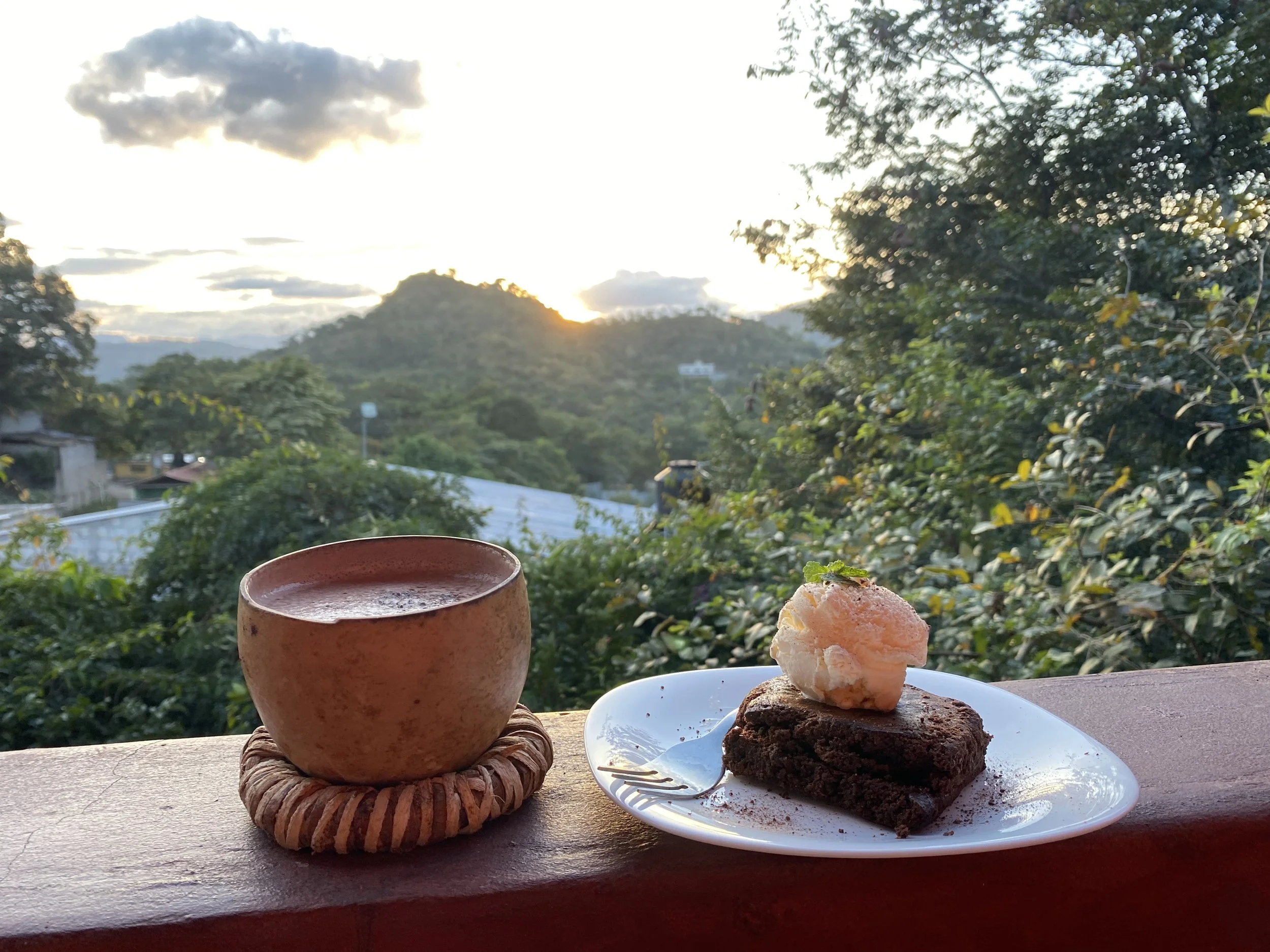
Technically not dinner. Emotionally necessary.
First Through the Gates — Copán Mayan Ruins
I made sure I was the first person through the gates.
Entry is currently listed online at around $20 USD. I don’t remember exactly what I paid — I usually photograph my tickets, but this time they gave more of a receipt than a collectible entrance stub. The only proof I have is the map they handed me.
And honestly? Worth it.
I didn’t pay extra for the tunnels. I explored independently with my map — just me and the site.
For a while, I had it completely to myself.
There’s something surreal about standing in a place that once held thousands of people and hearing nothing but birds.
One of the first things I saw was a miniature reconstruction model of what the site would have looked like when it was fully active. I loved that. It helped my brain piece things together — these weren’t just scattered ruins. They were structured. Intentional. Powerful.
Using my map, I started with the main buildings and plazas.
I loved the jaguar statues. Powerful. Watchful.
Then I moved toward the Hieroglyphic Stairway — one of the most famous features of Copán. The detail carved into those steps is incredible. Each glyph tells part of a story. It’s layered history in stone form.
Last, I wandered toward the stelae.
And this is where Copán truly shines.
The craftsmanship is intricate. Elaborate headdresses. Carved rulers. Symbolism everywhere. You can see why they’re considered some of the best-preserved stelae in the Mayan world. My favorite one was the turtle.
I also noticed red macaws flying near the entrance. Bright flashes of red cutting across the canopy.
At the time, I just thought they were beautiful — and that I was lucky enough to see so many in the wild.
I didn’t yet understand how intentional that presence was.
I spent hours there. Not rushing. Just walking, observing, reading signs, sitting quietly. And yes — taking a million photos. When you have an ancient Mayan site almost entirely to yourself, you take advantage of it. A little solo “photo shoot” never hurt anyone. By the time the crowds slowly trickled in, I had already had my moment with the site.
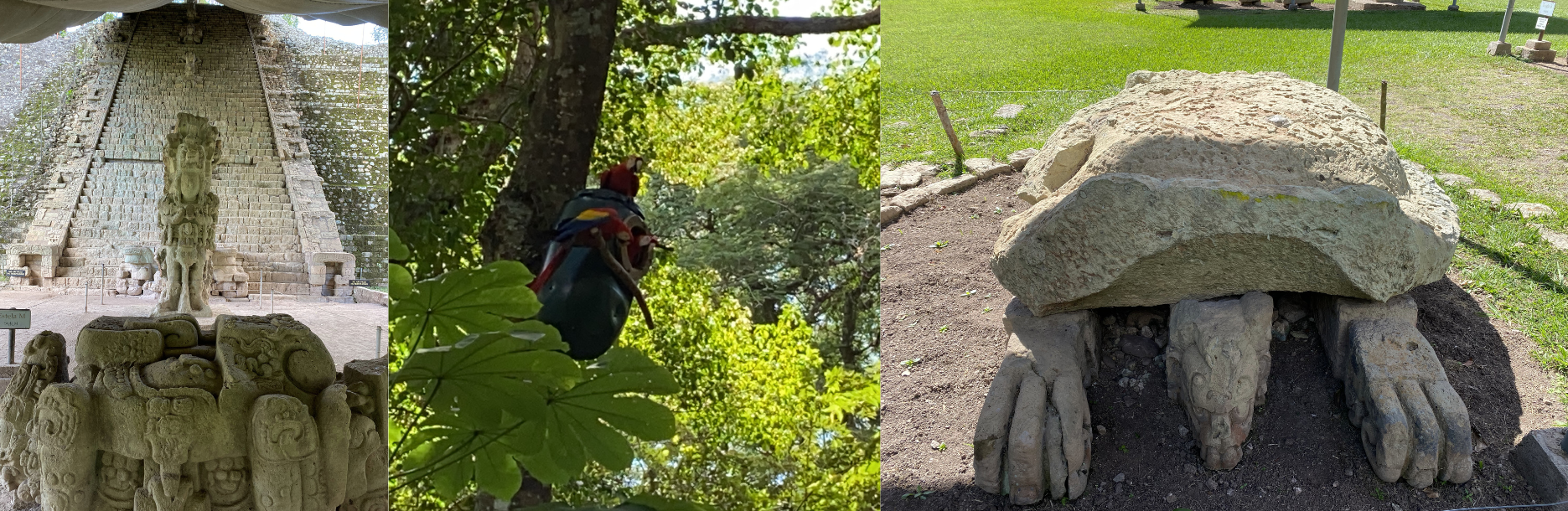
Ancient kings in stone — and macaws flying overhead.
Macaw Mountain — Where It All Connected
By early afternoon, I still had energy — and time.
Macaw Mountain was too far to walk, so I grabbed a tuk-tuk. Cheap. Easy. No stress.
The sanctuary was quiet. Peaceful. Almost hidden in the forest.
And I loved it immediately.
Red macaws everywhere. Not just flying above ruins now — but here, close. Real. Rescued. Some had been kept as pets. Some confiscated from the illegal trade. The sanctuary’s mission is to rehabilitate birds when possible and release them back into the wild — specifically around the Copán Ruins.
Suddenly, those red macaws at the archaeological site made sense.
They weren’t random.
They were part of restoration.
I spent a few hours there — slowly walking the paths, reading about each species, watching staff feed the birds.
They had several species of toucans (one of my absolute favorites), parrots, macaws — and yes, I now know the difference between parrots and macaws. Macaws are actually a type of parrot, but larger, longer-tailed, and typically more vividly colored.
At one point, a parrot lunged toward my phone — which resulted in a hilarious and very close-up photo. Worth it.
I managed to arrive during feeding time and watched the staff work with precision and care. Signs clearly stated not to touch the birds — they’re trying to reduce human dependency so they can re-enter the wild.
Which is why I was honestly frustrated when I saw a backpacker who had snuck into the conservation area and was petting the birds. The entry fee supports rehabilitation. It goes directly back into conservation and the local community.
This isn’t a petting zoo.
It’s a rehabilitation center.
I met Pierre while we were both trying to photograph the birds — which, if you’ve ever tried to photograph a macaw, you know is harder than it sounds. We ended up offering to take photos for each other. Classic solo traveler move. From there, we started chatting and realized we were both traveling through Central America alone.
So we did the rest of the park together — mostly so we could swap photos with the birds perched nearby. There’s something oddly comforting about temporary travel friendships. No expectations. No backstory. Just two people in the same place at the same time.
It reminded me that solo travel doesn’t mean isolation. It just means you’re open to moments like that.
We ended up taking photos of each other with some of the birds that can’t be released — permanent rescues. Before COVID, visitors could pose with birds perched on them. Now they stay on stands and you stand nearby.
I actually respect that boundary.
My favorite photo from the day? A macaw statue — with a real macaw perched above it.
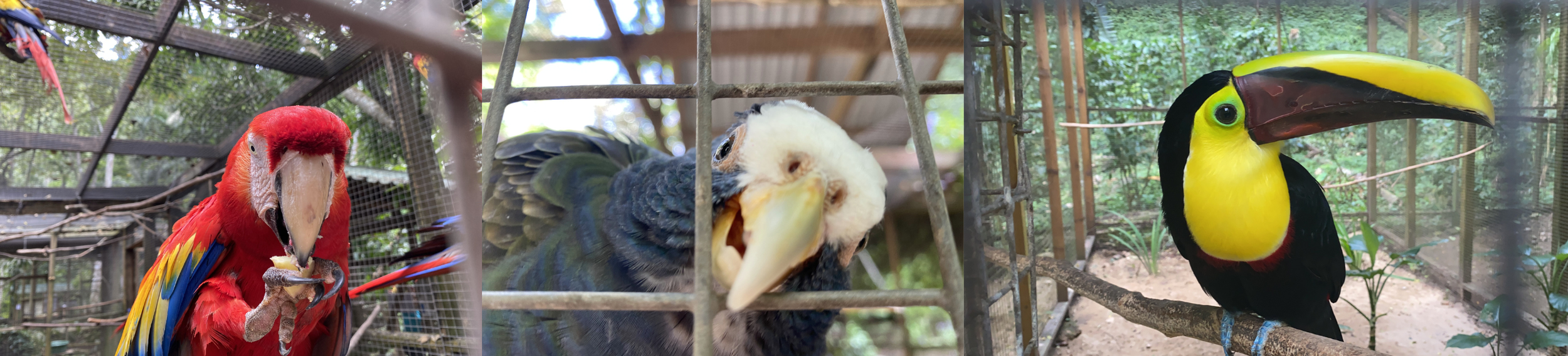
One bird eating. One bird choosing violence. One bird being iconic.
A Nest, A Donation & Leaving Copán
At the end of my visit, I donated $100 USD toward a nesting box at the Copán Ruins.
The sanctuary works to proliferate the species, and those nesting boxes I had seen earlier at the archaeological site? Now one would also be there with my name attached.
That felt meaningful.
I also bought my mom a red macaw Christmas ornament. December in Honduras. Conservation. A reminder.
Pierre and I shared a tuk-tuk back to town. Since we were both traveling solo, we grabbed dinner and drinks. We exchanged numbers — he was traveling through Honduras for about two weeks as well.
Sometimes when you travel alone, you aren’t really alone.
You meet people randomly. In sanctuaries. In tuk-tuks. Over local beer.
After sunset, we separated. I needed to pack, shower, and sleep. I had a shuttle to San Pedro Sula early the next morning.
I had to use San Pedro as a hub — there were no direct buses to Tela, my next destination. Sometimes travel in Central America requires a little logistical patience.
Copán gave me exactly what I came for.
History. Silence. Color. Conservation.
And a reminder that sometimes the most powerful travel moments aren’t just about what you see —
They’re about what you choose to support.
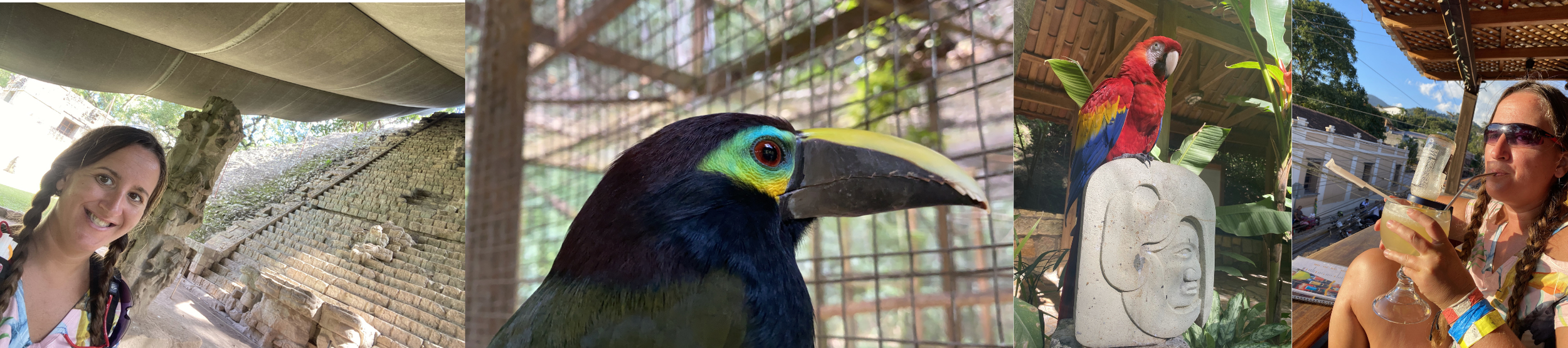
Mayan kings, jungle birds, and a sunset drink. That’s a good travel day.
